Having Hope in an Age of Darkness

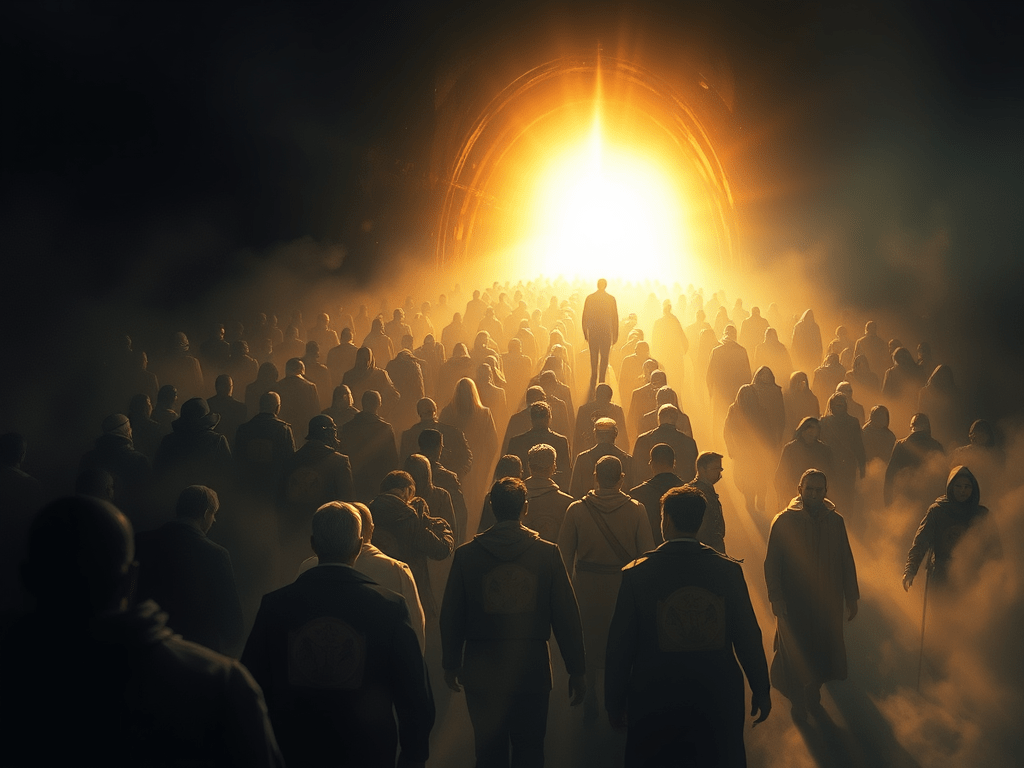
In a season of darkness we can keep on choosing life. We can be committed to embracing new life in babies, to making our homes, families, workplaces, friendships as open to life and grace as we can. We can embrace the stranger, care for our elderly, show love and compassion to our enemies. We can resolve never to give in to nihilism or self-centredness and instead keep living for the sake of God and of others. This will not be easy. But it is possible because God keeps his promises.

Do not be afraid! God keeps his promises.

I wrote these reflections on how to live free from fear and anxiety, how to be a people of hope, before last week’s decision concerning assisted suicide.1 In light of that vote, however, these ideas are particularly important. 

One of the famous texts that is read at 9 Lessons and Carols most years is Jeremiah 33:14-16. It is all about hope and fear.

Jeremiah begins his message to Israel with reassurance about God’s faithfulness:

The days are coming,’ declares the LORD, ‘when I will fulfil the good promise I made to the people of Israel and Judah.

It is worth sitting with this for a moment. God makes promises to us. He is a promise making God.

Incidentally, God doesn’t have to be like this. He could be arbitrary – doing whatever he wants whenever he wants it. That kind of God is a tyrant, untrustworthy and unreliable. We intuitively know God isn’t like this. It is written into the very fabric of the universe which, completely unnecessarily, is governed by laws. In that it reflects the character and mind of its Creator.

One of the earliest things we read God say in Scripture is a promise. We can read about this in Genesis 3:14-15.

Through Eve and then Adam sin had entered the world. She had received a message from an angelic messenger – pictured here as a serpent – who tempted her with a promise of power. If only she defied God, humanity would take God’s place. And so she had taken the fruit and ate. It was an act of defiance, of rejection, and it brought a poison into humanity that would eat up and kill generation after generation. They would be cut off from the presence of God and his light. This is always the path when we choose darkness. Man and woman are promised that they will become like God; instead they become less than human. The rejection of light and life is the embrace of darkness and death.

But at the outset of this creeping darkness God spoke a promise of light. One day there would arise a woman who would have a Son and that Son would crush the serpent. He would provide a Redeemer to deliver humanity from the curse it had brought upon itself. These promises are repeated in different forms throughout the Scriptures to Israel and then to her kings and prophets. King David is promised a son who would reign not as one who dies but who lives forever.

We can read these promises, and receive them for ourselves. Perhaps you feel you have had promises from God – that you would flourish, that your friend or family member would come to know Jesus, that he would never forsake you. But at times it feels as if the promise is failing. We wait and wait but still the darkness advances and we come to fear the future, to fear the power of the Serpent, to fear that God has failed.

That was the position of ancient Israel when Jeremiah spoke. The promise to King David seemed in ruins. The kingdom he built had divided, his sons had failed morally, politically, militarily. And his people were going into exile. On and on the darkness marched as the Serpent’s voice seemed the only one that sounded.

It was precisely at this time that Jeremiah reaffirms the promise. He calls his people to hope.

God speaks in the midst of the darkness and what he says is “Fear Not!” “Do not be afraid”. The God of Israel, of the Cosmos, of your heart, is the God who lives and reigns even when darkness abounds.

The hope of Israel may seem to have fallen and been crushed but God is going to make it spring up, sprout from the broken stump of David’s line. Can you feel the imagery? David’s tree has been axed down, felled and broken. But in this moment of death God is going to bring resurrection. 

And so we come to Luke 1 and the story of the annunciation. The familiarity of the verses can blind our eyes to the reality of what is happening.

Here is the second woman, filled with grace (v.28). Your copy will read “highly favoured”, literally, saturated with God’s gifts. She is one who has been prepared and sanctified by God for this moment. While Eve’s sin had separated humanity from God and now to Mary comes the word: “God is with you”. Eve had brought the Serpent to power; through Mary will come the One to crush that Serpent’s head. And where Eve had defied God’s design for her grasping power and equality with God, Mary would reply “I am the Lord’s servant…May your word to me be fulfilled.” To the woman comes an angelic message. The promise is to be fulfilled. David will have his king to sit on the throne.

Suddenly, when hope seemed lost, when Israel was dominated by tyrants, humiliated and oppressed, when the promises of God were a long-held but distant memory, God acted.  He had been working through all the ages even when we could not see it.

He was working in Cain and Abel, in the flood of Noah, in Abraham and Joseph, in David and Solomon, in Ruth and Moab, in Esther in Exile, through Isaiah and Jeremiah and Micah and the Macabees. It was hard to see, darkness seemed to reign, death seemed ever more present. Fear was a natural response. And yet God was working.

And so he brought a new Eve, ready to bear the fulfilment of every promise – the eternal yes, the final word: Fear Not!

Even as Christ battled demons, diseases and demagogues, darkness and death seemed to triumph. But a voice would echo from the despair of Calvary: Fear Not! And Christ would rise triumphant from the grave.

My friends and fellow-sinners. I don’t know what promises you have received from God this year or through your life. Some of us are in that moment of rejoicing, standing with St Mary and acclaiming with joy: How can this be? What a God who fulfils his promises!

Some of us are in exile with Jeremiah, looking at a life which seems marked with pain where the presence of evil is all too obvious. The temptation is to despair, to succumb to fear of the present of the future.  If that is you, you are in good company. But my message to you this morning is the same as Jeremiah’s: Fear Not! 

The God of Israel, the God of Eve and Mary, the God of Jesus Christ has not forsaken you or forgotten you. It is precisely from the place of death that we encounter resurrection power.

The world can seem increasingly dark. There are wars and rumours of wars. The gospel retreats in the West even as it advances in the East and in Africa. At times it feels as if the Serpent is winning and the kingdom of death and darkness are at hand. But even now, especially now, God is at work. He has not forsaken us. He will not forsake us. Fear Not!

There will be a day when you will stand in glory with Mary and acclaim the glorious faithfulness of her Son. When you will stand with Jeremiah and say: I saw the fulfilment of the promises. When the hand that flung the stars and surrendered to nails will wipe the tears from your eyes and speak over you words of love and grace. Fear Not!

If your life is hard, then take heart. God hasn’t forsaken you. Lean into him. Find a good prayer app or practice that you can hold onto even when life is hard. You can try the Bible in One Year, Lectio 365, or Hallow.

Often the answer to our prayers, the fulfilment of God’s promises in our lives, requires our consent, our courage. Mary is our mother in this: we need to resist the temptation to become hardened or so sad that we are unable to say ‘yes’ when the promises begin to be fulfilled.

Finally, we need the courage to live as men and women of hope and life in the midst of a culture that embraces despair and death.

Our culture is becoming increasingly dark. This is likely to continue. Once one has accepted the logic that unborn life can be terminated for reasons of convenience or, to be blunt, finance, the logic of terminating other inconvenient life becomes irresistible. And so it has proved. This is a deeply dangerous trajectory for a society to be on and it can cause us to feel lost and afraid.

The alternative is to have the courage to keep on choosing Christ, to keep on choosing life. We can be committed to embracing new life in babies, to making our homes, families, workplaces, friendships as open to life and grace as we can. We can embrace the stranger, care for our elderly, show love and compassion to our enemies. We can resolve never to give in to nihilism or self-centredness and instead keep living for the sake of God and of others. This will not be easy. But it is possible because God keeps his promises.

    1. I refuse to use the euphemism ‘assisted dying’: words matter and we should not hide from the reality that what was approved last week is physicians giving poisons to patients so that they can kill themselves ↩︎


    Can I Be Good Without God?

    Can we be good without God? No. 
    In fact, on our own we wouldn’t even know what goodness is. But in and through Jesus we can be forgiven and accepted anyway.

    Because God exists we know what goodness is. And through Jesus we can be forgiven and accepted even though we don’t do it.1

    Introduction

    Today I want to think about whether we can be good without God. 

    At the outset I want to clarify what I am saying and what I’m not. I’m not saying that it is impossible to be good without believing in God. It is, of course, perfectly possible to do good without believing in God. But it is impossible to do good without God. That is to say, if God does not really exist then doing good is impossible.

    This is an important point but it is obvious if we substitute ‘fly to New York’ for ‘doing good’ and ‘aeroplanes’ for ‘God’.

    It is perfectly possible to fly from London to New York without believing in aeroplanes. Believing in the aeroplane is irrelevant to your ability to rely on it and let it transport you. You might be unconscious for the whole flight. You might be mad and imagine that you are flapping your arms the whole way. 

    However, it is impossible to fly from London to New York without aeroplanes. In the whole history of humanity until the invention of the plane, noone managed it because it could not be done.

    I am arguing that while it is perfectly possible to do good without believing in God, it is impossible to do good if God does not exist.

    My argument has three parts:

    First, that morality – good and bad/right and wrong – is real. This is what I call the ‘moral law’.

    Second, that the moral law’s reality depends on God or someone like him existing.

    Third, that it is Jesus who shows us truly what the content of the moral law is.

    1. The Moral Law is Real

    In Romans 2, St Paul argues that there is a moral law – a sense of right and wrong – and that deep down everyone knows this even without being told. 

    To be plain, what I mean is that right and wrong are real things. They aren’t just questions of taste – like whether you prefer chocolate or vanilla ice-cream. Rather they exist independently of us and over us.

    That is how we speak – how we argue – by appealing to principles that are above us. We assume that there is a moral law at work in the universe and that everyone ought to obey it.

    It is fashionable to ignore this and deride it, particularly on the left. There is a great temptation to say that there is no such thing as objective morality that ought to be known and shared by others. Yet, the funny thing is that even those who argue for this position in one moment, then appeal to morality in the next. 

    The man may say there is no moral reason people should keep their promises. But if you try and break a promise to him, he protests that you are not being fair. Or he tries to justify breaking his own promise by some other factor that means he hadn’t really broken the moral law at all. 

    This was brought home to me when I studied legal philosophy at University. My teacher, a brilliant legal philosopher called Nigel Simmonds, knew that there were lots of smarmy undergrads who would object that right and wrong were not real. He offered to debate the point. But only with someone who really believed that the transatlantic slave trade was fine. Unsurprisingly, no-one argued the point. Everyone knows right and wrong are real things and those who say they are not are just playing games.

    It is not an objection that different societies have different moralities. They differ in the way it works out (who we should be unselfish towards) but they always agree you should be unselfish to someone. They agree that you cannot kill whom you please but disagree about the precise way of working that out.

    Here I am making a limited point. I’m not arguing that every culture, everywhere has agreed on right and wrong. They plainly haven’t. But they do all agree that there is something called right and wrong. They all agree that there are things that we shouldn’t do, not just because they are inefficient or hurt me. But because they are wrong even if they benefit me or enable me to get what I want.

    This is the universal experience of humanity, even those who protest it.

    Before moving on, we should note that we all break the moral law. We know it. That is why we feel guilty or ashamed at times. Noone has to tell us to feel that way; often no one knows what we have done. We can try to dampen down that feeling by making an excuse or blaming someone else. 

    Ultimately, however, even our excuses demonstrate that we feel there is something we need to excuse. We know that there is a moral law. And we know that we break it.

    1. The moral law depends upon God

    So the moral law is real. There is a sense of ‘ought’ that every human being shares and which governs the way they behave.

    But what lies behind it?

    There are basically only two explanations for existence.

    The first is materialism. In this view, everything comes down to matter bouncing off itself and colliding with the world around it. The materialist believes that matter and space have always existed. Noone knows why, what caused them, and any question like that should not be asked because it is difficult to answer.

    The matter bounced against other matter until, over time, by a mindbogglingly unlikely series of accidents, governed by the operation of laws (which came from nowhere and were caused by no-one but which are nevertheless extremely powerful), the matter rearranged itself into creatures that we call humans. On this view there is no such thing as a ‘mind’, ‘thoughts’ or ‘morality’. Only stuff. There is nothing fundamentally different between a man and a mountain except the arrangement of matter.

    The other view is a religious view. 

    On this view the universe was caused by a mind that chose to make it. The religious view argues that this great mind thinks about things, cares about things and has a purpose for the universe he created. Its laws are perfectly explicable because they are made by a lawgiver. It worked to produce creatures that think just as it thinks. 

    The religious explanation accepts that the Creator works through physical processes. It accepts that stuff changes because it hits other stuff. 

    The key difference is that for the religious explanation of existence, there is such a thing as mind and morals. Indeed, they are the most fundamental reality.

    These views have both always been present in humanity. 

    The argument can’t be settled by science because science does not and cannot address any of these questions. All science does is tell you what is physically happening. It doesn’t tell you what is behind it anymore than a TV replay can tell you conclusively why a football manager picked a player or waited to make a substitution.

    Now that doesn’t mean that we cannot answer the question.  We have some information that helps us. 

    We know that human beings universally experience themselves and the world around them as if minds and morality are real. 

    In every place at every time people have behaved as if the moral law is real, even if they have disagreed about exactly what it means. Everyone knows there is something they ought to do and that sometimes they do not do it.

    Let me put it more plainly. We know from our own experience and the experiences of every other person that the moral law is real. In the only place we could expect to find evidence that minds and morals are real, we find evidence that they are.

    We find that we know that something or somebody wants us to behave in a certain way and that at times we don’t. This only makes sense if there is something directing me and everyone else. 

    What is more, this is very much like a mind. Matter cannot give us a manual. Atoms cannot give advice. Only a person can do that.

    And so we find that we have arrived at a second point in our argument.

    There is such a thing as the moral law.

    Behind the moral law must be a mind, a lawgiver. This is what we call God.

    1. Jesus

    Everything we have said so far points to the idea that there is a God. It is almost impossible satisfactorily to account for the way human beings experience the world – which is the thing in the universe we have best evidence for – without God. 

    We should note that this is a vision of God that is uncompromising and strong. The moral law is absolute – it tells you to do whatever is right, however hard it is to do. The mind behind the universe must not just be a bit good. Our experience suggests that he must be absolutely good. And that is terrifying.

    We know three things.

    First, we know there is a law because we all experience its effects. 

    Second, we know that because there is a law, there is a law-giver. There is no other satisfactory explanation for its existence.

    And third, we know that we break that law. And the universal experience of laws is that breaking them has consequences. This isn’t comfortable. But it is true. And truth is, at the end of the day, the most important thing.

    So what do we do about it? What is the truth about this moral law? And how do we fix the problem of our breaking it? This is where Jesus comes in.

    Christians don’t believe that everyone else in the world is completely wrong in their beliefs about the universe. 

    Atheists believe that they are completely right and everyone else completely wrong. Christians are more generous. We believe that there is usually some echo of the truth in every culture and religion. It is there, a story that keeps being told, an intuition that can’t be shaken off. It is like everyone has had a dream they know was true but they can’t quite remember.

    Now, to be clear, where other belief systems differ from Christianity, we believe that it is right and they are wrong. But there is something of God remaining everywhere. And Jesus fulfils and makes known to us this God. 

    More than that, he takes the consequences of our breach of the moral law, of our continual failure to do what we know is right. 

    Christians believe that in Jesus, God became one of us. 

    In his teaching we hear the moral law that all societies know in part explained to us perfectly. To love one’s enemies, to care for the poor, to refuse revenge, to love and honour one’s spouse, to forgive. In these words we find the summation of the human moral project. Noone has improved on it. Those who have tried – like Marx or the Communists – have only succeeded in causing immeasurable damage.

    Wherever Jesus’ message has gone, life is better. It improves the position of women, of children, of minorities. It is the foundation of modern legal systems protecting the oppressed, of the modern scientific method, of human rights, of the welfare state.

    Jesus’ teaching is the supreme and purest explanation of the moral law.

    In his life we see it lived out. A life lived for others, without grasping riches, healing the sick, teaching the poor, accepting the stranger, purifying the unclean, forgiving the unrighteous, challenging the strong, dying for his friends.

    Jesus’ life is the supreme and purest demonstration of the moral law.

    And in his death and resurrection he takes our failure to do what we know we should and he bears its consequences. His infinite goodness, his moral perfection, is swapped with our failure. Every breach of the law has a consequence. And he took mine.

    In its place he offered me his perfect obedience. It is this that brings us back into a right relationship with the lawgiver. The breach is repaired and we are made right with him.

    This is the distinctive claim of Christianity. And it is really good news.

    Conclusion

    So can you be good without God? No. 

    In fact, on our own we cannot be good at all.

    But in and through Jesus we can be forgiven and accepted anyway.

    1. In preparing this blog I am almost completely dependent not only on the Bible but on CS Lewis’ Mere Christianity. You need to read this. It’s one of the most influential books of the last 200 years. If you are wondering about Christianity, even if you are not sure and think you might not believe, you should read this book. ↩︎

    The Dignity of Life

    All human life is sacred, given by God and should be cherished and protected.

    All human life is sacred, given by God and should be cherished and protected.

    This week I want to think about one of the most pressing, important and sensitive issues we can: the dignity, value and sanctity of human life.

    Before I write another word, I want to acknowledge that this topic may bring up painful memories, experiences or ideas. In a blog I cannot possibly do justice to the pastoral or emotional issues that arise when we consider abortion, euthanasia, war, or any related issue. For that reason I want to ask for your patience and forgiveness for when I misstep or write clumsily. Above all, however, we must always remember that while it is vital that we speak and think with clarity and courage on these issues, Jesus came not to condemn but to restore and that there is always grace and forgiveness available to us in him.

    [If you’re interested in some Bible passages that relate to these ideas, you can find them here]

    1. The Central Importance of Life

    There is no more important issue in all human ethics – all moral questions – than the dignity and value of human life. It shapes and affects everything. Your view of this question changes your answer to every other question.

    Christians make several startling claims about the value of human life that change the nature of every other discussion profoundly.

    We believe that human beings, both male and female, are created in the image of God. Pause there. That is the ethical point being made in the story of Eve being created from Adam; not that she is inferior to him or an afterthought. Rather that she is inseparable from him. Men and women together equally share in God’s image and his dignity.

    We believe that every human being is, in the words of the Catechism of the Catholic Church, ‘unique and unrepeatable’. You matter as an individual. You are not a lego brick, interchangeable with a million others, whose only purpose is to make a bigger model. You are unique. God saw you in your mother’s womb, before you were born. He chose you. 

    As Benedict XVI beautifully put it, while evolutionary theory may picture how God took the stuff of this world and shaped it into people, nevertheless ‘we are not some casual and meaningless product of evolution. Each of us is the result of a thought of God. Each of us is willed, each of us is loved, each of us is necessary.

    We believe, therefore, that every human being has an inherent dignity and worth that does not depend upon others. Every life matters whether other people love it and cherish it or not. It is inherently worthy because every individual is known to God and loved by him. Every person is, to quote the Psalmist, ‘fearfully and wonderfully made’.

    This means that a person’s value, dignity or worth does not increase or decrease as they age. It does not depend upon race or social class, upon intellectual ability or usefulness to a society. It does not diminish upon injury or disability.

    This is one of the major problems Christianity has with ideologies or belief systems that make the individual’s worth and dignity contingent on their value to the rest of society. Communism, Fascism and other forms of totalitarianism are offences against the idea of the dignity and worth of the individual created in the image of God and of infinite value to him.

    It is also one of the major problems with seeing people as a bundle of characteristics, each of which increase or decrease their significance. You are not worth more, you do not have greater dignity, if you are black or white, male or female, attracted to men or women. That kind of thinking leads inevitably and inexorably to the oppression of groups and divisions between people. 

    All human lives are possessed of God-given value and rights from the moment they are conceived – when God knits them together in their mother’s womb and begins to plan the adventures he has for them – until the moment they die.

    We do not, we dare not, violate that dignity in others or in ourselves. To do so is a crime against the person and, most profoundly, against the Creator whose image they bear.

    All human life is sacred, given by God and should be cherished and protected.

    1. Ethical Implications

    What then does this mean for our moral lives?

    It means that to be a Christian is always to be pro-life. 

    I am going to explain what I mean by that in a moment. Of course it is nuanced. But it is not negotiable.

    The witness of the Christian church from its beginning today, in almost all places and at all times, is that to follow Christ means to be for life. 

    That is why Jesus came for us. He came in order that we might have life, and life to the full, life that extends to the ends of the earth, to the depths of hell, and beyond the limits of time.

    To be a Christian is to be pro-life because Jesus is radically pro-life.

    This has implications that are uncomfortable to talk about in polite British society.

    Because Christians believe in the dignity and value of every life, irrespective of age or gender or race or class, we should work to reduce and then eliminate abortion and oppose euthanasia.

    Human dignity and worth do not start at a low level, increase until a point of maximal productivity in mid-life and then decline as we get older. Putting it as baldly as this might sound odd. But that is functionally how much contemporary ethical dialogue proceeds. It is common to come across the sentiment that the very young are inconvenient, unnecessary and it would be better all around if they weren’t born at all and there were fewer people. Or that the views of the old should be given less weight and less priority because they in some sense count for less than those of the young.

    The creeds begin their narrative of Jesus’ life by recording that he was ‘conceived of the Holy Spirit’. The gospels speak of how John the Baptist leaped in his mother’s womb in celebration of the presence of Christ. That is a reflection of one of the great joys of expecting a baby – to feel him or her move while still within the womb.

    Abortion is a direct attack on the weakest human lives. Intentionally ending the life of an unborn human being represents a rejection of the dignity and value of those seen only by God, loved by him, and yet treated as disposable by others.

    Now I will concede immediately that these are profoundly painful issues and if anyone is struggling with this, I am happy to listen, to pray and, if needed, to extend God’s forgiveness. 

    But we have to confront this painful reality. 

    More than seventy million abortions occur throughout the world each year, significantly more than the whole population of the UK.

    Every. Year.

    This is almost as far from God’s desire and plan for us as it is possible to get.

    We will think about the broader questions in a moment. But being pro-life does not mean only that we work for the elimination of abortion.

    It means opposing the intentional taking of life in other situations.

    Euthanasia is not compatible with Christianity. We do not have the right to take another’s life from them. Nor do we have the right to take our own lives.

    Suicide, whether assisted by others or not, is a subject of extraordinary pain. Who truly knows the anguish and illness that afflicts someone who would take their own life, except God himself. 

    We address these issues not to condemn those on whom we pray God has mercy and compassion but to protect and care for those who are in pain now.

    I can offer many pragmatic arguments against assisted suicide from my time as a lawyer, times when I have seen people take major decisions because of perceived pressure or depression about their worth to others. We protect them against the effects of those decisions because we recognise that they are not thinking clearly. 

    Or the fact that the vast majority of those who attempt suicide and survive (between 90 and 95%) do not end up killing themselves. To quote the New England Journal of Medicine, this suggests that ‘many suicidal crises… including attempts that were expected to be lethal’ are actually of a ‘temporary nature and fleeting’. In other words, the evidence we have suggests that the majority of people who try to kill themselves regret it and, if they survive the attempt, do not try again.1

    The idea of a settled suicidal wish, for the vast majority of cases, is just not true. And it is a profound and awful tragedy when, instead of working to make that person’s life better, society colludes in ending it.

    Yet these are not the most basic arguments. Most fundamentally, euthanasia is wrong because this is a person made in God’s image and neither we nor they have the right to end their life.

    All human life is sacred, given by God and should be cherished and protected.

    We could go on to talk of other examples of affronts to human dignity such as war, capital punishment, poverty, discrimination and so on. We will return to these ideas later in this series.

    1. Putting It Into Practice

    What should we do about this? How should it affect the way we behave?

    As Voters

    As voters, there is realistically no mainstream option among political parties for those who want to work to eliminate abortion.

    However, we can campaign on and ask candidates for their plans to reduce the conditions that make abortions attractive.

    In the UK, this takes the form of policies such as removing the limit on child benefit, to build more homes, to increase access to adoption services. Each of these might have a measurable effect on the demand for abortion.

    We can write to MPs and campaign on the issue of Euthanasia when it comes up. The same applies if the nation is being taken into an unjust war.

    As a Church

    As a church we should continue to promote a culture that embraces life. That means being clear that caring for the elderly is a priority for us, within our church community and beyond.

    It means welcoming children and supporting families with babies. This means going beyond Sundays to the work that we do with midwives, health-care visitors, toddler groups and so on. 

    As Individuals

    As individuals, the most important thing we can do is to pray.

    Beyond that, however, let us challenge ourselves: do we see all people as created in the image and likeness of God? Do my actions and interactions with others reflect this belief?

    What about the people who bother us at work, at home, or at school? Do we care for them as made in God’s image? 

    All human life is sacred, given by God and should be cherished and protected.

    1. Matthew Miller and David Hemenway, ‘Guns and Suicide in the United States’, N Engl J Med 359.10 (2008) < https://www.nejm.org/doi/full/10.1056/NEJMp0805923#:~:text=The%20temporary%20nature%20and%20fleeting,on%20to%20die%20by%20suicide. > ↩︎

    God is Love

    God is love. He gives love to us. We give it away to others. 
    A guest post from the inestimable Heather Fellows.

    Here’s a guest post from the inestimable Heather Fellows.

    God is love.  He gives love to us.  We give it away to others.   

    I want to share some of the ideas I was meditating on when I went away on my retreat a few weeks ago. I have drawn particularly on Pope Benedict XVI’s first encyclical, God is Love. You can find a copy for free online if you want to read it.

    Introduction

    Christianity has been transforming societies across the world for the past 2,000 years. The positive impact of the Church cannot be overstated: guided by the teachings of Jesus, Christianity has touched virtually every part of life. Over the centuries, the Church has founded schools, hospitals and orphanages. Christians have campaigned for prison reform, better housing and an end to the slave trade; they have helped to establish a huge number of charities to support the poor, the underprivileged, prisoners and their families, the homeless and those seeking justice. Churches run marriage courses, thousands of parent-and-toddler groups and provide support for the bereaved. The people of this church make sacrifices day in and day out for the good of others. 

    Research in the UK in 2015 for the Cinnamon Network calculated that the time given by churches and faith groups to their communities through social action was worth more than £3bn a year.[1]  I imagine that figure is much higher now, if only through inflation.

    And that is staggering, isn’t it?  So, what has, and what continues to motivate the Church to reach out in these kinds of ways day after day, century after century? 

    Love. 

    Love is at the heart of it all.  Jesus says that God is, Himself, love.  He defines what love is.  And Jesus ultimately demonstrated what this love looks like by laying down his life for us on the cross. 

    Today I want to spend a little time dwelling on the love of God.  What does it mean to us and for us? And what is its impact upon us?

    I’m not going to quote long bits of the Bible here. But if you want to dig into where this comes from, you can look at 1 John 4: 7-16 and Mark 12: 28-31.

    God is Love

    When looking at the subject of love, we must begin with God himself.  Only after that can we begin to think about what love means for us. 

    What does it mean to say that God loves us?

    We love, John tells us, because God first loved us.  God is the source of love.

    We all need to be loved.  We know that if a child is deprived of love when they are an infant, it has huge implications for their life.  It leads to attachment problems, anxiety, insecurity and many other things. 

    So perhaps it should come as no surprise to us that the Bible and especially the New Testament, is laced with references to love.  We need it like we need air to breath and water to drink and food to eat.  And so God, in his great mercy, came down to earth, to meet our greatest need. 

    This is love: not that we loved God, but that he loved us and sent his Son as an atoning sacrifice for our sins. 

    Our sin separated us from God and this was a big problem.  From that point on mankind has been restless.

    I think we can sense that in the world around us, can’t we?  People are always seeking and searching for something and yet there is a sense that it is always slightly out of reach.  And God’s answer to the problem is love. 

    Love looks like God himself taking the form of a man and coming to the earth to live and die in our place, bearing the weight of our sin upon his shoulders and paying the price we can never pay, so that we might be united in love with him.

    God loves man with a personal, elective love.  He chooses Israel and loves her, but precisely with a view to healing the whole human race.  God gives her the Torah, the Law, opening Israel’s eyes to man’s true nature, his sin, and showing her the path leading to true life.  And man, through a life of fidelity to the one God, comes to experience himself loved by God, and discovers joy and truth and righteousness – a joy in God that becomes his essential happiness:

    “Who do I have in heaven but you?  And there is nothing upon earth that I desire besides you…for me it is good to be near God” (Psalm 73).  

    How beautifully the Psalmist captures the heart of one who has come to know something of the depths of God’s love.  There is nothing that matters more.

    Our society is obsessed with love, but there is something distinct, something unique about God’s love.  If you know your Greek, you might know that the most commonly used word for love in the New Testament is agape.  This is the kind of love demonstrated by Jesus.  It is a kind of love whose concern is not primarily for oneself, but for the other.  The kind of love we often seek is more of an eros love.  This kind of love is a desperate, and hungry longing that desires to be filled for its own sake.  It says, I need something and you can give it to me.  But what God does is to intervene in man’s search for love in order to purify and perfect it.  He unites our eros desire with his agape selfless love and creates something beautiful and powerful. 

    Jesus sums this up so well in Luke 17:33 when he said, “Whoever tries to keep their life will lose it, and whoever loses their life will preserve it.”  The essence of love and life itself is found in giving it away, just as Jesus himself so perfectly modelled.

    But as well as there being a hunger in each of us to be loved, so too God loves.  God’s own eros desire for man, his passionate love for us, is also totally agape, totally self-giving.  God’s love is unmerited, we have done nothing to deserve it, in fact we rather deserve death for turning our backs on our Creator.  But God loves us with a passionate and forgiving love.  So great is God’s love for man that by becoming man he follows man even into death, and so reconciles justice and love.  The Song of Songs describes God’s relationship with man and man’s relationship to God.  It is a love poem and pretty erotic in places:

    I belong to my beloved, and his desire is for me: (Song 7:10)

    The essence of biblical faith is that man can indeed come into union with God.  Our search for peace has a true destination. 

    In Jesus we see that it is God himself who goes in search of the lost sheep – the lover in search of his beloved, culminating in his death on the cross – giving himself in order to save man – love in its most radical form. 

    When we take Communion we remember that Jesus has given his body and blood as the new food from heaven. 

    Before Jesus, the Jews understood that God’s Word was man’s real food – the Old Testament says that man cannot live by bread alone but by every word that proceeds from the mouth of God.  But this same ‘Word’, the word become flesh as John puts it, now truly becomes food for us as love in the person of Jesus. 

    When we take Communion, we enter into the very dynamic of Jesus’s self-giving.    And in taking this meal in communion with each otherwe remember that union with Christ is also union with all those to whom he gives himself.  I cannot possess Jesus just for myself.  We become one body with Christ, together.  And so we see how the love of God and the love of our neighbour are now truly united.  Communion includes the reality of both being loved and loving others in return. 

    But this love doesn’t stop there.  As we accept and receive it, as we receive Jesus into our lives, God’s love is poured into us, saturating our hearts and minds and transforming us from the inside out into the very likeness of Christ.  God’s love fuels and enables our Christian life.

    In Romans 5:5 it says: “… God’s love has been poured out into our hearts through the Holy Spirit, who has been given to us.”

    It’s the fulfilment of Jesus’ promise in John 7: 37: “Let anyone who is thirsty come to me and drink. Whoever believes in me, as Scripture has said, rivers of living water will flow from within them.”   If we want our lives to be characterised by love, then we need Gods love first. 

    There is one God who is the source of all that exists, and we need to come and drink from him if we are to know love and life as he intended. 

    Jesus himself tells us that the focus of our lives should be love.  When Jesus is asked which is the most important commandment, he answers by uniting into a single precept the commandments to love God and love your neighbour.  The two are intertwined.  And this echoes the passage we read in 1 John; we cannot truly love others, without first experiencing the love of the Father.   It is a response to the gift of love with which God has drawn near to us. 

    That same love which prompted Jesus to lay down his life for us, God’s love, has been given to us if we have received Jesus into our lives. 

    And so as we have considered something of the nature of God’s love for us, we must now look at what it means for us.  Because the very nature of God’s love is that it was designed to be given away, to impact the ones to whom it was given, to impact us. 

    And how does his love impact our lives? 

    We know from the well-known parable of the Good Samaritan told by Jesus that our neighbour is everyone and anyone.   Love for others should absolutely characterise the church family and it is the place where no-one should go without.  But loving our neighbour is a much wider calling.  It is a call to love everyone we meet. 

    And Jesus had a particular heart for the poor and the least in society. This is what he said in Matthew 25:31-36:

    “When the Son of Man comes in his glory, and all the angels with him, he will sit on his glorious throne. All the nations will be gathered before him, and he will separate the people one from another as a shepherd separates the sheep from the goats. He will put the sheep on his right and the goats on his left.

    “Then the King will say to those on his right, ‘Come, you who are blessed by my Father; take your inheritance, the kingdom prepared for you since the creation of the world. For I was hungry and you gave me something to eat, I was thirsty and you gave me something to drink, I was a stranger and you invited me in, I needed clothes and you clothed me, I was sick and you looked after me, I was in prison and you came to visit me.’

    “Then the righteous will answer him, ‘Lord, when did we see you hungry and feed you, or thirsty and give you something to drink? When did we see you a stranger and invite you in, or needing clothes and clothe you? When did we see you sick or in prison and go to visit you?’

    “The King will reply, ‘Truly I tell you, whatever you did for one of the least of these brothers and sisters of mine, you did for me.’

    Jesus identifies himself with the least. 

    The love of God and love of others are inextricably bound together. He is the stranger, the prisoner, the who is hungry and naked. 

    Truly I tell you, whatever you did for one of the least of these brothers and sisters of mine, you did for me. (Matt. 25:40)

    In the least in society, Jesus tells us, we will find him.  And we know that in Jesus we find God. 

    God is, of course, everywhere and we all bear his image, but Jesus says when we show love to the least, we are especially loving him.   God’s love is taking a hold in our hearts, we are beginning to love with a God-like love in response to his love for us.  And in doing so our own appreciation of God’s love for us grows.

    When Gods radical, self-giving love is poured into our hearts, something happens.  If you are a Christian here today, perhaps you can identify with this.  As we receive God’s love, we find ourselves feeling a love for others that we cannot explain and didn’t previously experience.  Sure, was a nice enough person before I was a Christian and I was, mostly, hopefully, kind to my friends and polite to people I met.   But God’s love goes far beyond niceties.  God’s love extends to the poor and the stranger and the outcast. 

    Putting Love Into Action

    First, let’s ask God to help each of us to know more deeply and fully his love for us. 

    Why not spend some time this week chewing over some of the verses we have looked at today? 

    God loves you so much.  His desire is for you.  Do you know that?  If you aren’t a Christian, perhaps you are hearing this for this first time.  Perhaps this speaks to you and there is a deep desire in your heart to be loved.  Then God’s word to you today is this ‘I love you so much that I gave my only son for you, so that by believing in me you might not perish but have eternal life.’  Come to me, he says. 

    And second, if you have received Jesus into your life, then do you know that his transforming love has been poured into your heart by the Holy Spirit?  Perhaps you have experienced hurt and your heart has grown a little cold.  Ask God to reveal his love afresh to you today, invite him to pour his love afresh on you, to warm your heart. 

    Finally, Jesus’ s love for us was never meant to be kept to ourselves, but to be given away.  In fact it only truly finds completeness as it is given away.  Why not ask God to open our eyes to the people around us to know how we can love them today?

    Who are your neighbours?  Who is at the school gates or in the office?  Where are the poor near you?  I once prayed a prayer asking God to show me the poor in Hersham and he did just that, which is another story.  It was a ‘take me deeper than my feet could ever wander moment’.  It’s a powerful prayer to pray.  But in seeking to love others, God has moved powerfully in my own heart too.

    Who needs to know God’s love this week?  We could do worse than just ask that question each day. 

    With all those we encounter in everyday life, we are called to reflect God’s love by seeking to see them as Jesus does, attending to their practical needs, but also keeping in need their deepest need of all, for Jesus himself.

    God is love.  He gives love to us.  We give it away to others.  


    [1] Cinnamon Faith Action Audit, May 2015, p.4; Louise Ridley, ‘Could The Staggering £3bn Social Contribution Of Religious Groups Be The Antidote To Austerity Cuts?’, HuffPost, 20 May 2015 <https://www.huffingtonpost.co.uk/2015/05/20/church-groups-community-social-contribution-tories_n_7321288.html> [Accessed 17 May 2024]

    Is Jesus True for Everyone?

    Jesus is true for everyone. And that’s really good news.

    Christianity is what is called a missionary faith. We are people with purpose – to bring the whole world to Jesus and to enable people to know him. We are explicit about it. We want to help people to convert.

    This idea makes some people uncomfortable. In fact, for the reasons I’m going to explain, it not only makes sense, it is good. 

    I’m not going to extract loads of Bible verses. But you might want to read these passages if you want to see some of the Scriptural background to what I’m saying.

    1. Christianity claims to be the truth.

    First, we need to see that Christians make some profound claims about Jesus.

    Jesus himself claimed to be one with God – his perfect representation on earth. That is what he is saying in the reading we heard from John’s gospel – when you look at Jesus, you see God.

    That isn’t something later Christians made up. It goes right back to the beginning. In Colossians, written right at the start, Paul claims that God fully dwells in Jesus.

    That doesn’t mean that Jesus is the only thing that tells us anything about God. We can learn something about him in lots of places – creation, culture, beauty, even the mathematical laws of science reveal the brilliant mind of God.

    But it is in Jesus that we see God clearly, and fully.

    More than that, Jesus is the only way to God. Everyone needs Jesus and it is only through Jesus that human beings can be forgiven their sin, healed, and receive eternal life. Everyone who is saved will be saved through Christ.

    Again, these ideas are central to who Jesus claims to be. 

    1. Why This Makes Sense

    Given that this is what we believe, it makes complete sense to argue that Christianity is the true religion and that it is true for everyone.

    Against this some people argue that all religions are simply different paths to God. It doesn’t matter what you believe; all roads lead to the same place in the end. Therefore, it is said, we shouldn’t try to convert one another.

    This argument is, to put it as charitably as I can, absolute nonsense. Even worse, it is patronising and slightly racist nonsense.

    First, it doesn’t understand the way facts work.

    When you claim something as an objective fact, it is either true or false. Universal facts aren’t true for some people but not for others depending on how they feel. They just are.

    Suppose someone said that Swindon Town are in the Premier League this year. And I said that they aren’t. It doesn’t matter how strongly he feels about it, it is a question of fact. It is either right or wrong.

    That is either true or it is not. What it cannot be is true for some people but not for others.

    Everyone knows this but somehow forgets it when it comes to questions of faith.

    That brings me to the second point: it doesn’t understand how religions work.

    Christianity and other faiths make truth claims. They are at least as much about facts as feelings.

    Christianity makes claims about the true nature of the universe. It claims certain facts to be true: that there is one God, that Jesus is his Son, that he did die and then he rose again. Moreover, it is through him that people are saved.

    Christian theologians and evangelists support this arguments by appealing to philosophy (arguments about why it is sensible to believe in God), human experience (the desire to love and be loved), and history (the evidence for the life, death and resurrection of Jesus).

    Muslims, by contrast, believe that Allah has no Son, that Jesus was not really divine, that he did not really die and that he did not rise from the dead. They don’t believe that people are forgiven by trusting in Jesus.

    These are truth claims about the nature of reality and history. And they directly contradict Christianity. 

    Christianity and Islam cannot both be true. They contradict one another. Just like the earth cannot both be a globe floating in space and a flat desert carried on the backs of a giant turtle.

    That isn’t to be critical of Islam or any other religion. Quite the opposite. It is to take them seriously. 

    By contrast the person who seems to love all religions equally actually despises and patronises each of them.

    It is nonsense to suggest that they are just different ways of saying the same thing. 

    Nor is it arrogant to suggest that if one is right, the other is wrong – it is simply reality.

    1. It is Good to Try to Convert Each Other

    Still, maybe it is bad to try and persuade people to change their religion.

    This argument sounds kind. But it is also really bad:

    It treats people like children who don’t have the ability or the right to make their own decisions. More than that, it actually leaves them in danger. Finally it ignores and treats as unworthy of respect the stories of those who have decided to change religion, even in terribly difficult circumstances.

    Trying to persuade someone to change their mind about something important is both a mark of respect and, if it is because you want their good, an act of love.

    We persuade people of important things because we think they are able to make decisions for themselves. It is a mark of our respect for them. They don’t need to be coddled or wrapped in cotton-wool in case an idea upsets them. They are a real person, with their own mind and desires and eternal soul.

    Moreover, we should try to convert them not just because we respect them but because we love them. If Christianity is true, then their eternal soul is dying from the inside out. They are in danger of eternal death. To try and prevent that is not disrespectful or unkind; it is a mark of profound love.

    Finally, to believe in preaching the gospel and trying to bring people to Christ is to take account of the lives and stories of those who have given everything to follow Jesus and found profound joy and peace in it.

    I could tell you of the 45 Ugandan martyrs who converted to Christianity. They were executed by the Ugandan king, Mwanga II, in 1880 when they refused to renounce Christ.

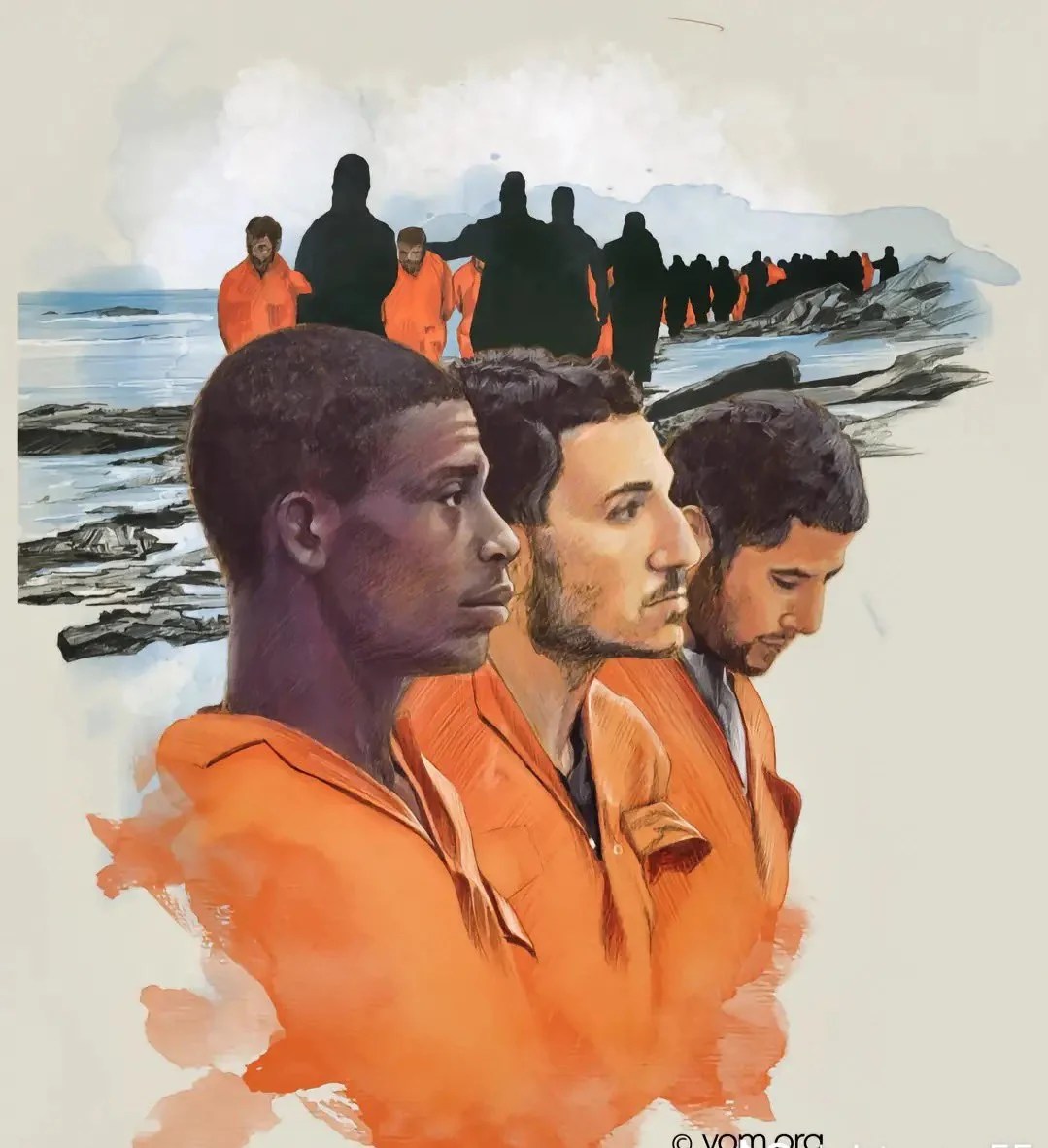
    Or in 2015, of the 21 Egyptian Orthodox Christians who were kidnapped and executed by Islamic State for refusing to renounce Jesus. They died audibly praising his name.

    Or of those I myself have baptised who have fled their homes and countries in the Middle East for the sake of choosing Jesus and are unable to return.

    I could tell you story after story of men and women who have lost enormous amounts in order to gain Christ and consider it a brilliant trade. Christianity takes their stories, often from within marginalised and ignored communities seriously.

    So what should we do about this?

    • Lean into Jesus and commit to him. The truth about Jesus is far better, more profound and more satisfying than we often remember. If you are a Christian, lean into your faith. Get to know it. It is very cool and deeply joyful.
    • Be humble, curious and prayerful with friends from other points of view. Evangelism is only morally good when we genuinely care about those we are going to; it is only effective when they understand and trust that we care about them.
    • As you listen, seek points of overlap to give away to share Jesus with them. Because you respect and love them, try to convert them. 

    Jesus is true for everyone. And that’s really good news.

    Do We Still Need Pastors and Priests?

    Faith, and the pastors and priests who embody it, not only remain relevant, in our current age they are essential.

    Do we still need pastors and priests? Or has our society progressed made such people and posts irrelevant or actively harmful. It’s a question I think about a lot both as a pastor/priest myself and as I watch many of my colleagues struggling with a crisis of calling or identity, scrabbling for relevance to other disciplines or professionals.

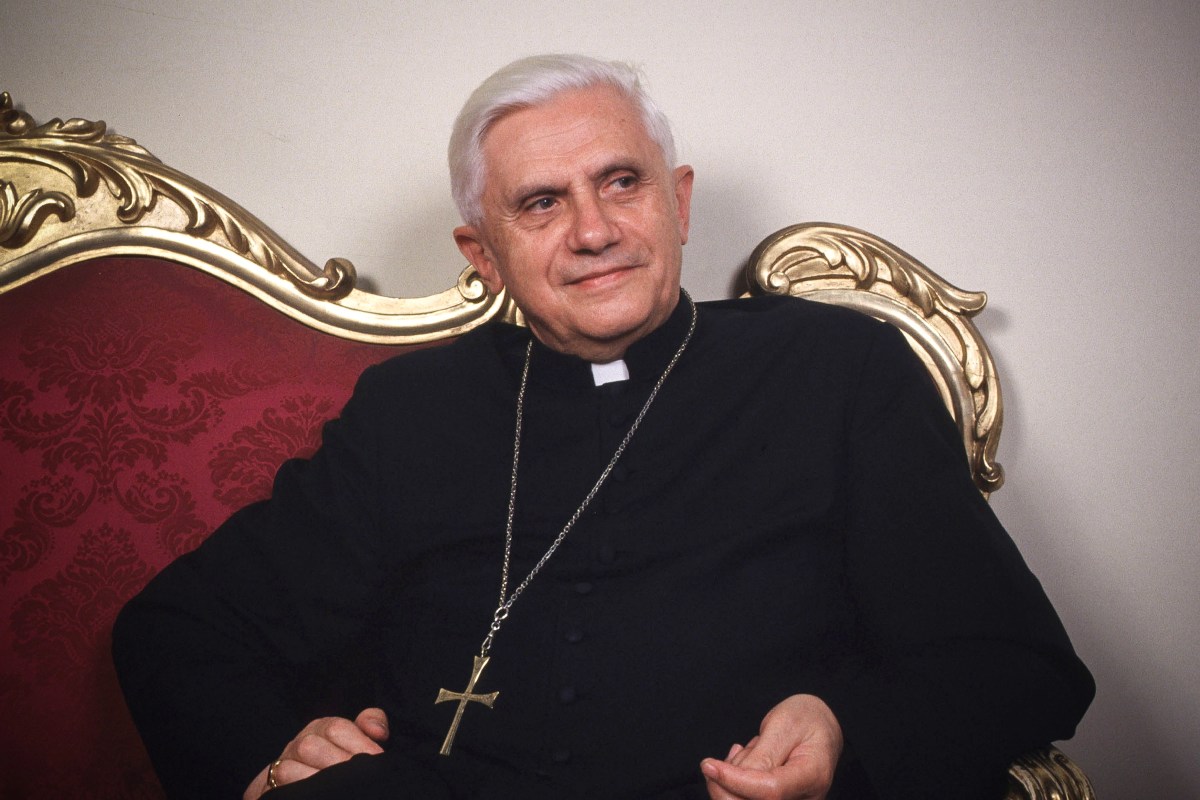
    To this question, Joseph Ratzinger gives a rallying cry: faith, and the pastors and priests who embody it, not only remain relevant, in our current age they are essential.

    The shadows are becoming longer, the loneliness— more profound, and the question of those who remain— more difficult: What sort of a future do they face? Does it still make sense to become a priest in a world in which only technological and social progress matters now? Does faith have a future? Is it worthwhile to stake one’s whole life on this card? Is priesthood not an outdated relic from the past that no one needs anymore, whereas all our efforts should be applied to eradicating poverty and furthering progress?

    But is all that really the case? Or is mankind, by running the machine of progress faster and faster, not at the same time rushing into suicidal insanity? The famous French aviator Antoine de Saint- Exupéry once wrote in a letter to a general: “There is only one problem in the world. How can we restore to man a spiritual significance, a spiritual discontent; let something descend upon them like the dew of a Gregorian chant. Don’t you see, we cannot live any longer on refrigerators, politics, balance sheets, and crossword puzzles. We just cannot.” And in his book The Little Prince, he says: How uncomprehending the world of adults, of clever people is. By now we understand only machines, geography, and politics. But the really important things, the light, the clouds, heaven and its stars, we no longer understand. And the great Russian author Solzhenitsyn records the cry of distress of a Communist who landed in Stalin’s prisons: We could use cathedrals in Russia again and men whose pure life makes these cathedrals alive and turns them into a space for the soul. Indeed, man does not live by refrigerators and balance sheets alone. The more he tries to do that, the more desperate he becomes, the emptier his life is. We need even today, and today more than ever, people who do not sell luxury items and do not make political propaganda but, rather, ask about the soul of a man and help him not to lose his soul in the tumult of everyday routine. The scarcer priests become in the world of business and politics, the more we need them.

    Joseph Ratzinger, Teaching and Learning the Love of God, p.207-8

    The Benefit of the Doubt

    Doubt is not always bad. If we handle it in the right way, doubt can spur us on to a richer, more satisfying and deeper faith.

    Doubt is not always bad. If we handle it in the right way, doubt can spur us on to a richer, more satisfying and deeper faith.

    Everyone experiences doubt at some point in their lives. This can affect our relationships with each other. Drawing on his own counselling ministry and research, the Christian writer and philosopher, Gary Habermas, observes in his excellent Dealing with Doubt that ‘Doubts concerning the ideas or persons most important to us might be called an almost universal fact of life.’ 

    This is true both for religious people and atheists, for matters of faith and any other area of life in which we have to deal with things of significance. 

    CS Lewis reflected on his own experience of periods of doubt as both an atheist and a Christian:

    ‘Now that I am a Christian I do have moods in which the whole thing looks very improbable; but when I was an atheist I had moods in which Christianity looked terribly probable.’

    Uncertainty is a part of human existence. That means that doubt is, too.

    Doubt is not always bad. As we will see, Jesus doesn’t condemn it in the disciples. Moreover, if we handle them in the right way, periods of doubt can spur us on to a richer, more satisfying and deeper faith.

    We should also note that doubt isn’t simple. We can be tempted to imagine that it is always an intellectual phenomenon. In reality, those involved in counselling people experiencing periods of doubt in different contexts have found that there are actually different types of doubt, each of which requires its own response.

    In this passage we see Jesus’ response to three types of doubt.

    1. Doubt in the emotions
    2. Doubt in the mind
    3. Doubt in the will

    Emotional Doubt

    In Luke 24:36 Jesus’s first words to his disciples when he appears to them after his resurrection are ‘peace to you’

    The first species of doubt is emotional. This is where doubt arises largely from our feelings rather than a particular intellectual problem. Habermas estimates that more than ⅔ of doubt he has come across in church is actually emotional.

    Doubt can often seem to be about ideas when actually it is about feelings. 

    This is a classic example. The disciples have been through a terrible trauma. They are utterly exhausted. They are also scared, probably angry, have been betrayed by their mate, and seen everything they believe in apparently crash around their ears.

    They are having a very bad week.

    In the midst of tiredness, hunger, and pain we can begin to doubt in a visceral way.

    Lewis expresses it in this way:

    Our faith in Christ waivers not so much when real arguments come against it as when it looks improbable–when the whole world takes on that desolate look which really tells us much more about the state of our passions and even our digestion than about reality.

    When we experience this type of doubt we need to be healed, not persuaded. That is why Jesus just says: ‘Peace be to you.’

    This healing has three parts:

    1. Physical:
      Get some sleep. Take some time off work if you are burnt out. Do something fun. Eat well.
      For example, I never take seriously anything I think after 10pm. It’s tiredness talking.
    2. Mental:
      If you are assailed by an idea you know to be false (like I’m too awful for God to love), identify the idea, name it, and challenge it with truth. Memorising Scripture is good for this.
    3. Spiritual:
      Learn to pray, particularly contemplative prayer. If you struggle to think of ways to pray, speak to me. 

    Intellectual Doubt

    Second, we can experience doubt in our minds. 

    This is what is going on in Luke 24:37-39. The disciples are struggling to believe that someone really could rise from the dead. They can’t get their heads around it. So Jesus offers them evidence to explore.

    Every thinking Christian at some point will have questions about the faith.

    They might be about the reliability of the gospels: how do we actually know that Jesus lived and died and rose from the dead?

    They might be about the existence of God: what arguments are there for believing that there is something more than the material world?

    They might be about specific questions such as the problem of evil or reconciling scientific discoveries with the content of Scripture and the faith.

    These questions are not new – they have been well canvassed by some of the most brilliant minds in the history of the world, from both science and philosophy. And many of those asking these questions end up as Christians.

    So how do we deal with this type of doubt:

    1. Maintain a strong devotional life.
      Staying in the Scriptures, and have a regular pattern of prayer feeds our minds and our souls.

    Lewis said:

    …make sure that, if you have once accepted Christianity, then some of its main doctrines shall be deliberately held before your mind for some time every day. That is why daily prayers and religious reading and church-going are necessary parts of the Christian life. We have to be continually reminded of what we believe. Neither this belief nor any other will automatically remain alive in the mind. It must be fed.

    1. Look for answers.
      Jesus offers his disciples evidence for his claims. There is really, really good evidence for Christianity.
      The questions we have are ones that brilliant minds have considered (not least Lewis himself). If you are really struggling with doubt in your minds about a particular question, look into it.
    2. Be patient.
      None of us is that smart and we need to be patient if we don’t get everything right away. Some things are really difficult. God is really big. We are really small.
      That doesn’t mean don’t apply your mind. It does mean having a healthy humility about your capacity to reason to the answer on every question in your own time.

    Doubt in the Will

    The third type of doubt flows from the will.

    This means that God is asking us to do something we don’t want to do. It is usually characterised by knowing the facts but not being willing to do the thing they seem to imply.

    This is suggested by what Jesus says in Luke 24:46-49

    By this stage the disciples know that Jesus is alive. The question is, are they going to go and tell anyone about him?

    Types of challenge that can cause this species of doubt can include ethical problems (I really want to sleep with my boyfriend even though I know I shouldn’t), to come to church (I know I should go but I want to stay home) or missional (I know God wants me to do something for him but I don’t want to).

    This type of challenge can lead to doubt. It isn’t a rational process: we rarely think ‘I don’t want to do [X]  so I don’t believe anymore’.

    Rather it manifests itself in raising up small, ‘picky’ issues that on any objective view aren’t really relevant to a life of faith or in refusing to accept, or even really consider, any answers or explanations that are given to apparent problems. The dispeace or uncertainty therefore continues and nothing can touch it.

    This happens because faith isn’t just a question of belief but of action. It implies a choice about what I will do – what Paul describes as the obedience of faith.

    How do we address this type of doubt? Jesus’ response to the disciples suggests two things:

    1.  We need to exercise our wills.
      Ultimately only we can choose to follow Christ. By God’s grace, every one of us has that agency. We are treated like grown-ups.
      It can be hard, painful and require the support of friends. But the choice is ours. 
    2. We need the Holy Spirit.
      Christ knows that the task is too difficult for them to do on their own. It is too difficult even to begin on their own. I think that is not only because they need the power to do it. It is because they need the courage to choose it.
      This implies prayer. When we are facing a hard choice, we need to be those who come to Jesus and ask for the Spirit’s power to choose well. Or even to desire to choose well. Don’t underestimate the power that is available to one who seeks it.

    Application

    I’ve offered ideas about how we respond in each of these areas as we have gone along. Nevertheless, I want to close by offering some general principles for dealing with doubt.

    • Keep together.
      Doubt, whether in our minds, emotions or wills is not something to be ashamed of or gone through alone. Talk to people.
      Obviously, be careful who you speak to if it is personal. But this is part of why God puts us in churches.
      For example, if you are wrestling with the problem of evil or the relationship between Creation, evolution and Scripture, come and talk to a pastor or theologian. You can even email me. I won’t judge you; the chances are I have thought about the same things. 
      If stuff is hard emotionally and you are starting to doubt your faith, talk to a friend or life group. You might find something as simple as a hug, or crying with them, makes a huge difference. Or it might take much longer.
      But use each other.
    • Keep praying.
      Above all else, keep Christ before you. If you are wondering if it’s worth it, I would ask: why not? What are you losing by continuing to pray and to come to church? And often it is through prayer and worship that we find ourselves united to Christ in a way that relativises all our doubts.
    • Keep humble and be patient.
      Always remember how small even the smartest and most together of us are compared to God, the universe and the things we are dealing with.
      There is such a big temptation to want to rush to conclusions or take immediate action in response to every thought. I cannot stress how important it is to resist that temptation.
      Be patient. With yourself, with God, with the answers. Stuff takes time to heal, to find, to understand and to accept.

    Doubt is not always bad. If we handle it in the right way, doubt can spur us on to a richer, more satisfying and deeper faith.

    How Does God Love the World?

    This is how God loved the world, he gave his only Son that whoever puts their trust in him shall not perish but have eternal life.

    Love is a big deal for Christians. It’s because of the centrality of love to Christianity that it appears so prominently in our culture. We all love to love.

    But as soon as we say this, it begs the question: how? How does God love the world? What does ‘love’ mean in that context? In culture, ‘love’ is often a synonym for sex. Yet at the same time grown men will say they ‘love’ their football teams.

    When Scripture talks about God loving the world it has something very powerful and particular in mind. It isn’t something that can adequately be summed up in words – it has to be shown rather than told.

    The best I can do is to say that love consists in choosing to give oneself completely for the good of another. Thus, in John 3:16 we read that, God loves the world by giving his only Son that whoever puts their trust in him shall not perish but have eternal life.

    That’s an idea that is quite easy to repeat. It is sufficiently well known that the wrestler, Stone Cold Steve Austin, used to parody the endless references to it on signs at Wrestlemania with his own version: Austin 3:16.

    The rest of this post is trying to explain what these verses actually mean and why they matter.

    I’m not going to quote John 3 here. But the rest of this post will make a lot more sense if you have read it.

    1. What’s Going On Here?

    Our scene opens at night. That is significant. It is dark. As you read John’s gospel you will notice that he often mentions light and darkness as symbols of a spiritual or mental awakening. For example, we are told in John 1 that Jesus is the light that shines in the darkness.

    So we are on the alert for someone who does not understand – who is, so to speak, “in the dark” and to whom Jesus is going to bring light.

    Into the scene comes Nicodemus. Nicodemus is a very senior leader and religious teacher in Israel. He is part of the council that runs Jewish religious life and is a brilliant man.

    I find this story so poignant.

    Here is someone who is faithful, who is clever, who has worked hard and achieved an enormous amount. But even with all of that he knows he needs Jesus. He has seen something in Christ that goes beyond all the power and all the prestige and all the wisdom he has acquired. And he knows he needs it.

    Whether you are the Teacher of Israel or a street Prostitute, eventually you have to come to Jesus and ask for help.

    I love Nicodemus. I love his humility. I love the way a supreme official in the religious hierarchy has come to sit down with a provincial street preacher in order to ask him about the Kingdom of God. He reminds me of the best of brilliant people.

    Nicodemus comes to Jesus and asks him about what Jesus is doing. He and his colleagues have seen Jesus at work and they get there is something going on here. But they don’t quite grasp its implications.

    Maybe that is how you feel about church or Christianity. There is something you have seen that you recognise as good. It might be a feeling you get in worship, a peace that comes when you pray or hike, or a deep hunger you can’t quite understand (like an itch you can’t reach) but which seems to be satisfied when you listen to the Bible. 

    If that resonates with you then you are the type of person Jesus is speaking to in this conversation.

    1. Why Jesus Came

    Jesus tries two ways of explaining this to Nicodemus. 

    First, he says, getting into God’s kingdom is like having a fresh start, almost going right back to the beginning, like you are born for a second time. But instead of this being a physical birth, it comes from two things: God’s Spirit moving on you and you being baptised; from Spirit and water.

    Nicodemus doesn’t get that metaphor. So Jesus reaches for something he is very familiar with – the Old Testament.

    There is a story of the people of Israel in the desert after God had set them free from Egypt and before they had entered the land they would call home. They were bitter and angry and complained about God, about being set free, about the food they had and the lives they lived. They began to reject God as provider and leader and look back towards the slavery of Egypt.

    And so God allowed an invasion of snakes to come into their camp. They were biting the people and causing pain, even death. The people were sick. 

    God provided a way out for them. He commanded Moses to make a bronze snake and put it on a pole. Moses lifted it in the air. Whoever looked up to the bronze snake was healed from the effect of the snake bites.  It was as if the bronze snake had taken all the effects of the snake bites into itself and the people could be healed.

    This is what the kingdom of God is like, Jesus says. In fact this incident was put there in the Old Testament so people like Nicodemus could recognise this moment when it came and know what they should do about it. 

    Human beings are sick and they are dying. They are dying from the inside out – spiritually killed by the decision to reject God and to turn inward to selfishness and pride. This is what we call sin – the human propensity to mess things up, particularly our relationship with God and each other.

    And so Jesus has come, and would be lifted up on a cross and die, punished as a sinner, taking all the world’s sin on himself and offering healing to everyone who would look to him.

    Notice three things about this description:

    1. The people aren’t condemned by Jesus.
      They are sick already. It is their choices, our choices, which kill us. That is why Jesus didn’t come into the world to condemn the world but to save it. The world is already dying. Naturally we are already dying, mortally wounded by a thousand rebellions, petty hurts, treasured prides and self-centredness. 
    2. It is God who takes the first step to redeem us.
      Jesus came to us, we didn’t go to him. The point about the bronze snake is that God (through Moses) gave it to the people so that they could be healed. This is what we call grace – the free gift of healing and forgiveness and a future. It isn’t earned, like exchanging a day’s labour for a fair wage. It is given, like receiving medicine.
    3. It has to be accepted and trusted.
      The gift has to be received. It has to be trusted. The people had to look up, away from themselves, away from the snakes, away from their staffs and solutions, and trust the provision God made.
      This is what we call faith. To paraphrase St Thomas Aquinas, it is the response of trust to the testimony of someone we believe. The way Jesus (and the Church after him) teaches we should exercise this trust is by turning away from ourselves and being baptised; be born of Spirit and water.
    1. Why Do We Choose (or Not Choose) the Light?

    The conversation finishes with John (or possibly Jesus – the Greek is unclear) explaining how people react to this. 

    We can react in one of three ways.

    1. We can hold on to our sin because of shame (misunderstanding what the light is there to do – he came to save, not condemn).
    2. We can refuse the light because we actually prefer our sin. This gets worse the more we choose darkness. When we refuse the light, it gets harder to choose it next time. 
    3. We can choose to say yes to the light and find it brings healing. This has the opposite effect- we find the light is pleasant and good and so the more we choose it, the easier and more desirable it is to choose it again.

    Application

    What does this mean for us?

    • The first response is for those who haven’t yet trusted themselves to Jesus. Maybe you’re one of those, like Nicodemus, who senses there is something good, vital, even divine about what Jesus says and does. God’s word to you is that he loves you and came for you.
      But you need to know that the yearning you feel is a symptom. It’s like a hungry body’s craving for food, a thirsty man’s need for water. Your soul is sick and it craves the cure.
      Put your trust in Jesus, be baptised, and you will receive a new start and a new life.
    • What about showing hope to others? Here we need to remember that Jesus came to a world that hadn’t asked for him but needed him. He came in love, to bring help and healing to people who had rejected him.
      Ask God to show you who needs your help. And then give it. That is the way of God.
    • Finally, what about sharing hope? Learn from the way Jesus deals with Nicodemus. He listens to him, knows him, and talks to him in a way he can understand. The first step to sharing Jesus effectively with others is to listen to them.

    How Can We Follow a Good God in a World of Pain?

    Precisely because Auschwitz exists, we need faith, we need the presence of the Resurrection and of the victory of love; only the Resurrection can make the star of hope rise that allows us to live.

    This is a question everyone wrestles with at some time or another. Here’s what Joseph Ratzinger, whose family were persecuted by the Nazis, addressed the subject in a talk to those about to be ordained to the priesthood:

    The answer to an oft-asked question became clear to me as well. How often has it been said: Can anyone still believe in a good God after Auschwitz? I understood: Precisely because Auschwitz exists, we need faith, we need the presence of the Resurrection and of the victory of love; only the Resurrection can make the star of hope rise that allows us to live.
    Making the Resurrection present—my dear young friends—this in fact describes completely the essence of what being a priest means. It means, most profoundly, being able to bring about this reality on the killing field of this world, in which death and its powers reap a continual harvest; it means bringing about the presence of the Resurrection and, thus, giving the answer of life that is stronger than death.
    1

    In turn, this changes the way that we see evil. We mourn and fight it but regard it ultimately as a defeated and vanquished foe. Thus, as Ratzinger returned to Auschwitz-Birkenau and celebrated the Eucharist, he found his perspective changed:

    Making the Resurrection present… It was an exciting thought and an exciting experience, over this vast harvest field of death, on this killing field on which over a million people met their death, to live to see the presence of the Resurrection as the only true and only sufficient answer to it. It was exciting to experience how this memorial to hatred and inhumanity became a place of the triumph of the love of Jesus Christ and of love.2

    1. Ratzinger, Teaching and Learning the Love of God, p.95. ↩︎
    2. Ratzinger, Teaching and Learning the Love of God, p.94. ↩︎

    How Can We Understand the Bible?

    For many people, reading the Bible can be hard. This is a quick guide to how we can understand it’s deep meaning and know God better.

    For many people, reading the Bible can be hard. There are bits that seem easy to follow (like when Jesus teaches people), that seem irrelevant (tell me again about eating shellfish in the desert), that are obviously picture language or poetry (the trees in the fields don’t literally clap their hands), and that just seem weird (all of Revelation). 

    Then there is the way Biblical authors use other bits of the Bible. For example, John the Baptist looks at Jesus and describes him as “the lamb of God, that takes away the sins of the world” (John 1:29), St Paul writes about the stories of Israel finding water in a rock only to say “the Rock was Christ” (1 Corinthians 10:4). It is perfectly reasonable to ask: what on earth is going on?

    The church has always believed that the Bible is a book that operates on a number of levels. I recently came across this summary of how this works in the Catechism of the Catholic Church (paragraphs 109-118). It really helped me to categorise the different ways we engage with Scripture. I’ve reproduced it below (with some of my explanation at the end of each section) in case it helps you too.

    First, read what the authors meant:

    109 In Sacred Scripture, God speaks to man in a human way. To interpret Scripture correctly, the reader must be attentive to what the human authors truly wanted to affirm, and to what God wanted to reveal to us by their words.

    110 In order to discover the sacred authors’ intention, the reader must take into account the conditions of their time and culture, the literary genres in use at that time, and the modes of feeling, speaking and narrating then current. “For the fact is that truth is differently presented and expressed in the various types of historical writing, in prophetical and poetical texts, and in other forms of literary expression.”

    This means that we can’t always simply read the text literalistically. Instead we need to work out what the original author meant and how his readers would have understood his words.

    We do this all the time in English. If I said “it’s raining cats-and-dogs outside”, you get an umbrella. You don’t call the RSPCA. You know that in English that is an idiom or metaphor, not literal. And it would be completely inappropriate to treat it like it was.

    Sometimes it’s appropriate to read the Bible like a history book (for example when dealing with the Gospels or biographies). Sometimes it’s obviously not (for example when dealing with the poetry in the Psalms). Sometimes it’s complicated because the Bible uses types of books that we aren’t familiar with (like collections of Proverbs or Paleo-History).

    Things that can help with this are Pastors and good Bible commentaries.

    Second, read Scripture as a whole, assuming that it is coherent and bearing in mind that Jesus is the point of it all:

    112 Be especially attentive “to the content and unity of the whole Scripture”. Different as the books which compose it may be, Scripture is a unity by reason of the unity of God’s plan, of which Christ Jesus is the center and heart, open since his Passover.

    The phrase “heart of Christ” can refer to Sacred Scripture, which makes known his heart, closed before the Passion, as the Scripture was obscure. But the Scripture has been opened since the Passion; since those who from then on have understood it, consider and discern in what way the prophecies must be interpreted.

    This means that as Christians we believe that the Bible has lots of human authors (all writing in their own personalities and using their own styles) but one divine mind behind it. To put it another way, Scripture is loads of books but together they tell one story. And that story is ultimately about Jesus.

    This means when you take two texts that seem hard to reconcile or contradict one another, they can almost certainly be read as complementing each other or as talking about different things. If you find something that troubles you in this way talk to a Pastor (or read a good commentary).

    Third, read with the Church:

    113 2. Read the Scripture within “the living Tradition of the whole Church”. According to a saying of the Fathers, Sacred Scripture is written principally in the Church’s heart rather than in documents and records, for the Church carries in her Tradition the living memorial of God’s Word, and it is the Holy Spirit who gives her the spiritual interpretation of the Scripture (“. . . according to the spiritual meaning which the Spirit grants to the Church”).

    114 3. Be attentive to the analogy of faith. By “analogy of faith” we mean the coherence of the truths of faith among themselves and within the whole plan of Revelation.

    The Bible is a book that is meant to be read in community. Jesus promises that as we live together as the Church, we are guided by his Spirit and learn how to read the Bible correctly (eg John 15:26). This goes for the Church in the world now but also throughout time. We want to hear how the Spirit has directed us to read Scripture, and that means reading it in the community of the Church. It also means that sometimes we have to have the humility to accept that we may have misunderstood something from Scripture and to be corrected.

    Four, pay attention to the different senses of Scripture:

    115 According to an ancient tradition, one can distinguish between two senses of Scripture: the literal and the spiritual, the latter being subdivided into the allegorical, moral and anagogical senses. the profound concordance of the four senses guarantees all its richness to the living reading of Scripture in the Church.

    116 The literal sense is the meaning conveyed by the words of Scripture and discovered by exegesis, following the rules of sound interpretation: “All other senses of Sacred Scripture are based on the literal.”83

    117 The spiritual sense. Thanks to the unity of God’s plan, not only the text of Scripture but also the realities and events about which it speaks can be signs.
    1. the allegorical sense. We can acquire a more profound understanding of events by recognizing their significance in Christ; thus the crossing of the Red Sea is a sign or type of Christ’s victory and also of Christian Baptism.
    2. the moral sense. the events reported in Scripture ought to lead us to act justly. As St. Paul says, they were written “for our instruction”.
    3. the anagogical sense (Greek: anagoge, “leading”). We can view realities and events in terms of their eternal significance, leading us toward our true homeland: thus the Church on earth is a sign of the heavenly Jerusalem.

    118 A medieval couplet summarizes the significance of the four senses:

    The Letter speaks of deeds; Allegory to faith;
    The Moral how to act; Anagogy our destiny.

    This is the hardest bit for us to grasp but it makes sense of how the apostles and other Biblical writers used Scripture and unlocks a lot of what God is wanting to tell us through it.

    Put simply, there are four ways that we can interpret different bits of the Bible. They aren’t contradictory – they are like levels of meaning (kind of like a Russian doll). They are:

    1. The “Letter” or “Literal” sense.
      This doesn’t mean taking everything literally. It means asking what a passage would have meant to the original readers. This is what we talked about above. It means reading bits of the Bible according to the type of book they are (poetry, history etc). It is the basic question: what is the writer trying to say here. For a lot of modern Bible scholars, this is as far as they go (which is a shame and means we miss a lot of meaning that the ancient church understood).
    2. The “allegorical” sense.
      This means way that the bits of the Bible we are reading teach us lessons about Jesus even when he doesn’t explicitly appear. This is what John the Baptist is doing when he describes Jesus as the “Lamb of God” or what St Paul is doing when he describes a Rock from the Old Testament as being about Jesus. It realises that when God inspired the Bible he was always pointing us to Jesus, even when the original authors didn’t realise it. So, for example, the story of the creation of Adam and Eve is designed to teach us about Jesus and the church (see Ephesians 5:31-32). Another word for this is Typology.
    3. The Moral sense.
      This is obvious. Bits of the Bible are designed to teach us how to behave. When it says “don’t steal”, you don’t need to reach for a commentary (particularly if the commentary isn’t yours). Other narratives can also teach moral lessons. So, for example, the story of Cain and Abel can teach valuable moral lessons about the danger of anger, jealousy and the destructive consequences of violence.
    4. The “anagogical” or “mystical” sense.
      Stories we find in Scripture can ultimately teach us something important about our eternal destiny in Jesus. So, for example, the story of God bringing Israel out of slavery in Egypt, through a time of trials and testing in the desert, over a river (literally through something that kills people) and into a promised land is a picture of the way God rescues souls, leads them through life and brings them through death to heaven.

    You don’t need to be an expert at spotting all these levels of meaning in Scripture right away. One of the good things about being part of a Church is that many men and women have spent their lives meditating on Scripture and explaining to us what they saw so that we can see it too. It’s also part of why God gives the church teachers – so that we can grow in understanding him and his word to us.