The Wisdom of Hating Sin

It is much harder to warm a cold heart than to cool an overheated one, as it is much harder to light a fire once it has gone out than to change the direction of the air heated by the fire by adjusting the air vents. It is harder to make a saint out of an ice cube than out of a firebrand, just as it is harder to start up a car that is stuck than to change its direction once it is moving.

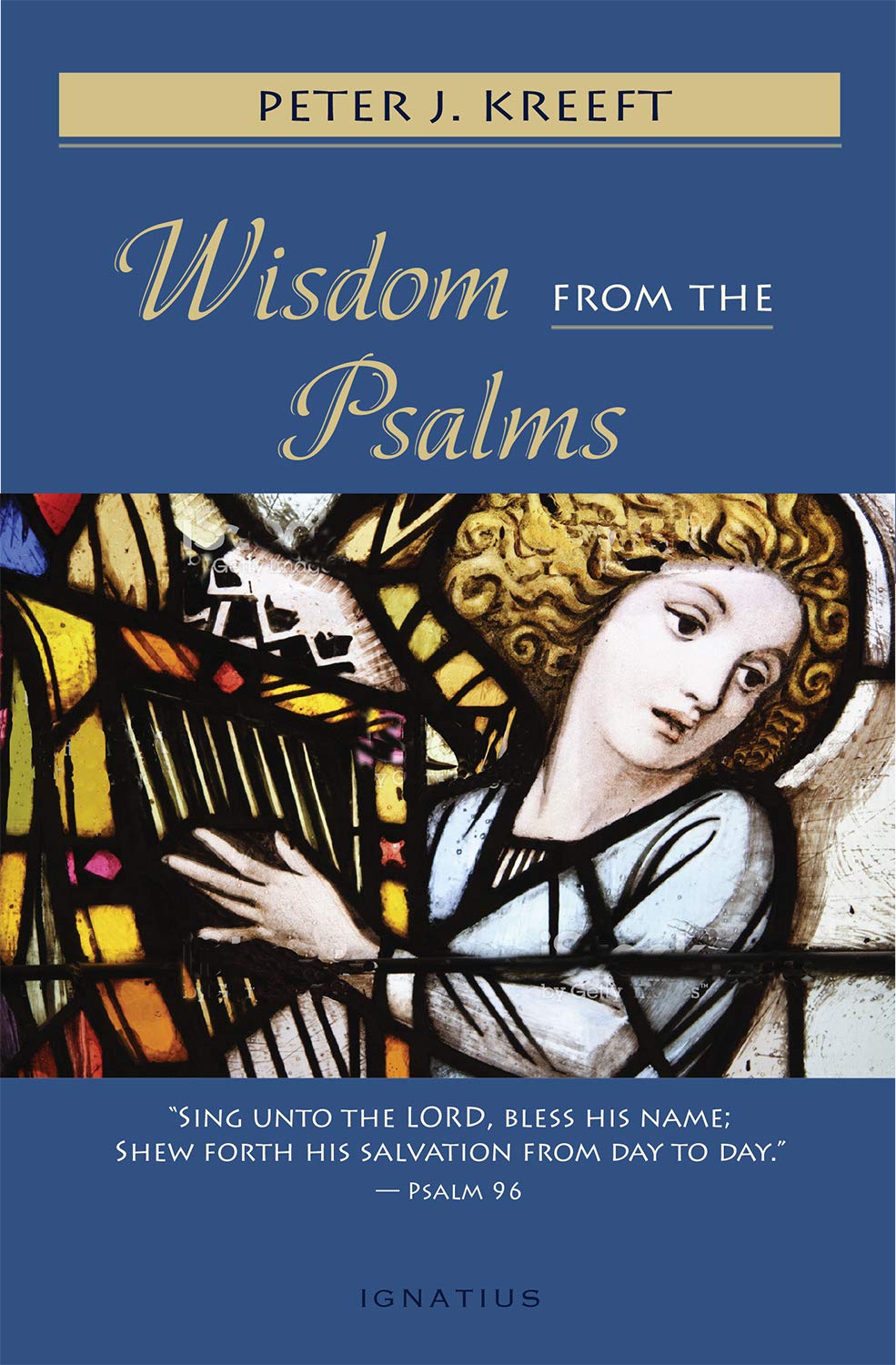
One of the most interesting and helpful authors I’ve read this year is Peter Kreeft, the Charismatic Catholic Philosopher. He’s written a wonderful book on the Psalms which, even though I haven’t agreed with every word, has consistently provoked questions, worship and delight on almost every page.

Here is Kreeft on the challenge to late Western indifference and relativism presented in the very first verse of Psalm 1:

We must clearly distinguish sins from sinners, for we are commanded to hate sins and not sinners, and to love sinners (our “neighbours”, all of whom are sinners like ourselves) and not to love sins. But we are impressed more by concretizations than abstractions; that is why examples impress us more than principles, why saints are more powerful teachers than scholars, why stories impress us more than sermons, and why great teachers always use parables. The danger is that we become so fixated on the concrete example (the person) that we take the attitude toward him that is appropriate to the principle—that is, we hate the sinner because we confuse him with the sin. This is a mistake that is natural and common to children and primitives, and it is correctable by a later sophistication and maturity of mind, when the mind becomes abstract enough to distinguish the sinner from the sin. 

The opposite mistake is much harder to correct. That is the mistake of failing to begin here, with passionate and concretely real hatred of sin, as embodied in sinners. It is much easier to correct an intellectual mistake (confusing the abstract with the concrete) than to correct a mistake of the heart, and it is a mistake of the heart not to love or hate anything passionately but to be bland and indifferent, “lukewarm” (see Rev 3:16). It is much harder to warm a cold heart than to cool an overheated one, as it is much harder to light a fire once it has gone out than to change the direction of the air heated by the fire by adjusting the air vents. It is harder to make a saint out of an ice cube than out of a firebrand, just as it is harder to start up a car that is stuck than to change its direction once it is moving…

We are all sinners, of course. But “the scornful” do not admit it or do anything about it, and they scorn and pity and sneer at those of us who do. The damned do not go to Hell because they sin but because they scorn and sneer at the idea of sin and repentance. They are scornful to those of us who hate the sins that they love. The difference between the damned and the blessed is not that one class sins and the other does not, but that one class scorns and the other repents, that the one class is happy with their sins and the other is unhappy with them.

(Peter Kreeft, Wisdom from the Psalms, p.21-24)

You can get a copy of the book here. I can’t recommend it highly enough.

3 Reasons to Pray (and Read) the Psalms

The Psalms are an amazing resource filled with imagery that captivates and captures the imagination of artists and saints from Bach to Coolio. They reveal God, teach us to pray, and offer practical wisdom for life.

We’ve just started a new sermon series looking at the Psalms. It’s a powerful book filled with imagery that captivates and captures the imagination of artists and saints from Bach to Coolio. But it can also be confusing and, in places, disconcerting.

There are, however, lots of good reasons to persevere with praying (and just reading the Psalms).

1 They Reveal God to Us

The Psalms teach us about God and, in particular, about Jesus. They contain a wealth of doctrine about creation, redemption, purpose and the God behind it all. In particular they point us to the problem of sin – humanity’s brokenness in its relationship to God and to sin. And then they point past the problem to Christ as its future solution.

The Orthodox Study Bible puts it this way:

The Psalms have become for the Church, as for ancient Israel, a book of prayer and praise. All find their fulfillment in Christ, the Son of God.

2 They Teach Us to Pray

Fundamentally the Psalms are a book of prayers and hymns. They are, therefore, a wonderful resource for learning how to pray well. If you want to be a good pray-er then begin by praying the Psalms. That is, after all, what Jesus did: when things were hard (crucifixion hard), and almost everyone had left him, he prayed the words of the Psalms.

The Orthodox Study Bible continues:

Not only do the Psalms predict specific events of Christ’s life, but in them He Himself intercedes for and with His people before the Father. The Psalms can also be seen as a dialogue between the Church, the body of Christ, and Christ her Head. Therefore, they make the most sense to us when they are prayed or sung, not simply read.

Or in the words of the evangelical, Expositor’s Study Bible:

Prayer is a person’s communion with God. Prayers in the Psalter sometimes take the form of complaints against the Lord. The individual or community laments the adversity, describes the evil in God’s world, or petitions God to be true to his promises. Faith cries out for reality, and lament functions as an expression of authenticity…

Praise is a person’s longing for God and for others to be moved with the same desire for God…Israel praised the perfections of the Lord, his kingship, his revelation, and his covenant. But they longed for the fullness of redemption, especially when distressed.

3 They Offer Wisdom for Life

The Psalms contain real practical wisdom for how we should live. Right from Psalm 1, we are given advice about how to prosper – to flourish, be blessed or live well. Fundamentally this is rooted on a spiritual posture of humility, submission and adoration towards God, our Creator. That is the key to everything else.

This attitude of obedience flows out in myriad ways, including things as practically helpful as the benefits and blessings of financial generosity (Psalm 112:5) or about the possibility and grace of forgiveness irrespective of what we’ve done.

Read the Psalms; pray the Psalms; obey the Psalms. Simple.

To dive deeper, watch this amazing video from the guys at The Bible Project.