
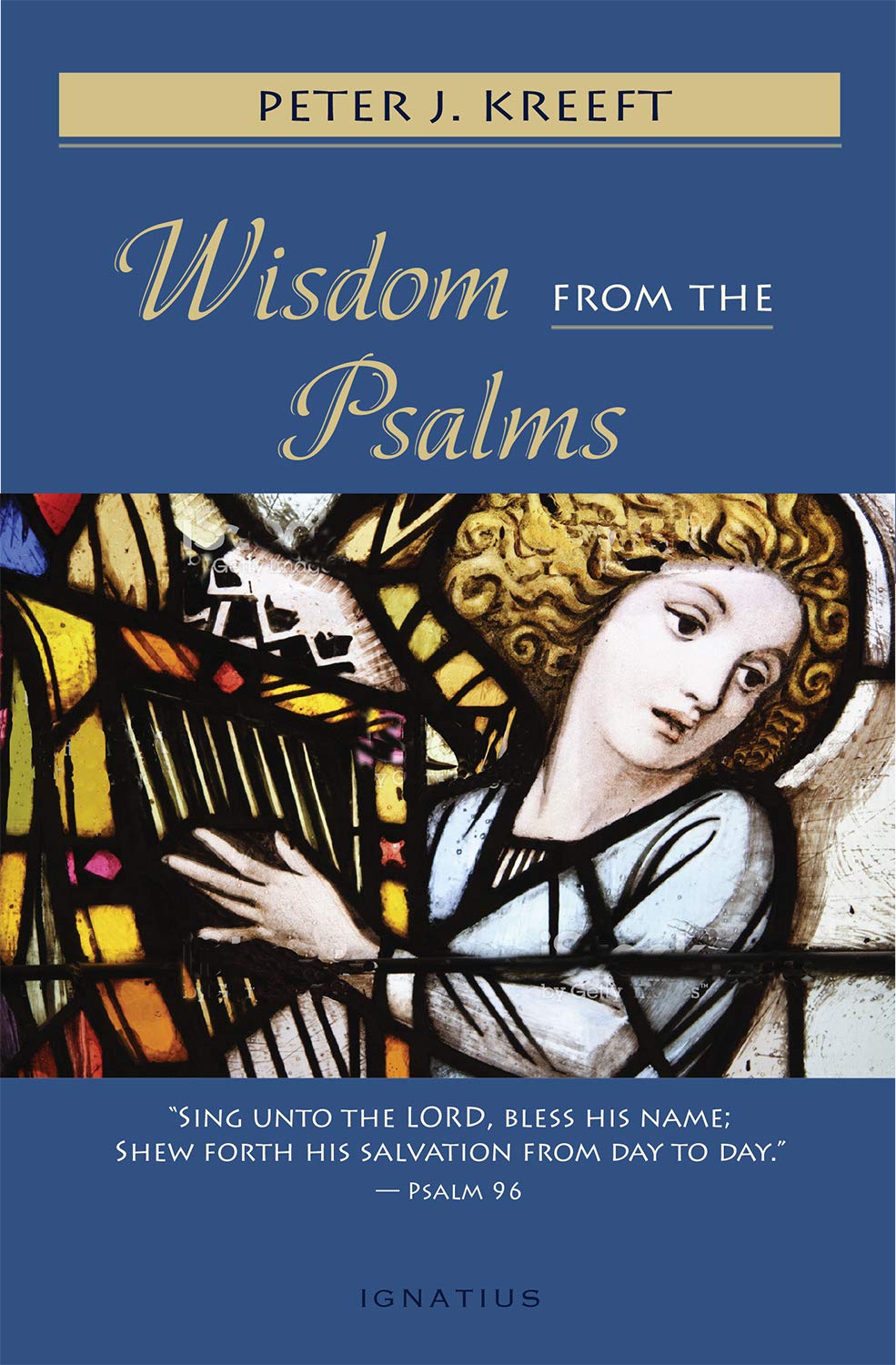
One of the most interesting and helpful authors I’ve read this year is Peter Kreeft, the Charismatic Catholic Philosopher. He’s written a wonderful book on the Psalms which, even though I haven’t agreed with every word, has consistently provoked questions, worship and delight on almost every page.
Here is Kreeft on the challenge to late Western indifference and relativism presented in the very first verse of Psalm 1:
We must clearly distinguish sins from sinners, for we are commanded to hate sins and not sinners, and to love sinners (our “neighbours”, all of whom are sinners like ourselves) and not to love sins. But we are impressed more by concretizations than abstractions; that is why examples impress us more than principles, why saints are more powerful teachers than scholars, why stories impress us more than sermons, and why great teachers always use parables. The danger is that we become so fixated on the concrete example (the person) that we take the attitude toward him that is appropriate to the principle—that is, we hate the sinner because we confuse him with the sin. This is a mistake that is natural and common to children and primitives, and it is correctable by a later sophistication and maturity of mind, when the mind becomes abstract enough to distinguish the sinner from the sin.
The opposite mistake is much harder to correct. That is the mistake of failing to begin here, with passionate and concretely real hatred of sin, as embodied in sinners. It is much easier to correct an intellectual mistake (confusing the abstract with the concrete) than to correct a mistake of the heart, and it is a mistake of the heart not to love or hate anything passionately but to be bland and indifferent, “lukewarm” (see Rev 3:16). It is much harder to warm a cold heart than to cool an overheated one, as it is much harder to light a fire once it has gone out than to change the direction of the air heated by the fire by adjusting the air vents. It is harder to make a saint out of an ice cube than out of a firebrand, just as it is harder to start up a car that is stuck than to change its direction once it is moving…
We are all sinners, of course. But “the scornful” do not admit it or do anything about it, and they scorn and pity and sneer at those of us who do. The damned do not go to Hell because they sin but because they scorn and sneer at the idea of sin and repentance. They are scornful to those of us who hate the sins that they love. The difference between the damned and the blessed is not that one class sins and the other does not, but that one class scorns and the other repents, that the one class is happy with their sins and the other is unhappy with them.
(Peter Kreeft, Wisdom from the Psalms, p.21-24)
You can get a copy of the book here. I can’t recommend it highly enough.
 Deep Church