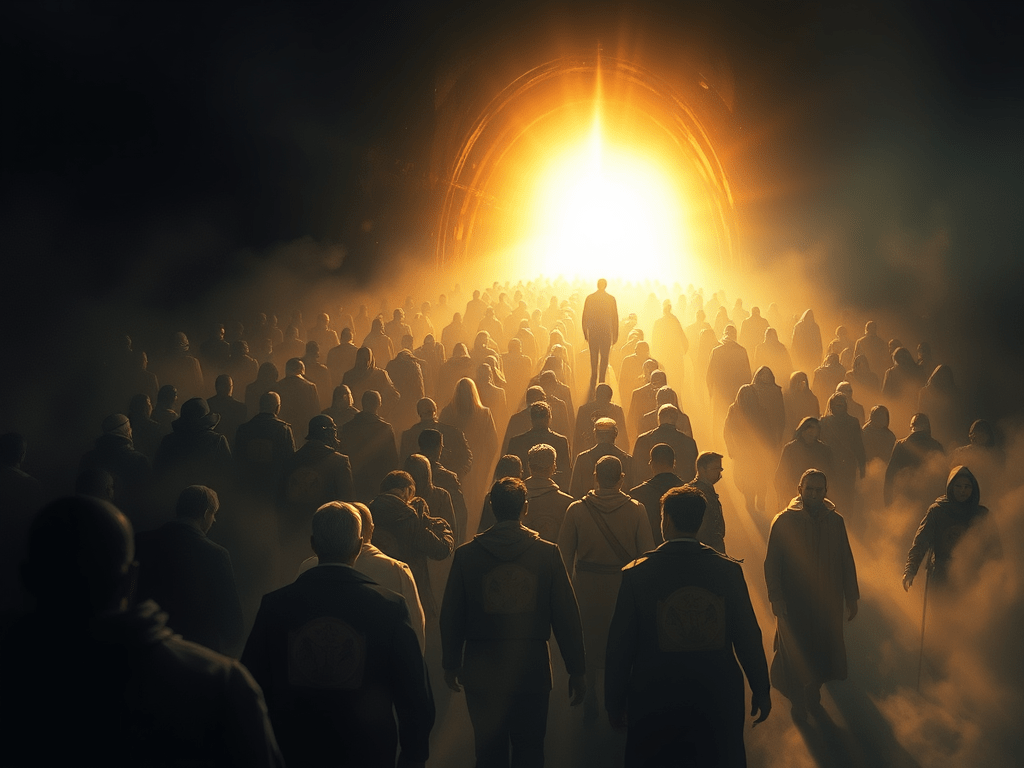
Having Hope in an Age of Darkness

In a season of darkness we can keep on choosing life. We can be committed to embracing new life in babies, to making our homes, families, workplaces, friendships as open to life and grace as we can. We can embrace the stranger, care for our elderly, show love and compassion to our enemies. We can resolve never to give in to nihilism or self-centredness and instead keep living for the sake of God and of others. This will not be easy. But it is possible because God keeps his promises.

Do not be afraid! God keeps his promises.

I wrote these reflections on how to live free from fear and anxiety, how to be a people of hope, before last week’s decision concerning assisted suicide.1 In light of that vote, however, these ideas are particularly important. 

One of the famous texts that is read at 9 Lessons and Carols most years is Jeremiah 33:14-16. It is all about hope and fear.

Jeremiah begins his message to Israel with reassurance about God’s faithfulness:

The days are coming,’ declares the LORD, ‘when I will fulfil the good promise I made to the people of Israel and Judah.

It is worth sitting with this for a moment. God makes promises to us. He is a promise making God.

Incidentally, God doesn’t have to be like this. He could be arbitrary – doing whatever he wants whenever he wants it. That kind of God is a tyrant, untrustworthy and unreliable. We intuitively know God isn’t like this. It is written into the very fabric of the universe which, completely unnecessarily, is governed by laws. In that it reflects the character and mind of its Creator.

One of the earliest things we read God say in Scripture is a promise. We can read about this in Genesis 3:14-15.

Through Eve and then Adam sin had entered the world. She had received a message from an angelic messenger – pictured here as a serpent – who tempted her with a promise of power. If only she defied God, humanity would take God’s place. And so she had taken the fruit and ate. It was an act of defiance, of rejection, and it brought a poison into humanity that would eat up and kill generation after generation. They would be cut off from the presence of God and his light. This is always the path when we choose darkness. Man and woman are promised that they will become like God; instead they become less than human. The rejection of light and life is the embrace of darkness and death.

But at the outset of this creeping darkness God spoke a promise of light. One day there would arise a woman who would have a Son and that Son would crush the serpent. He would provide a Redeemer to deliver humanity from the curse it had brought upon itself. These promises are repeated in different forms throughout the Scriptures to Israel and then to her kings and prophets. King David is promised a son who would reign not as one who dies but who lives forever.

We can read these promises, and receive them for ourselves. Perhaps you feel you have had promises from God – that you would flourish, that your friend or family member would come to know Jesus, that he would never forsake you. But at times it feels as if the promise is failing. We wait and wait but still the darkness advances and we come to fear the future, to fear the power of the Serpent, to fear that God has failed.

That was the position of ancient Israel when Jeremiah spoke. The promise to King David seemed in ruins. The kingdom he built had divided, his sons had failed morally, politically, militarily. And his people were going into exile. On and on the darkness marched as the Serpent’s voice seemed the only one that sounded.

It was precisely at this time that Jeremiah reaffirms the promise. He calls his people to hope.

God speaks in the midst of the darkness and what he says is “Fear Not!” “Do not be afraid”. The God of Israel, of the Cosmos, of your heart, is the God who lives and reigns even when darkness abounds.

The hope of Israel may seem to have fallen and been crushed but God is going to make it spring up, sprout from the broken stump of David’s line. Can you feel the imagery? David’s tree has been axed down, felled and broken. But in this moment of death God is going to bring resurrection. 

And so we come to Luke 1 and the story of the annunciation. The familiarity of the verses can blind our eyes to the reality of what is happening.

Here is the second woman, filled with grace (v.28). Your copy will read “highly favoured”, literally, saturated with God’s gifts. She is one who has been prepared and sanctified by God for this moment. While Eve’s sin had separated humanity from God and now to Mary comes the word: “God is with you”. Eve had brought the Serpent to power; through Mary will come the One to crush that Serpent’s head. And where Eve had defied God’s design for her grasping power and equality with God, Mary would reply “I am the Lord’s servant…May your word to me be fulfilled.” To the woman comes an angelic message. The promise is to be fulfilled. David will have his king to sit on the throne.

Suddenly, when hope seemed lost, when Israel was dominated by tyrants, humiliated and oppressed, when the promises of God were a long-held but distant memory, God acted.  He had been working through all the ages even when we could not see it.

He was working in Cain and Abel, in the flood of Noah, in Abraham and Joseph, in David and Solomon, in Ruth and Moab, in Esther in Exile, through Isaiah and Jeremiah and Micah and the Macabees. It was hard to see, darkness seemed to reign, death seemed ever more present. Fear was a natural response. And yet God was working.

And so he brought a new Eve, ready to bear the fulfilment of every promise – the eternal yes, the final word: Fear Not!

Even as Christ battled demons, diseases and demagogues, darkness and death seemed to triumph. But a voice would echo from the despair of Calvary: Fear Not! And Christ would rise triumphant from the grave.

My friends and fellow-sinners. I don’t know what promises you have received from God this year or through your life. Some of us are in that moment of rejoicing, standing with St Mary and acclaiming with joy: How can this be? What a God who fulfils his promises!

Some of us are in exile with Jeremiah, looking at a life which seems marked with pain where the presence of evil is all too obvious. The temptation is to despair, to succumb to fear of the present of the future.  If that is you, you are in good company. But my message to you this morning is the same as Jeremiah’s: Fear Not! 

The God of Israel, the God of Eve and Mary, the God of Jesus Christ has not forsaken you or forgotten you. It is precisely from the place of death that we encounter resurrection power.

The world can seem increasingly dark. There are wars and rumours of wars. The gospel retreats in the West even as it advances in the East and in Africa. At times it feels as if the Serpent is winning and the kingdom of death and darkness are at hand. But even now, especially now, God is at work. He has not forsaken us. He will not forsake us. Fear Not!

There will be a day when you will stand in glory with Mary and acclaim the glorious faithfulness of her Son. When you will stand with Jeremiah and say: I saw the fulfilment of the promises. When the hand that flung the stars and surrendered to nails will wipe the tears from your eyes and speak over you words of love and grace. Fear Not!

If your life is hard, then take heart. God hasn’t forsaken you. Lean into him. Find a good prayer app or practice that you can hold onto even when life is hard. You can try the Bible in One Year, Lectio 365, or Hallow.

Often the answer to our prayers, the fulfilment of God’s promises in our lives, requires our consent, our courage. Mary is our mother in this: we need to resist the temptation to become hardened or so sad that we are unable to say ‘yes’ when the promises begin to be fulfilled.

Finally, we need the courage to live as men and women of hope and life in the midst of a culture that embraces despair and death.

Our culture is becoming increasingly dark. This is likely to continue. Once one has accepted the logic that unborn life can be terminated for reasons of convenience or, to be blunt, finance, the logic of terminating other inconvenient life becomes irresistible. And so it has proved. This is a deeply dangerous trajectory for a society to be on and it can cause us to feel lost and afraid.

The alternative is to have the courage to keep on choosing Christ, to keep on choosing life. We can be committed to embracing new life in babies, to making our homes, families, workplaces, friendships as open to life and grace as we can. We can embrace the stranger, care for our elderly, show love and compassion to our enemies. We can resolve never to give in to nihilism or self-centredness and instead keep living for the sake of God and of others. This will not be easy. But it is possible because God keeps his promises.

    1. I refuse to use the euphemism ‘assisted dying’: words matter and we should not hide from the reality that what was approved last week is physicians giving poisons to patients so that they can kill themselves ↩︎
    Hope for the Next Year

    This year why not be someone who knows hope, shows hope and shares hope?

    Hope is powerful. Without hope people wither and die.

    One of the most frequent pictures that Scripture uses to describe the dynamic of hope we have in Jesus is light and darkness.

    “God”, St John says, “is light, and in him is no darkness at all.”1 He is light. That picture of light is brilliantly simple and yet rich and deep.

    It is in the nature of light that it goes out and includes others. Light radiates from a source and moves towards the other, enfolding and embracing it. It does not diminish that which it touches but rather allows it to be seen fully as it is, to become fully itself. It warms and energises.

    For this reason light is associated in the Bible with life and with love. To say that God is light is the flip-side of saying he is love: one who looks to the other, and brings them life, enabling them to be more fully themselves and more glorious than they could have been without him.

    But we can go further. For God to be light also implies that he is truth and freedom. Light illuminates – that is its essence. It makes known the truth about that which it touches.That in turn brings freedom for to choose freely we must first know the truth. And so we return to love. For what is love but the other, known and freely chosen?

    God is light. He is beauty and truth and freedom and above all love.
    Pause for a moment. This is an extraordinary claim. At the centre of existence is not the cold indifference of a mechanical universe blindly progressing from darkness to darkness. It is a person whose very being is light.

    Moreover, this light is not merely the source of existence but its end. In the beautiful picture of the destiny of all who love Jesus, John describes a city that “has no need of sun or moon to shine on it, for the glory of God gives it light, and its lamp is the Lamb. By its light will the nations walk, and the kings of the earth will bring their glory into it, and its gates will never be shut by day—and there will be no night there.”2

    But if the centre of existence is light, why does the world experience such darkness?

    The possibility of darkness is the necessary implication of the ability to choose the light of freedom and love. God is perfect freedom and perfect love. To be able to choose both freedom and love is to accept the possibility of choosing darkness. Yet just as light, love, freedom and life go together so do darkness, sin, slavery and death. The world exercises the freedom of light to choose darkness and so finds that freedom removed. It rejects God who is freely chosen love and life and finds itself enslaved to sin and death. Such is the condition of humanity. It is fundamentally one without hope for the only hope of the slave is to be freed and yet freedom is the one good the slave cannot himself will or perhaps even imagine.

    To be in darkness is to be without hope. To offer light is first to demonstrate that there is another way to live – to understand that darkness is not the final condition of all humanity. That offer awakens the possibility of hope because it demonstrates that we need not live in the darkness of sin and death but can imagine ourselves becoming men and women of light and love.

    This is how St John begins his account of Jesus’s life, death and resurrection: “In him was life, and that life was the light of all mankind… The true light that gives light to everyone was coming into the world.”3 As Christ comes into the world he brings with him hope that the darkness of sin, slavery and death will be destroyed in his light.

    “Again Jesus spoke to them, saying, “I am the light of the world. Whoever follows me will not walk in darkness, but will have the light of life.”4 This is the gospel. That within each of us lies a darkness of pain, shame, guilt, frustration and, ultimately, despair. And that in its place Jesus has come to fill us with light and, ultimately, with life.

    The challenge each of us face is whether we will receive that hope, to allow the light to remove our darkness and replace our death with his life. To do so is both sudden and slow. It comes like a flood when we open the shutters of our lives to him, when we are baptised and commit ourselves to following him. And yet there are still attic rooms shrouded in gloom which each of us need continually to open to the light – areas of bitterness or long-held grudges, of cherished abuses of our sexuality or prejudice against our brothers and sisters.

    To live in the light is a continual choice to reject darkness and embrace Christ.

    So where does this leave us as Christ’s Church? With the words we read earlier.

    Christ came as light into a world of darkness, the ultimate bearer of hope. And now he sends us in the same way.

    When Christ instructs us to be light, therefore, he is setting out our destiny – not merely to show up the failures of the world around us but rather to offer hope that the world need not live in darkness any longer; that slavery can be replaced by freedom, sin by love, despair by joy, the devil by God himself. To put this shortly, the light is Christ; when we become light we demonstrate the desirability of knowing Christ, generating the hope that there might be a different way; when we offer light we are offering the chance for that hope of a better future to be realised.

    The light that we bring is not, fundamentally, our own. It is not, in the final analysis, the hope of a society run well, of people who are kind, of men and women treated as equals, of a community of races, nationalities and ethnicities. All of these things are evidence of the presence of light. But the light they demonstrate is not their own; it is a reflection of Jesus. 

    Our work is to bring people to Christ; it is not merely to demonstrate a better way of living but to introduce them to the One who is himself life.This is how John’s words are fulfilled: “the light shines in the darkness, and the darkness has not overcome it.”5 It continues to shine through us.

    What does this mean for us as we move into the year ahead?

    First, it means we need to know hope. In other words, to resolve to come increasingly to the light of God and allow that light increasingly to fill our lives. In practice, that might mean any of:

    • Getting baptised – going all in for Jesus. If you haven’t got baptised, that’s a bit like having those Christmas lights people put up that shine a picture onto the house. The light is there, some might get in through a window at some point, but basically the house is closed to the light. It is outside shining in where it can. If you haven’t put your trust in Jesus and got baptised yet, do.
    • Committing to prayer and reading Scripture, or fasting each week. Plan to build up your spiritual life in a named, accountable, achievable way.
    • Looking for acts of kindness first to other Christians and then to those outside. You could set yourself the goal of one selfless act of love for someone every week. Then increase it.

    Second, we need to show hope. Jesus said:

    “You are the light of the world. A city set on a hill cannot be hidden. Nor do people light a lamp and put it under a basket, but on a stand, and it gives light to all in the house. In the same way, let your light shine before others…”6

    We can do this as a group, opening our building to community services, looking for ways we can raise money to help good causes, seeking ways to improve our environment and care for creation. You will have better ideas than I do. Let’s share them. We want to be a light shining in this village, bringing hope to those whose experience of life is dark.

    Third, share hope. That quote from Jesus doesn’t finish with Christians doing good. It says we are to do good in order that people might come to worship the God who made them.

    “You are the light of the world. A city set on a hill cannot be hidden. Nor do people light a lamp and put it under a basket, but on a stand, and it gives light to all in the house. In the same way, let your light shine before others so that they may see your good works and give glory to your Father who is in heaven.”7

    A large part of the point of the good deeds is ultimately to bring people to worship. The light we shine is not our own; it is Christ’s. We let our light shine so that they can discover his light. Ultimately he is what people need.

    Sharing faith can feel hard or intimidating. But it doesn’t need to be. It could be as simple as:

    • Inviting a friend to come with you to a Life Group or Sunday service.
    • Resolving to pray for someone to know Jesus and then doing it every week.
    • Offering to pray with a friend or neighbour who is in distress.
    • Inviting someone to Alpha.

    It feels scary but it shouldn’t. Jesus is good. Church is good. Light and life are good. And everyone deserves to know them.

    1. 1 John 1:5. ↩︎
    2. Rev. 21:23-27 ↩︎
    3. John 1:4, 9 ↩︎
    4. John 8:12 ↩︎
    5. John 1:5. ↩︎
    6. Matthew 5:14-16 ↩︎
    7. Matthew 5:14-16 ↩︎