I’ve Become a Catholic

Earlier this year, after a lifetime in charismatic Evangelical churches, including 13 years helping to lead a Baptist church, I became a Roman Catholic. 

Earlier this year, after a lifetime in charismatic Evangelical churches, including 13 years helping to lead a Baptist church, I became a Roman Catholic. 

For the last 6 months I have not written or talked about this change publicly both because I wanted to give a chance for my family to adjust to our new lives and because I do not consider myself qualified to be an internet apologist for Catholicism. However, I have just begun a new academic year as a Catholic University Chaplain (you can follow me here and here) and, since posts have begun to appear that look conspicuously Catholic, I thought I had better say something for those who are confused or bewildered.

Catholicism is Great

First, I really like being a Catholic. I don’t want to come across as a triumphalist convert. I am acutely aware of all the foibles, failures and frustrations of the reality as well as the theory of the Catholic Church. But notwithstanding all of that; I love her. Catholic Christianity is saturated with grace, makes coherent sense of Scripture, invites me to participate in the single greatest intellectual and spiritual tradition in the history of humanity, provides me with beauty and wonder, enfolds me in the most diverse organisation in the world, and, most significantly, offers me the substantial body and blood of my Saviour. I go to Mass often; I would go every day if I could.

My wonderful, intuitive and succinct wife pointed out to me a while ago that we used to speak often of being hungry and thirsty for Christ. Now I feed on him each week in the sacrament. When my priest hears my confession and speaks the words of forgiveness and cleansing over me it does not merely communicate a spiritual reality, it brings that reality into existence in my soul. The liturgy in my local parish is not as much fun as a really well constructed and executed worship set. But it brings me the voice of Scripture and prays in return everything that needs to be said in a way that is both concise and beautiful.

Moreover, to become Catholic is to join oneself to the whole communion of the Saints throughout the ages in a way that is real and powerful. My experience of the history of the church and her great heroes as a Protestant was similar to the way I might think of great Spurs players of the past; I can look at them and learn from them but not play with them. Indeed, I am being generous here; as a Protestant I could only really publicly learn from or acknowledge a few – principally Augustine and the Reformers. Aquinas, Bonaventure, Therese of Liseaux and so on were, to say the least, suspect. Were they great heroes for us or suspect? Now I not only learn from the saints, I pray with them and they with and for me. My whole understanding and appreciation of the truth of the resurrection of the dead and the communion of saints has been transformed by the knowledge that those who go before us still stand with us, pray for us and do so powerfully.

Being a Catholic is great.

I Still Love Protestants

I still love Protestants.

Becoming Catholic is obviously a huge decision. It has meant changing job, moving house and has put strain on relationships I had previously thought strong. There are obviously some profound theological differences between the evangelical and Catholic understandings of Christianity. I don’t want to diminish those differences. Some are relatively trivial. Others are more profound. But for all this I do believe that my brothers and sisters in Protestantism are just that: brothers and sisters and I have nothing but love for them. 

My own reception into Catholicism is not, from my perspective at least, a repudiation of the evangelical charismatic world or a denial of God’s work within it. I remain grateful for all God did in me and my family through the work of bodies like New Frontiers and the brothers and sisters we worshipped with and pastored at HBC. I believe the Spirit is really at work in and through them, changing lives, saving souls and healing bodies. The work those churches do is extraordinary and profound as is their love for Scripture and the Spirit. I would not be who I am without them; I love them and continue to pray for them.

This is, no doubt, hard for some to hear. Inevitably there is a sense of loss when someone becomes Catholic, especially if, like me, they have worked and pastored in a Protestant context. For those who hear of my conversion and feel some sense of pain at it, I hope it will be reassuring to know that I became Catholic because I positively believe the Catholic understanding of Christianity to be a true and good fulfilment of everything I experienced in my Protestant faith. It is not, in this sense, a rejection of anyone but rather a continuation of the same pursuit of Christ that characterises evangelical piety. Indeed, a crucial part of my own emotional journey towards Catholicism was reading the works of Joseph Ratzinger and deeply desiring the knowledge of Christ and the joy in his beauty that I discovered there.

So, how did it happen?

Conversion is Both a Process and a Punctuation Point

Coming to the Catholic Church was very like getting engaged. I can tell you the time and place I became engaged to Heather. It was a Sunday evening in late August in my parents’ living room. I know what we ate just before it (lasagne) and how it happened (I wrapped a ring in a series of boxes like Russian dolls before going down on one knee). I asked her to marry me, she promised to do so and we were engaged. In the same way I can tell you the day and the time I became a Catholic. On 20 March 2025 at about 1845 I stood before Fr Con Foley at Christ the Prince of Peace in Weybridge, promised to receive all that the Catholic Church teaches as revealed by God. He laid his hand on my head and prayed for the Spirit to fill me and use me. I was filled with joy and then received my first Eucharist. It was, like our engagement, one of the most important days of my life.

It is important that both our engagement and my reception into the Church were definite moments. Before I asked Heather to marry me, she had made no promise to do so. We were not pledged to one another. Something changed in that moment as we went from one state to another. In the words we exchanged and the physical pledges we offered, our status was altered. Before that service on 20 March I was not a Catholic. I had not promised to obey the Church’s teaching, had not acknowledged it as revealed by God, and could not receive the Eucharist. When people ask me when I became a Catholic, therefore, I tell them that I can name the day and time just as I know the moment I became a fiancée (and later, even more so, a husband).

At the same time, conversion, like engagement, is the culmination of a process that takes time, sometimes years, proceeding on occasions dramatically and at others imperceptibly. My engagement to Heather was the fruit of a year of friendship and love between us. Going back further, it flowed from the work of God in both of our lives shaping our desires for a partner and a life lived for God. Over time it became increasingly clear where that process would likely be leading until Heather was sat at a dining table with a ring on her finger and a crying man at her feet. We were not engaged until that moment, but that moment came because of everything that had gone before.

My coming to the Church was similarly a process that, viewed in retrospect began many years ago. It proceeded through a thousand questions, prayers and experiences that led to it. It came through my wrestling with Scripture, with prayer, with pastoral work and with history. It came through moments of grace and joy, tears and frustrations, through pain and through the providence of God.

I mention this to reassure those who find themselves on a spiritual journey of whose destination they are as yet unsure. I did not believe my journey would lead to the Church until it was nearly over. Christ led me through all my preaching, friendships, prayer and pain to a place I did not anticipate. It was a hard journey. And yet, from this side I can see his grace and love in it.

For me my conversion is a process and a punctuation point. Prior to 20 March I never preached or taught anything that was distinctively Catholic. My theological arguments proceeded using Protestant sources and logic. Nor did I receive communion in a Catholic Church. I was not a Catholic until that time.  And yet from the perspective of my being a Catholic I can see how that evangelical work, the love of Scripture, of the Church, of God’s people and work, led me to find my home in Rome. I hope it will lead me deeper and deeper into God’s love and his Church.

Where To from Here?

If you are still reading this post, I imagine you may be interested in what I am going to do next and what has come of my wonderful wife and her ministry. I am at present working on finishing my PhD examining Baptist doctrines of the Church in conversation with Joseph Ratzinger. While I am doing that, I am the Catholic chaplain at Royal Holloway University and about to begin teaching RS at a local secondary school. I have no idea what God’s plan is for me in the future save that I would love for it to involve bringing as many people to know Jesus, to find love in his Church and to receive his grace as I can.

Heather’s story is her own to tell. For the moment I can say that she, too, has experienced a great joy in becoming Catholic and has found particular peace and fulfilment in the Eucharist and in a deepening relationship with the Saints of the Church. She is currently working in a prison as a chaplain. I have never seen anyone more obviously used by God to bring light into darkness.

If you would like to know more about how this all happened, please feel free to reach out to me privately. We value and covet your prayers above all.
Having Hope in an Age of Darkness

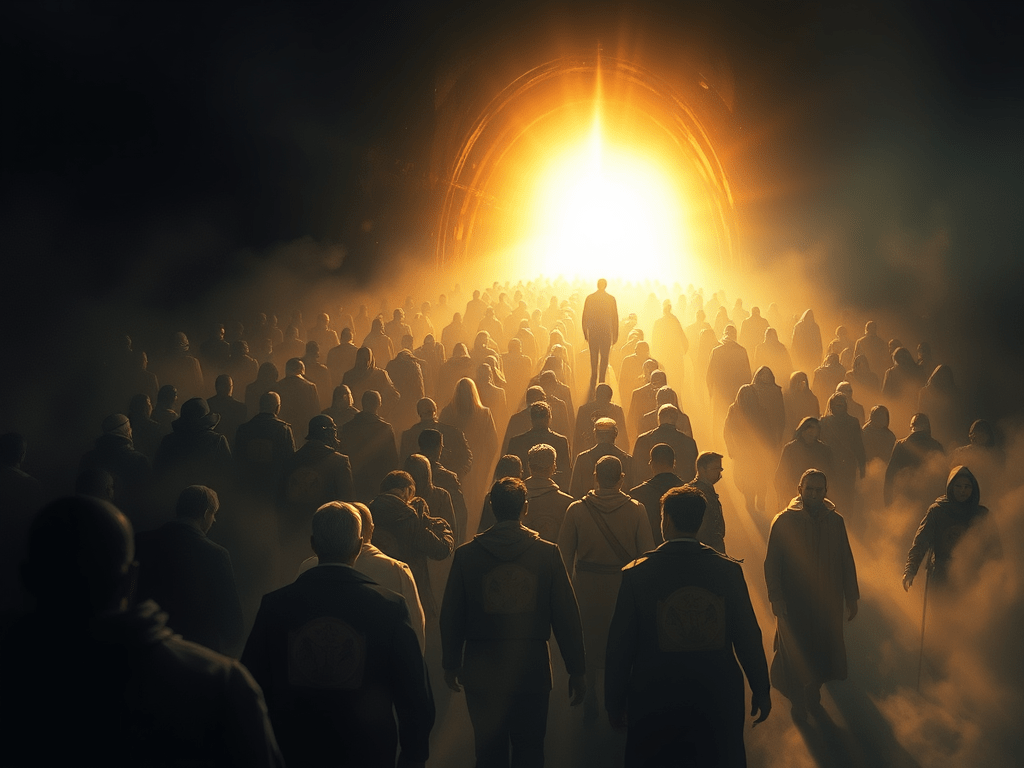
In a season of darkness we can keep on choosing life. We can be committed to embracing new life in babies, to making our homes, families, workplaces, friendships as open to life and grace as we can. We can embrace the stranger, care for our elderly, show love and compassion to our enemies. We can resolve never to give in to nihilism or self-centredness and instead keep living for the sake of God and of others. This will not be easy. But it is possible because God keeps his promises.

Do not be afraid! God keeps his promises.

I wrote these reflections on how to live free from fear and anxiety, how to be a people of hope, before last week’s decision concerning assisted suicide.1 In light of that vote, however, these ideas are particularly important. 

One of the famous texts that is read at 9 Lessons and Carols most years is Jeremiah 33:14-16. It is all about hope and fear.

Jeremiah begins his message to Israel with reassurance about God’s faithfulness:

The days are coming,’ declares the LORD, ‘when I will fulfil the good promise I made to the people of Israel and Judah.

It is worth sitting with this for a moment. God makes promises to us. He is a promise making God.

Incidentally, God doesn’t have to be like this. He could be arbitrary – doing whatever he wants whenever he wants it. That kind of God is a tyrant, untrustworthy and unreliable. We intuitively know God isn’t like this. It is written into the very fabric of the universe which, completely unnecessarily, is governed by laws. In that it reflects the character and mind of its Creator.

One of the earliest things we read God say in Scripture is a promise. We can read about this in Genesis 3:14-15.

Through Eve and then Adam sin had entered the world. She had received a message from an angelic messenger – pictured here as a serpent – who tempted her with a promise of power. If only she defied God, humanity would take God’s place. And so she had taken the fruit and ate. It was an act of defiance, of rejection, and it brought a poison into humanity that would eat up and kill generation after generation. They would be cut off from the presence of God and his light. This is always the path when we choose darkness. Man and woman are promised that they will become like God; instead they become less than human. The rejection of light and life is the embrace of darkness and death.

But at the outset of this creeping darkness God spoke a promise of light. One day there would arise a woman who would have a Son and that Son would crush the serpent. He would provide a Redeemer to deliver humanity from the curse it had brought upon itself. These promises are repeated in different forms throughout the Scriptures to Israel and then to her kings and prophets. King David is promised a son who would reign not as one who dies but who lives forever.

We can read these promises, and receive them for ourselves. Perhaps you feel you have had promises from God – that you would flourish, that your friend or family member would come to know Jesus, that he would never forsake you. But at times it feels as if the promise is failing. We wait and wait but still the darkness advances and we come to fear the future, to fear the power of the Serpent, to fear that God has failed.

That was the position of ancient Israel when Jeremiah spoke. The promise to King David seemed in ruins. The kingdom he built had divided, his sons had failed morally, politically, militarily. And his people were going into exile. On and on the darkness marched as the Serpent’s voice seemed the only one that sounded.

It was precisely at this time that Jeremiah reaffirms the promise. He calls his people to hope.

God speaks in the midst of the darkness and what he says is “Fear Not!” “Do not be afraid”. The God of Israel, of the Cosmos, of your heart, is the God who lives and reigns even when darkness abounds.

The hope of Israel may seem to have fallen and been crushed but God is going to make it spring up, sprout from the broken stump of David’s line. Can you feel the imagery? David’s tree has been axed down, felled and broken. But in this moment of death God is going to bring resurrection. 

And so we come to Luke 1 and the story of the annunciation. The familiarity of the verses can blind our eyes to the reality of what is happening.

Here is the second woman, filled with grace (v.28). Your copy will read “highly favoured”, literally, saturated with God’s gifts. She is one who has been prepared and sanctified by God for this moment. While Eve’s sin had separated humanity from God and now to Mary comes the word: “God is with you”. Eve had brought the Serpent to power; through Mary will come the One to crush that Serpent’s head. And where Eve had defied God’s design for her grasping power and equality with God, Mary would reply “I am the Lord’s servant…May your word to me be fulfilled.” To the woman comes an angelic message. The promise is to be fulfilled. David will have his king to sit on the throne.

Suddenly, when hope seemed lost, when Israel was dominated by tyrants, humiliated and oppressed, when the promises of God were a long-held but distant memory, God acted.  He had been working through all the ages even when we could not see it.

He was working in Cain and Abel, in the flood of Noah, in Abraham and Joseph, in David and Solomon, in Ruth and Moab, in Esther in Exile, through Isaiah and Jeremiah and Micah and the Macabees. It was hard to see, darkness seemed to reign, death seemed ever more present. Fear was a natural response. And yet God was working.

And so he brought a new Eve, ready to bear the fulfilment of every promise – the eternal yes, the final word: Fear Not!

Even as Christ battled demons, diseases and demagogues, darkness and death seemed to triumph. But a voice would echo from the despair of Calvary: Fear Not! And Christ would rise triumphant from the grave.

My friends and fellow-sinners. I don’t know what promises you have received from God this year or through your life. Some of us are in that moment of rejoicing, standing with St Mary and acclaiming with joy: How can this be? What a God who fulfils his promises!

Some of us are in exile with Jeremiah, looking at a life which seems marked with pain where the presence of evil is all too obvious. The temptation is to despair, to succumb to fear of the present of the future.  If that is you, you are in good company. But my message to you this morning is the same as Jeremiah’s: Fear Not! 

The God of Israel, the God of Eve and Mary, the God of Jesus Christ has not forsaken you or forgotten you. It is precisely from the place of death that we encounter resurrection power.

The world can seem increasingly dark. There are wars and rumours of wars. The gospel retreats in the West even as it advances in the East and in Africa. At times it feels as if the Serpent is winning and the kingdom of death and darkness are at hand. But even now, especially now, God is at work. He has not forsaken us. He will not forsake us. Fear Not!

There will be a day when you will stand in glory with Mary and acclaim the glorious faithfulness of her Son. When you will stand with Jeremiah and say: I saw the fulfilment of the promises. When the hand that flung the stars and surrendered to nails will wipe the tears from your eyes and speak over you words of love and grace. Fear Not!

If your life is hard, then take heart. God hasn’t forsaken you. Lean into him. Find a good prayer app or practice that you can hold onto even when life is hard. You can try the Bible in One Year, Lectio 365, or Hallow.

Often the answer to our prayers, the fulfilment of God’s promises in our lives, requires our consent, our courage. Mary is our mother in this: we need to resist the temptation to become hardened or so sad that we are unable to say ‘yes’ when the promises begin to be fulfilled.

Finally, we need the courage to live as men and women of hope and life in the midst of a culture that embraces despair and death.

Our culture is becoming increasingly dark. This is likely to continue. Once one has accepted the logic that unborn life can be terminated for reasons of convenience or, to be blunt, finance, the logic of terminating other inconvenient life becomes irresistible. And so it has proved. This is a deeply dangerous trajectory for a society to be on and it can cause us to feel lost and afraid.

The alternative is to have the courage to keep on choosing Christ, to keep on choosing life. We can be committed to embracing new life in babies, to making our homes, families, workplaces, friendships as open to life and grace as we can. We can embrace the stranger, care for our elderly, show love and compassion to our enemies. We can resolve never to give in to nihilism or self-centredness and instead keep living for the sake of God and of others. This will not be easy. But it is possible because God keeps his promises.

    1. I refuse to use the euphemism ‘assisted dying’: words matter and we should not hide from the reality that what was approved last week is physicians giving poisons to patients so that they can kill themselves ↩︎

    In Defence of Shabana Mahmood

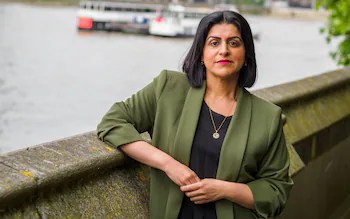
    Shabana Mahmood is, like Wes Streeting, a politician of courage, integrity and ability. She thinks deeply, engages wisely, and acts bravely. We need more men and women of faith like them engaged in debates like this if we are to think and act well particularly in matters of life and death.

    The Justice Secretary, Shabana Mahmood is a Muslim. Her thinking about issues is therefore inevitably shaped by her faith. This means she should not express any opinions about public policy where there is a risk her faith has influenced her.

    So runs the argument given voice in Sunday’s papers by Charlie Falconer, the former Lord Chancellor and vocal proponent of assisted dying. I describe it as an argument. This does not quite reflect Lord Falconer’s almost total failure to explain why Mahmood’s perspective is invalidated by having been influenced by her Islam. It is just assumed that it does.

    This is wrong but typical. In the rest of this post I want to explain why arguments articulated on the basis of religious reflection are not only valid and helpful when making public policy but are among the best reasons to do or not do something.

    1. Religious reasons are deep and broad

    First, reasons formulated upon the basis of a Christian, Islamic or Judaic faith (to pick the three faiths most influential in the UK) are both deep and broad. Where they overlap with one another they are exceptionally so. What I mean by this is that they are founded on millennia of reflection and reasoning about the most profound realities human beings face. In that sense they are deep.

    Public policy issues such as assisted suicide, abortion, poverty relief, war and so on raise profound questions about who human beings are, the nature of their responsibility to one another, to posterity, to a Creator (if there is one). They rely on philosophical questions about the nature of compassion, coercion, consent, dignity, healing and care. Throughout human history almost all the reflection upon these issues has been done by and within faith traditions. To say that one’s views are informed by one’s faith is to say one stands in the line of deep, wise, rich and tested reasoning about the most profound realities.

    More than this, where there is agreement between the Roman Catholic, Protestant and Islamic faiths (as in the case of assisted dying), one is struck by the breadth of the wisdom they embody. Together those faiths represent over 2/3 of the global populations. Crowds can, of course, be wrong. But if these faiths embody the wisdom of billions over millennia they are surely at least relevant to public policy questions.

    Viewed from this perspective, not only are Mahmood’s religiously informed reasons valid one would have to be mad to disqualify them. Their wisdom is certainly more persuasive and relevant than poorly articulated conceptions of personal autonomy and healthcare economics.

    2. Religious Reasons are Inevitable

    Second, Lord Falconer’s implicit argument seems to imagine that there are reasons grounded in solid contemporary ethics and informed by (in his case) the Labour movement that are not religiously influenced. This is simply not true.

    Falconer’s Labour movement, the values of personal autonomy, compassion and so forth that he supports, all arose in the context of a distinctively Judeo-Christian culture. Tom Holland has demonstrated at length how the values that we take for granted as progressive Westerners reflect deeply Christian convictions about the world and our place within it. This is particularly so for social-justice movements such as the Labour party. That is why Harold Wilson is reputed to have claimed that the Labour Party ‘owed more to Methodism than to Marx.’ In that sense Falconer knows neither his movement nor himself since both are a product or religiously grounded reasons.

    The truth is that religious reasons are inescapable. Religious reflection built our society. The deepest intuitions we have are formed by convictions about the value of the individual, the dignity of life (and death), and a myriad other issues that are historically and philosophically contingent upon religious beliefs. All Mahmood is doing is reflecting that reality honestly.

    3. Religious reasons are not coercive

    Lord Falconer also suggests that for Mahmood to make arguments grounded in spiritual reflection is to impose her religious beliefs on everyone. This is both risible and offensive.

    Mahmood is not seeking to coerce anyone to follow Islam. She is arguing about the law on assisted dying should be. If she succeeds (and I pray she does) there will be no more Muslims in England next Sunday than there are this. She is doing exactly what Lord Falconer is doing: making an argument that other people can agree with or not. Moreover, his intervention suggests she is doing so rather better than he is.

    If secularists think religiously or spiritually informed reasons for doing or not doing something are wrong, they should explain why. Simply saying they are not admissible displays both fear and arrogance. Either Lord Falconer does not feel able to explain why Muslim, Christian or Jewish perspectives on the sanctity of life and the proper role of compassion are wrong, or (worse) he feels he should not have to do so because they are intrinsically invalid because those who hold them are not thinking hard enough or are not among the permitted class of decision makers. To be blunt, he will only allow a Muslim (or a Catholic) to participate in dialogue if they are willing first to disavow the wisdom and experience of their people. I suspect in this case that both are at play. The first is foolish, the second offensive.

    Shabana Mahmood is, like Wes Streeting, a politician of courage, integrity and ability. She thinks deeply, engages wisely, and acts bravely. We need more men and women of faith like them engaged in debates like this if we are to think and act well particularly in matters of life and death.

    The Benefit of the Doubt

    Doubt is not always bad. If we handle it in the right way, doubt can spur us on to a richer, more satisfying and deeper faith.

    Doubt is not always bad. If we handle it in the right way, doubt can spur us on to a richer, more satisfying and deeper faith.

    Everyone experiences doubt at some point in their lives. This can affect our relationships with each other. Drawing on his own counselling ministry and research, the Christian writer and philosopher, Gary Habermas, observes in his excellent Dealing with Doubt that ‘Doubts concerning the ideas or persons most important to us might be called an almost universal fact of life.’ 

    This is true both for religious people and atheists, for matters of faith and any other area of life in which we have to deal with things of significance. 

    CS Lewis reflected on his own experience of periods of doubt as both an atheist and a Christian:

    ‘Now that I am a Christian I do have moods in which the whole thing looks very improbable; but when I was an atheist I had moods in which Christianity looked terribly probable.’

    Uncertainty is a part of human existence. That means that doubt is, too.

    Doubt is not always bad. As we will see, Jesus doesn’t condemn it in the disciples. Moreover, if we handle them in the right way, periods of doubt can spur us on to a richer, more satisfying and deeper faith.

    We should also note that doubt isn’t simple. We can be tempted to imagine that it is always an intellectual phenomenon. In reality, those involved in counselling people experiencing periods of doubt in different contexts have found that there are actually different types of doubt, each of which requires its own response.

    In this passage we see Jesus’ response to three types of doubt.

    1. Doubt in the emotions
    2. Doubt in the mind
    3. Doubt in the will

    Emotional Doubt

    In Luke 24:36 Jesus’s first words to his disciples when he appears to them after his resurrection are ‘peace to you’

    The first species of doubt is emotional. This is where doubt arises largely from our feelings rather than a particular intellectual problem. Habermas estimates that more than ⅔ of doubt he has come across in church is actually emotional.

    Doubt can often seem to be about ideas when actually it is about feelings. 

    This is a classic example. The disciples have been through a terrible trauma. They are utterly exhausted. They are also scared, probably angry, have been betrayed by their mate, and seen everything they believe in apparently crash around their ears.

    They are having a very bad week.

    In the midst of tiredness, hunger, and pain we can begin to doubt in a visceral way.

    Lewis expresses it in this way:

    Our faith in Christ waivers not so much when real arguments come against it as when it looks improbable–when the whole world takes on that desolate look which really tells us much more about the state of our passions and even our digestion than about reality.

    When we experience this type of doubt we need to be healed, not persuaded. That is why Jesus just says: ‘Peace be to you.’

    This healing has three parts:

    1. Physical:
      Get some sleep. Take some time off work if you are burnt out. Do something fun. Eat well.
      For example, I never take seriously anything I think after 10pm. It’s tiredness talking.
    2. Mental:
      If you are assailed by an idea you know to be false (like I’m too awful for God to love), identify the idea, name it, and challenge it with truth. Memorising Scripture is good for this.
    3. Spiritual:
      Learn to pray, particularly contemplative prayer. If you struggle to think of ways to pray, speak to me. 

    Intellectual Doubt

    Second, we can experience doubt in our minds. 

    This is what is going on in Luke 24:37-39. The disciples are struggling to believe that someone really could rise from the dead. They can’t get their heads around it. So Jesus offers them evidence to explore.

    Every thinking Christian at some point will have questions about the faith.

    They might be about the reliability of the gospels: how do we actually know that Jesus lived and died and rose from the dead?

    They might be about the existence of God: what arguments are there for believing that there is something more than the material world?

    They might be about specific questions such as the problem of evil or reconciling scientific discoveries with the content of Scripture and the faith.

    These questions are not new – they have been well canvassed by some of the most brilliant minds in the history of the world, from both science and philosophy. And many of those asking these questions end up as Christians.

    So how do we deal with this type of doubt:

    1. Maintain a strong devotional life.
      Staying in the Scriptures, and have a regular pattern of prayer feeds our minds and our souls.

    Lewis said:

    …make sure that, if you have once accepted Christianity, then some of its main doctrines shall be deliberately held before your mind for some time every day. That is why daily prayers and religious reading and church-going are necessary parts of the Christian life. We have to be continually reminded of what we believe. Neither this belief nor any other will automatically remain alive in the mind. It must be fed.

    1. Look for answers.
      Jesus offers his disciples evidence for his claims. There is really, really good evidence for Christianity.
      The questions we have are ones that brilliant minds have considered (not least Lewis himself). If you are really struggling with doubt in your minds about a particular question, look into it.
    2. Be patient.
      None of us is that smart and we need to be patient if we don’t get everything right away. Some things are really difficult. God is really big. We are really small.
      That doesn’t mean don’t apply your mind. It does mean having a healthy humility about your capacity to reason to the answer on every question in your own time.

    Doubt in the Will

    The third type of doubt flows from the will.

    This means that God is asking us to do something we don’t want to do. It is usually characterised by knowing the facts but not being willing to do the thing they seem to imply.

    This is suggested by what Jesus says in Luke 24:46-49

    By this stage the disciples know that Jesus is alive. The question is, are they going to go and tell anyone about him?

    Types of challenge that can cause this species of doubt can include ethical problems (I really want to sleep with my boyfriend even though I know I shouldn’t), to come to church (I know I should go but I want to stay home) or missional (I know God wants me to do something for him but I don’t want to).

    This type of challenge can lead to doubt. It isn’t a rational process: we rarely think ‘I don’t want to do [X]  so I don’t believe anymore’.

    Rather it manifests itself in raising up small, ‘picky’ issues that on any objective view aren’t really relevant to a life of faith or in refusing to accept, or even really consider, any answers or explanations that are given to apparent problems. The dispeace or uncertainty therefore continues and nothing can touch it.

    This happens because faith isn’t just a question of belief but of action. It implies a choice about what I will do – what Paul describes as the obedience of faith.

    How do we address this type of doubt? Jesus’ response to the disciples suggests two things:

    1.  We need to exercise our wills.
      Ultimately only we can choose to follow Christ. By God’s grace, every one of us has that agency. We are treated like grown-ups.
      It can be hard, painful and require the support of friends. But the choice is ours. 
    2. We need the Holy Spirit.
      Christ knows that the task is too difficult for them to do on their own. It is too difficult even to begin on their own. I think that is not only because they need the power to do it. It is because they need the courage to choose it.
      This implies prayer. When we are facing a hard choice, we need to be those who come to Jesus and ask for the Spirit’s power to choose well. Or even to desire to choose well. Don’t underestimate the power that is available to one who seeks it.

    Application

    I’ve offered ideas about how we respond in each of these areas as we have gone along. Nevertheless, I want to close by offering some general principles for dealing with doubt.

    • Keep together.
      Doubt, whether in our minds, emotions or wills is not something to be ashamed of or gone through alone. Talk to people.
      Obviously, be careful who you speak to if it is personal. But this is part of why God puts us in churches.
      For example, if you are wrestling with the problem of evil or the relationship between Creation, evolution and Scripture, come and talk to a pastor or theologian. You can even email me. I won’t judge you; the chances are I have thought about the same things. 
      If stuff is hard emotionally and you are starting to doubt your faith, talk to a friend or life group. You might find something as simple as a hug, or crying with them, makes a huge difference. Or it might take much longer.
      But use each other.
    • Keep praying.
      Above all else, keep Christ before you. If you are wondering if it’s worth it, I would ask: why not? What are you losing by continuing to pray and to come to church? And often it is through prayer and worship that we find ourselves united to Christ in a way that relativises all our doubts.
    • Keep humble and be patient.
      Always remember how small even the smartest and most together of us are compared to God, the universe and the things we are dealing with.
      There is such a big temptation to want to rush to conclusions or take immediate action in response to every thought. I cannot stress how important it is to resist that temptation.
      Be patient. With yourself, with God, with the answers. Stuff takes time to heal, to find, to understand and to accept.

    Doubt is not always bad. If we handle it in the right way, doubt can spur us on to a richer, more satisfying and deeper faith.