Having Hope in an Age of Darkness

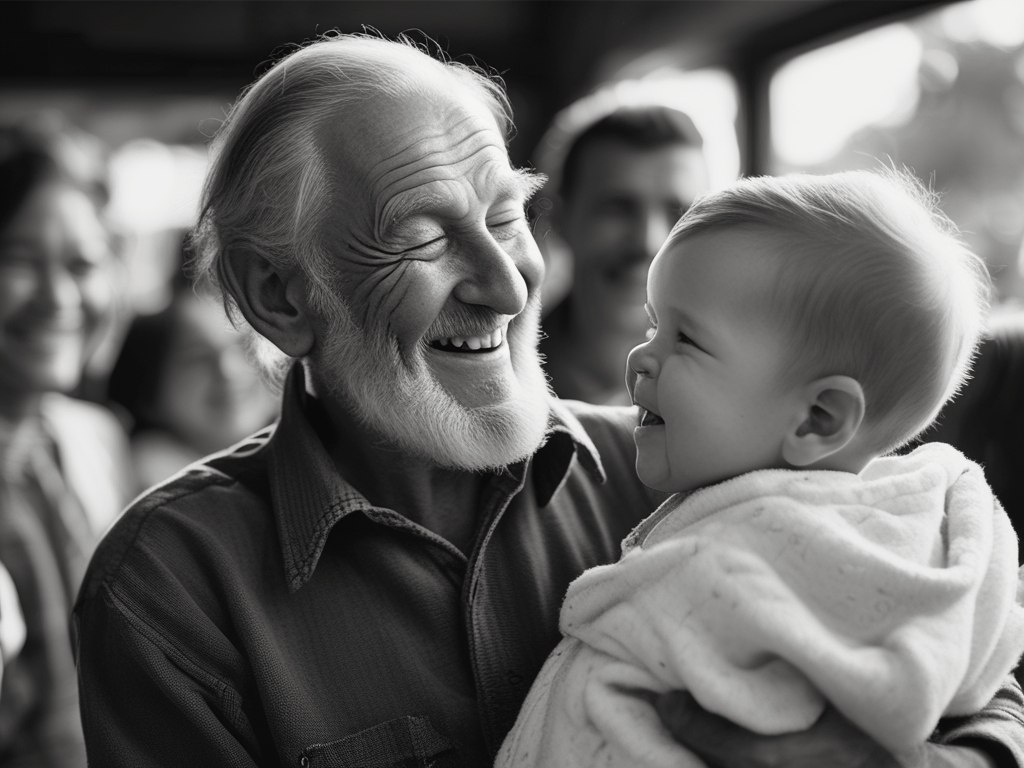
In a season of darkness we can keep on choosing life. We can be committed to embracing new life in babies, to making our homes, families, workplaces, friendships as open to life and grace as we can. We can embrace the stranger, care for our elderly, show love and compassion to our enemies. We can resolve never to give in to nihilism or self-centredness and instead keep living for the sake of God and of others. This will not be easy. But it is possible because God keeps his promises.

Do not be afraid! God keeps his promises.

I wrote these reflections on how to live free from fear and anxiety, how to be a people of hope, before last week’s decision concerning assisted suicide.1 In light of that vote, however, these ideas are particularly important. 

One of the famous texts that is read at 9 Lessons and Carols most years is Jeremiah 33:14-16. It is all about hope and fear.

Jeremiah begins his message to Israel with reassurance about God’s faithfulness:

The days are coming,’ declares the LORD, ‘when I will fulfil the good promise I made to the people of Israel and Judah.

It is worth sitting with this for a moment. God makes promises to us. He is a promise making God.

Incidentally, God doesn’t have to be like this. He could be arbitrary – doing whatever he wants whenever he wants it. That kind of God is a tyrant, untrustworthy and unreliable. We intuitively know God isn’t like this. It is written into the very fabric of the universe which, completely unnecessarily, is governed by laws. In that it reflects the character and mind of its Creator.

One of the earliest things we read God say in Scripture is a promise. We can read about this in Genesis 3:14-15.

Through Eve and then Adam sin had entered the world. She had received a message from an angelic messenger – pictured here as a serpent – who tempted her with a promise of power. If only she defied God, humanity would take God’s place. And so she had taken the fruit and ate. It was an act of defiance, of rejection, and it brought a poison into humanity that would eat up and kill generation after generation. They would be cut off from the presence of God and his light. This is always the path when we choose darkness. Man and woman are promised that they will become like God; instead they become less than human. The rejection of light and life is the embrace of darkness and death.

But at the outset of this creeping darkness God spoke a promise of light. One day there would arise a woman who would have a Son and that Son would crush the serpent. He would provide a Redeemer to deliver humanity from the curse it had brought upon itself. These promises are repeated in different forms throughout the Scriptures to Israel and then to her kings and prophets. King David is promised a son who would reign not as one who dies but who lives forever.

We can read these promises, and receive them for ourselves. Perhaps you feel you have had promises from God – that you would flourish, that your friend or family member would come to know Jesus, that he would never forsake you. But at times it feels as if the promise is failing. We wait and wait but still the darkness advances and we come to fear the future, to fear the power of the Serpent, to fear that God has failed.

That was the position of ancient Israel when Jeremiah spoke. The promise to King David seemed in ruins. The kingdom he built had divided, his sons had failed morally, politically, militarily. And his people were going into exile. On and on the darkness marched as the Serpent’s voice seemed the only one that sounded.

It was precisely at this time that Jeremiah reaffirms the promise. He calls his people to hope.

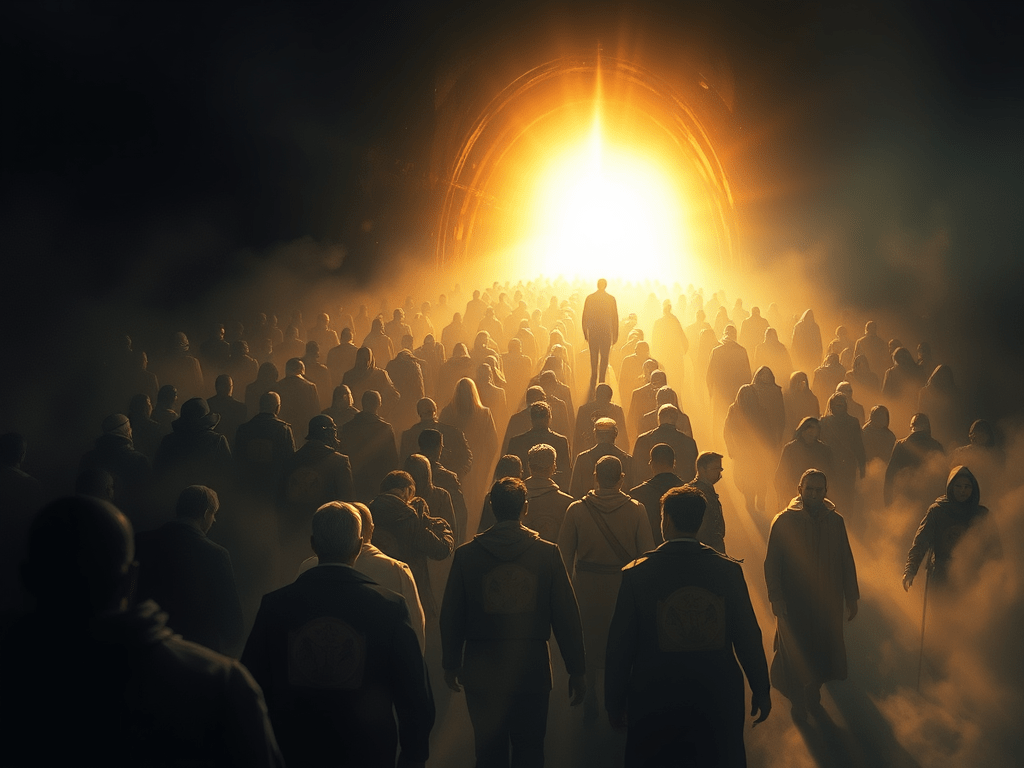
God speaks in the midst of the darkness and what he says is “Fear Not!” “Do not be afraid”. The God of Israel, of the Cosmos, of your heart, is the God who lives and reigns even when darkness abounds.

The hope of Israel may seem to have fallen and been crushed but God is going to make it spring up, sprout from the broken stump of David’s line. Can you feel the imagery? David’s tree has been axed down, felled and broken. But in this moment of death God is going to bring resurrection. 

And so we come to Luke 1 and the story of the annunciation. The familiarity of the verses can blind our eyes to the reality of what is happening.

Here is the second woman, filled with grace (v.28). Your copy will read “highly favoured”, literally, saturated with God’s gifts. She is one who has been prepared and sanctified by God for this moment. While Eve’s sin had separated humanity from God and now to Mary comes the word: “God is with you”. Eve had brought the Serpent to power; through Mary will come the One to crush that Serpent’s head. And where Eve had defied God’s design for her grasping power and equality with God, Mary would reply “I am the Lord’s servant…May your word to me be fulfilled.” To the woman comes an angelic message. The promise is to be fulfilled. David will have his king to sit on the throne.

Suddenly, when hope seemed lost, when Israel was dominated by tyrants, humiliated and oppressed, when the promises of God were a long-held but distant memory, God acted.  He had been working through all the ages even when we could not see it.

He was working in Cain and Abel, in the flood of Noah, in Abraham and Joseph, in David and Solomon, in Ruth and Moab, in Esther in Exile, through Isaiah and Jeremiah and Micah and the Macabees. It was hard to see, darkness seemed to reign, death seemed ever more present. Fear was a natural response. And yet God was working.

And so he brought a new Eve, ready to bear the fulfilment of every promise – the eternal yes, the final word: Fear Not!

Even as Christ battled demons, diseases and demagogues, darkness and death seemed to triumph. But a voice would echo from the despair of Calvary: Fear Not! And Christ would rise triumphant from the grave.

My friends and fellow-sinners. I don’t know what promises you have received from God this year or through your life. Some of us are in that moment of rejoicing, standing with St Mary and acclaiming with joy: How can this be? What a God who fulfils his promises!

Some of us are in exile with Jeremiah, looking at a life which seems marked with pain where the presence of evil is all too obvious. The temptation is to despair, to succumb to fear of the present of the future.  If that is you, you are in good company. But my message to you this morning is the same as Jeremiah’s: Fear Not! 

The God of Israel, the God of Eve and Mary, the God of Jesus Christ has not forsaken you or forgotten you. It is precisely from the place of death that we encounter resurrection power.

The world can seem increasingly dark. There are wars and rumours of wars. The gospel retreats in the West even as it advances in the East and in Africa. At times it feels as if the Serpent is winning and the kingdom of death and darkness are at hand. But even now, especially now, God is at work. He has not forsaken us. He will not forsake us. Fear Not!

There will be a day when you will stand in glory with Mary and acclaim the glorious faithfulness of her Son. When you will stand with Jeremiah and say: I saw the fulfilment of the promises. When the hand that flung the stars and surrendered to nails will wipe the tears from your eyes and speak over you words of love and grace. Fear Not!

If your life is hard, then take heart. God hasn’t forsaken you. Lean into him. Find a good prayer app or practice that you can hold onto even when life is hard. You can try the Bible in One Year, Lectio 365, or Hallow.

Often the answer to our prayers, the fulfilment of God’s promises in our lives, requires our consent, our courage. Mary is our mother in this: we need to resist the temptation to become hardened or so sad that we are unable to say ‘yes’ when the promises begin to be fulfilled.

Finally, we need the courage to live as men and women of hope and life in the midst of a culture that embraces despair and death.

Our culture is becoming increasingly dark. This is likely to continue. Once one has accepted the logic that unborn life can be terminated for reasons of convenience or, to be blunt, finance, the logic of terminating other inconvenient life becomes irresistible. And so it has proved. This is a deeply dangerous trajectory for a society to be on and it can cause us to feel lost and afraid.

The alternative is to have the courage to keep on choosing Christ, to keep on choosing life. We can be committed to embracing new life in babies, to making our homes, families, workplaces, friendships as open to life and grace as we can. We can embrace the stranger, care for our elderly, show love and compassion to our enemies. We can resolve never to give in to nihilism or self-centredness and instead keep living for the sake of God and of others. This will not be easy. But it is possible because God keeps his promises.

    1. I refuse to use the euphemism ‘assisted dying’: words matter and we should not hide from the reality that what was approved last week is physicians giving poisons to patients so that they can kill themselves ↩︎
    In Defence of Shabana Mahmood

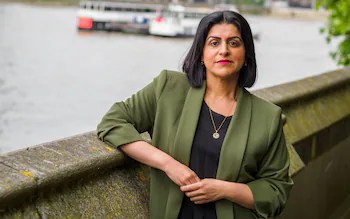
    Shabana Mahmood is, like Wes Streeting, a politician of courage, integrity and ability. She thinks deeply, engages wisely, and acts bravely. We need more men and women of faith like them engaged in debates like this if we are to think and act well particularly in matters of life and death.

    The Justice Secretary, Shabana Mahmood is a Muslim. Her thinking about issues is therefore inevitably shaped by her faith. This means she should not express any opinions about public policy where there is a risk her faith has influenced her.

    So runs the argument given voice in Sunday’s papers by Charlie Falconer, the former Lord Chancellor and vocal proponent of assisted dying. I describe it as an argument. This does not quite reflect Lord Falconer’s almost total failure to explain why Mahmood’s perspective is invalidated by having been influenced by her Islam. It is just assumed that it does.

    This is wrong but typical. In the rest of this post I want to explain why arguments articulated on the basis of religious reflection are not only valid and helpful when making public policy but are among the best reasons to do or not do something.

    1. Religious reasons are deep and broad

    First, reasons formulated upon the basis of a Christian, Islamic or Judaic faith (to pick the three faiths most influential in the UK) are both deep and broad. Where they overlap with one another they are exceptionally so. What I mean by this is that they are founded on millennia of reflection and reasoning about the most profound realities human beings face. In that sense they are deep.

    Public policy issues such as assisted suicide, abortion, poverty relief, war and so on raise profound questions about who human beings are, the nature of their responsibility to one another, to posterity, to a Creator (if there is one). They rely on philosophical questions about the nature of compassion, coercion, consent, dignity, healing and care. Throughout human history almost all the reflection upon these issues has been done by and within faith traditions. To say that one’s views are informed by one’s faith is to say one stands in the line of deep, wise, rich and tested reasoning about the most profound realities.

    More than this, where there is agreement between the Roman Catholic, Protestant and Islamic faiths (as in the case of assisted dying), one is struck by the breadth of the wisdom they embody. Together those faiths represent over 2/3 of the global populations. Crowds can, of course, be wrong. But if these faiths embody the wisdom of billions over millennia they are surely at least relevant to public policy questions.

    Viewed from this perspective, not only are Mahmood’s religiously informed reasons valid one would have to be mad to disqualify them. Their wisdom is certainly more persuasive and relevant than poorly articulated conceptions of personal autonomy and healthcare economics.

    2. Religious Reasons are Inevitable

    Second, Lord Falconer’s implicit argument seems to imagine that there are reasons grounded in solid contemporary ethics and informed by (in his case) the Labour movement that are not religiously influenced. This is simply not true.

    Falconer’s Labour movement, the values of personal autonomy, compassion and so forth that he supports, all arose in the context of a distinctively Judeo-Christian culture. Tom Holland has demonstrated at length how the values that we take for granted as progressive Westerners reflect deeply Christian convictions about the world and our place within it. This is particularly so for social-justice movements such as the Labour party. That is why Harold Wilson is reputed to have claimed that the Labour Party ‘owed more to Methodism than to Marx.’ In that sense Falconer knows neither his movement nor himself since both are a product or religiously grounded reasons.

    The truth is that religious reasons are inescapable. Religious reflection built our society. The deepest intuitions we have are formed by convictions about the value of the individual, the dignity of life (and death), and a myriad other issues that are historically and philosophically contingent upon religious beliefs. All Mahmood is doing is reflecting that reality honestly.

    3. Religious reasons are not coercive

    Lord Falconer also suggests that for Mahmood to make arguments grounded in spiritual reflection is to impose her religious beliefs on everyone. This is both risible and offensive.

    Mahmood is not seeking to coerce anyone to follow Islam. She is arguing about the law on assisted dying should be. If she succeeds (and I pray she does) there will be no more Muslims in England next Sunday than there are this. She is doing exactly what Lord Falconer is doing: making an argument that other people can agree with or not. Moreover, his intervention suggests she is doing so rather better than he is.

    If secularists think religiously or spiritually informed reasons for doing or not doing something are wrong, they should explain why. Simply saying they are not admissible displays both fear and arrogance. Either Lord Falconer does not feel able to explain why Muslim, Christian or Jewish perspectives on the sanctity of life and the proper role of compassion are wrong, or (worse) he feels he should not have to do so because they are intrinsically invalid because those who hold them are not thinking hard enough or are not among the permitted class of decision makers. To be blunt, he will only allow a Muslim (or a Catholic) to participate in dialogue if they are willing first to disavow the wisdom and experience of their people. I suspect in this case that both are at play. The first is foolish, the second offensive.

    Shabana Mahmood is, like Wes Streeting, a politician of courage, integrity and ability. She thinks deeply, engages wisely, and acts bravely. We need more men and women of faith like them engaged in debates like this if we are to think and act well particularly in matters of life and death.

    5 Non-Religious Reasons to Oppose Euthanasia

    In previous posts I have explained why Christian Social Teaching has always opposed something like euthanasia. In light of the Bill being presented to Parliament, however, here are five reasons to oppose it that are not founded upon spiritual convictions.

    In previous posts I have explained why Christian Social Teaching has always opposed something like euthanasia. In light of the Bill being presented to Parliament, however, here are five reasons to oppose it that are not founded upon spiritual convictions.

    Before proceeding further, I generally avoid all public political controversy. As a pastor my job is not to take sides between different political parties. In this case, however, the issue is recognised as one of conscience and not political allegiance. Moreover, given how many could die as a result of this Bill, I strongly urge people to do all they can to resist its implementation.

    This is the content of my own letter to my MP. You can write to your MP by following this link.

    Dear [MP],

    I write concerning the Assisted Suicide Bill due to be before the House of Commons later this week. For the following reasons I urge you in the strongest possible terms to vote against this bill in any form:

    1. It places the aged, ill or vulnerable in an impossible and damaging position.
    2. All experience of euthanasia from elsewhere in the world demonstrates that the proposed safeguards and limitations rapidly come under pressure and are revised, almost inevitably to widen the scope of euthanasia.
    3. It fundamentally changes the nature of healthcare provision for all and, in particular, the relationship between a doctor and patient.
    4. It undermines the provision and funding of proper social care and particularly end-of-life care.
    5. Terminating the lives of the vulnerable, sick and elderly is intrinsically unethical, attacks the assumptions that have underpinned social care and the welfare state, and will have repercussions for the rest of society.

    I briefly elaborate on each of these reasons below.

    The Burden on the Vulnerable

    The introduction of euthanasia for patients places an intolerable burden on them precisely at the point at which they are most in need of care and protection. The elderly and vulnerable often feel an acute sense of guilt or shame at the burden they perceive their care or situation to be placing on others. The pressure, intended or otherwise, to take a step to end their lives not because they truly want to but because they think it better for everyone else will be inevitable and powerful.

    This is not a fanciful suggestion. Following the introduction of similar legislation in Oregon, 50% of people opting to end their lives cited the perceived burden upon others as a reason for their choice.[1] This is a terrible and invidious position for us to place those individuals in. Moreover, this position will be widely known and recognised. The physicians responsible for ending the patient’s life will therefore know that there is, in all likelihood, a 50% chance that they are doing it because they feel that they should in order to decrease the burden on others and not because they wish to end their own suffering.

    Any lawyer can relate cases in which elderly people are placed either directly, or indirectly, under pressure to make transactions that are disadvantageous to themselves because they feel that it would lessen the burden on others or feel an inappropriate duty to do so. We have developed large legal frameworks to try and protect them precisely because we recognise that someone in that position is vulnerable to feeling under pressure to make such decisions even if that is not the intention of anyone else involved. Property transactions are reversible and the individual involved can be protected, to some extent at least, retrospectively. Euthanasia cannot be reversed. It is final. If even one person were to die because they felt under undue pressure to do so s then this Bill would be a disaster. In reality that situation cannot be avoided and the Bill should not pass.

    Expanding Terms of Reference

    Experiments with euthanasia in other comparable countries have shown that its safeguards and terms of reference are often rapidly and dramatically revised so as to expand the  scenarios in which it is available. For example:

    • In Oregon, the model proposed for the UK, the law was reinterpreted to apply to individuals who would otherwise live with medical treatment.[2] This includes illnesses such as diabetes.
    • In Canada euthanasia has been offered to people as an alternative to a new wheelchair ramp,[3] for those seeking help to live independently at home,[4] and even for otherwise healthy people suffering with depression or suicidal thoughts.[5]

    Noone envisaged this being the situation when Oregon or Canada introduced euthanasia. This was not part of the intended outcome. But once euthanasia has been introduced as an acceptable method of treating certain conditions the pressure to expand its use to other situations has proved irresistible. There is no reason at all to believe that in some way the UK would prove to be different from others who have followed this path.

    Change in the Nature of Healthcare Provision

    The fundamental settlement that underpins healthcare provision in the modern West is the principle that doctors seek to heal their patients. The patients, by contrast, agree to submit to practices that in other situations would be intolerable (being cut open, ingesting unknown substances etc) because they know that the doctor will always act to promote their physical good. Euthanasia fundamentally undermines this relationship by introducing a layer of ambiguity into it. 

    It is perfectly possible to imagine a scenario in which a particularly sick or depressed individual is not honest with his doctor for fear of the conversation it would open up. Or that it would change the nature of consultations to know that in some circumstances the person prescribing your medication would also administer drugs intending to kill you.

    Moreover, the impact on medical professionals would be incalculable. They would be required intentionally to terminate their patients’ lives, the exact opposite of the calling they initially undertook. It radically alters the nature of the doctor’s profession and will inevitably have profound impacts on the mental, spiritual and moral wellbeing of those involved. I have not seen any long-term studies done of the impact of altering policy on those responsible for carrying it out. How can it be right to put medical professionals in this position without any sense of how it will impact them?

    It is grossly irresponsible to proceed with a Bill that could have these profound consequences.

    Undermining the Provision of Palliative and Social Care

    The proposed reforms would undermine the provision of end-of-life care and social care. As the Health Secretary has noted,[6] end-of-life care and social care are already badly underfunded and poorly managed. The effect of this is that many of those involved would feel a pressure to euthanasia because of the sense of burden they might be to a system already under pressure and because the care they are receiving is not itself of a high enough quality. Such a situation would be unacceptable.

    We saw an example of individuals making the decision to sacrifice themselves because they felt a pressure to do so in order to reduce the burden upon healthcare systems during COVID. It has been well documented that many, including many with signs of early-stage cancer, refused to go to hospital or to GPs because of the sense that the services were under strain and it was their duty not to go. It is at least possible, if not likely, that many would feel the same given the state of end-of-life care and the well documented pressures it places on the healthcare system’s resources.

    Moreover, the provision of a relatively cheap alternative to end-of-life care will almost inevitably become attractive if not for the individuals involved then for the culture implicit in the systems themselves. This is not to say that any particular person would choose to push people towards euthanasia instead of offering them expensive palliative or other care. It is, however, likely that that pressure would begin to be felt simply because of the financial and other factors implicit in the system.

    Finally, on this point, the presence of euthanasia as a relatively inexpensive alternative to properly funded and reformed end-of-life care would significantly weaken the position of those arguing for that funding and reform.

    Long Term Consequences for Society

    Finally, euthanasia will have long-term and as yet unexplored consequences for society as a whole. Modern British society is founded upon an intuition that all lives are valuable and are worth preserving. That is why we have policies of redistributive taxation, welfare provision, and healthcare for all. There is a fundamental understanding that all people are worth caring for, even at our expense.

    Euthanasia damages this understanding in the most fundamental way. It is founded upon a noble desire to help those who are suffering. Yet it does so by ending those lives we would otherwise consider priceless. It introduces the idea that at a certain point it is better off if someone’s life does not continue and that we have the right to end it. Such a position attacks the principles that underpin the rest of the society we have built. 

    Viewed in this light the developments in Oregon and Canada are unsurprising. Once we have conceded that it is legitimate to end life in some circumstances, that assisted suicide is a proper tool for public policy, then why not deploy it in other situations. Almost inevitably the consequences of this shift will not be felt uniformly. They will be experienced most harshly by those from minorities, the poor and the vulnerable; changes like this always are.

    For all of these reasons I strongly urge you not to support this Bill.

    I am, of course, happy to talk about any of the issues raised in this letter.

    Rev. Phil Fellows,Hersham Baptist Church, 
    80 Vaux Crescent, Hersham, Surrey, KT124HD


    [1] Oregon Health Authority, Public Health Division, Center for Health Statistics (2021) Death with Dignity Act, 2020 Data Summary, p12. See https://www.oregon.gov/oha/PH/PROVIDERPARTNERRESOURCES/EVALUATIONRESEARCH/DEATHWITHDIGNITYACT/Documents/year23.pdf

    Accessed 19 Jan 2023.

    [2] https://www.carenotkilling.org.uk/articles/six-months-redefined/

    [3] https://www.ctvnews.ca/politics/paralympian-trying-to-get-wheelchair-ramp-says-veterans-affairs-employee-offered-her-assisted-dying-1.6179325

    [4] https://www.ctvnews.ca/health/chronically-ill-man-releases-audio-of-hospital-staff-offering-assisted-death-1.4038841

    [5] https://www.independent.co.uk/news/world/americas/vancouver-hospital-canada-assisted-suicide-maid-b2390914.html

    [6] https://www.telegraph.co.uk/politics/2024/09/07/end-of-life-care-assisted-dying-health-secretary-streeting/

    The Dignity of Life

    All human life is sacred, given by God and should be cherished and protected.

    All human life is sacred, given by God and should be cherished and protected.

    This week I want to think about one of the most pressing, important and sensitive issues we can: the dignity, value and sanctity of human life.

    Before I write another word, I want to acknowledge that this topic may bring up painful memories, experiences or ideas. In a blog I cannot possibly do justice to the pastoral or emotional issues that arise when we consider abortion, euthanasia, war, or any related issue. For that reason I want to ask for your patience and forgiveness for when I misstep or write clumsily. Above all, however, we must always remember that while it is vital that we speak and think with clarity and courage on these issues, Jesus came not to condemn but to restore and that there is always grace and forgiveness available to us in him.

    [If you’re interested in some Bible passages that relate to these ideas, you can find them here]

    1. The Central Importance of Life

    There is no more important issue in all human ethics – all moral questions – than the dignity and value of human life. It shapes and affects everything. Your view of this question changes your answer to every other question.

    Christians make several startling claims about the value of human life that change the nature of every other discussion profoundly.

    We believe that human beings, both male and female, are created in the image of God. Pause there. That is the ethical point being made in the story of Eve being created from Adam; not that she is inferior to him or an afterthought. Rather that she is inseparable from him. Men and women together equally share in God’s image and his dignity.

    We believe that every human being is, in the words of the Catechism of the Catholic Church, ‘unique and unrepeatable’. You matter as an individual. You are not a lego brick, interchangeable with a million others, whose only purpose is to make a bigger model. You are unique. God saw you in your mother’s womb, before you were born. He chose you. 

    As Benedict XVI beautifully put it, while evolutionary theory may picture how God took the stuff of this world and shaped it into people, nevertheless ‘we are not some casual and meaningless product of evolution. Each of us is the result of a thought of God. Each of us is willed, each of us is loved, each of us is necessary.

    We believe, therefore, that every human being has an inherent dignity and worth that does not depend upon others. Every life matters whether other people love it and cherish it or not. It is inherently worthy because every individual is known to God and loved by him. Every person is, to quote the Psalmist, ‘fearfully and wonderfully made’.

    This means that a person’s value, dignity or worth does not increase or decrease as they age. It does not depend upon race or social class, upon intellectual ability or usefulness to a society. It does not diminish upon injury or disability.

    This is one of the major problems Christianity has with ideologies or belief systems that make the individual’s worth and dignity contingent on their value to the rest of society. Communism, Fascism and other forms of totalitarianism are offences against the idea of the dignity and worth of the individual created in the image of God and of infinite value to him.

    It is also one of the major problems with seeing people as a bundle of characteristics, each of which increase or decrease their significance. You are not worth more, you do not have greater dignity, if you are black or white, male or female, attracted to men or women. That kind of thinking leads inevitably and inexorably to the oppression of groups and divisions between people. 

    All human lives are possessed of God-given value and rights from the moment they are conceived – when God knits them together in their mother’s womb and begins to plan the adventures he has for them – until the moment they die.

    We do not, we dare not, violate that dignity in others or in ourselves. To do so is a crime against the person and, most profoundly, against the Creator whose image they bear.

    All human life is sacred, given by God and should be cherished and protected.

    1. Ethical Implications

    What then does this mean for our moral lives?

    It means that to be a Christian is always to be pro-life. 

    I am going to explain what I mean by that in a moment. Of course it is nuanced. But it is not negotiable.

    The witness of the Christian church from its beginning today, in almost all places and at all times, is that to follow Christ means to be for life. 

    That is why Jesus came for us. He came in order that we might have life, and life to the full, life that extends to the ends of the earth, to the depths of hell, and beyond the limits of time.

    To be a Christian is to be pro-life because Jesus is radically pro-life.

    This has implications that are uncomfortable to talk about in polite British society.

    Because Christians believe in the dignity and value of every life, irrespective of age or gender or race or class, we should work to reduce and then eliminate abortion and oppose euthanasia.

    Human dignity and worth do not start at a low level, increase until a point of maximal productivity in mid-life and then decline as we get older. Putting it as baldly as this might sound odd. But that is functionally how much contemporary ethical dialogue proceeds. It is common to come across the sentiment that the very young are inconvenient, unnecessary and it would be better all around if they weren’t born at all and there were fewer people. Or that the views of the old should be given less weight and less priority because they in some sense count for less than those of the young.

    The creeds begin their narrative of Jesus’ life by recording that he was ‘conceived of the Holy Spirit’. The gospels speak of how John the Baptist leaped in his mother’s womb in celebration of the presence of Christ. That is a reflection of one of the great joys of expecting a baby – to feel him or her move while still within the womb.

    Abortion is a direct attack on the weakest human lives. Intentionally ending the life of an unborn human being represents a rejection of the dignity and value of those seen only by God, loved by him, and yet treated as disposable by others.

    Now I will concede immediately that these are profoundly painful issues and if anyone is struggling with this, I am happy to listen, to pray and, if needed, to extend God’s forgiveness. 

    But we have to confront this painful reality. 

    More than seventy million abortions occur throughout the world each year, significantly more than the whole population of the UK.

    Every. Year.

    This is almost as far from God’s desire and plan for us as it is possible to get.

    We will think about the broader questions in a moment. But being pro-life does not mean only that we work for the elimination of abortion.

    It means opposing the intentional taking of life in other situations.

    Euthanasia is not compatible with Christianity. We do not have the right to take another’s life from them. Nor do we have the right to take our own lives.

    Suicide, whether assisted by others or not, is a subject of extraordinary pain. Who truly knows the anguish and illness that afflicts someone who would take their own life, except God himself. 

    We address these issues not to condemn those on whom we pray God has mercy and compassion but to protect and care for those who are in pain now.

    I can offer many pragmatic arguments against assisted suicide from my time as a lawyer, times when I have seen people take major decisions because of perceived pressure or depression about their worth to others. We protect them against the effects of those decisions because we recognise that they are not thinking clearly. 

    Or the fact that the vast majority of those who attempt suicide and survive (between 90 and 95%) do not end up killing themselves. To quote the New England Journal of Medicine, this suggests that ‘many suicidal crises… including attempts that were expected to be lethal’ are actually of a ‘temporary nature and fleeting’. In other words, the evidence we have suggests that the majority of people who try to kill themselves regret it and, if they survive the attempt, do not try again.1

    The idea of a settled suicidal wish, for the vast majority of cases, is just not true. And it is a profound and awful tragedy when, instead of working to make that person’s life better, society colludes in ending it.

    Yet these are not the most basic arguments. Most fundamentally, euthanasia is wrong because this is a person made in God’s image and neither we nor they have the right to end their life.

    All human life is sacred, given by God and should be cherished and protected.

    We could go on to talk of other examples of affronts to human dignity such as war, capital punishment, poverty, discrimination and so on. We will return to these ideas later in this series.

    1. Putting It Into Practice

    What should we do about this? How should it affect the way we behave?

    As Voters

    As voters, there is realistically no mainstream option among political parties for those who want to work to eliminate abortion.

    However, we can campaign on and ask candidates for their plans to reduce the conditions that make abortions attractive.

    In the UK, this takes the form of policies such as removing the limit on child benefit, to build more homes, to increase access to adoption services. Each of these might have a measurable effect on the demand for abortion.

    We can write to MPs and campaign on the issue of Euthanasia when it comes up. The same applies if the nation is being taken into an unjust war.

    As a Church

    As a church we should continue to promote a culture that embraces life. That means being clear that caring for the elderly is a priority for us, within our church community and beyond.

    It means welcoming children and supporting families with babies. This means going beyond Sundays to the work that we do with midwives, health-care visitors, toddler groups and so on. 

    As Individuals

    As individuals, the most important thing we can do is to pray.

    Beyond that, however, let us challenge ourselves: do we see all people as created in the image and likeness of God? Do my actions and interactions with others reflect this belief?

    What about the people who bother us at work, at home, or at school? Do we care for them as made in God’s image? 

    All human life is sacred, given by God and should be cherished and protected.

    1. Matthew Miller and David Hemenway, ‘Guns and Suicide in the United States’, N Engl J Med 359.10 (2008) < https://www.nejm.org/doi/full/10.1056/NEJMp0805923#:~:text=The%20temporary%20nature%20and%20fleeting,on%20to%20die%20by%20suicide. > ↩︎