Hope for the Next Year

This year why not be someone who knows hope, shows hope and shares hope?

Hope is powerful. Without hope people wither and die.

One of the most frequent pictures that Scripture uses to describe the dynamic of hope we have in Jesus is light and darkness.

“God”, St John says, “is light, and in him is no darkness at all.”1 He is light. That picture of light is brilliantly simple and yet rich and deep.

It is in the nature of light that it goes out and includes others. Light radiates from a source and moves towards the other, enfolding and embracing it. It does not diminish that which it touches but rather allows it to be seen fully as it is, to become fully itself. It warms and energises.

For this reason light is associated in the Bible with life and with love. To say that God is light is the flip-side of saying he is love: one who looks to the other, and brings them life, enabling them to be more fully themselves and more glorious than they could have been without him.

But we can go further. For God to be light also implies that he is truth and freedom. Light illuminates – that is its essence. It makes known the truth about that which it touches.That in turn brings freedom for to choose freely we must first know the truth. And so we return to love. For what is love but the other, known and freely chosen?

God is light. He is beauty and truth and freedom and above all love.
Pause for a moment. This is an extraordinary claim. At the centre of existence is not the cold indifference of a mechanical universe blindly progressing from darkness to darkness. It is a person whose very being is light.

Moreover, this light is not merely the source of existence but its end. In the beautiful picture of the destiny of all who love Jesus, John describes a city that “has no need of sun or moon to shine on it, for the glory of God gives it light, and its lamp is the Lamb. By its light will the nations walk, and the kings of the earth will bring their glory into it, and its gates will never be shut by day—and there will be no night there.”2

But if the centre of existence is light, why does the world experience such darkness?

The possibility of darkness is the necessary implication of the ability to choose the light of freedom and love. God is perfect freedom and perfect love. To be able to choose both freedom and love is to accept the possibility of choosing darkness. Yet just as light, love, freedom and life go together so do darkness, sin, slavery and death. The world exercises the freedom of light to choose darkness and so finds that freedom removed. It rejects God who is freely chosen love and life and finds itself enslaved to sin and death. Such is the condition of humanity. It is fundamentally one without hope for the only hope of the slave is to be freed and yet freedom is the one good the slave cannot himself will or perhaps even imagine.

To be in darkness is to be without hope. To offer light is first to demonstrate that there is another way to live – to understand that darkness is not the final condition of all humanity. That offer awakens the possibility of hope because it demonstrates that we need not live in the darkness of sin and death but can imagine ourselves becoming men and women of light and love.

This is how St John begins his account of Jesus’s life, death and resurrection: “In him was life, and that life was the light of all mankind… The true light that gives light to everyone was coming into the world.”3 As Christ comes into the world he brings with him hope that the darkness of sin, slavery and death will be destroyed in his light.

“Again Jesus spoke to them, saying, “I am the light of the world. Whoever follows me will not walk in darkness, but will have the light of life.”4 This is the gospel. That within each of us lies a darkness of pain, shame, guilt, frustration and, ultimately, despair. And that in its place Jesus has come to fill us with light and, ultimately, with life.

The challenge each of us face is whether we will receive that hope, to allow the light to remove our darkness and replace our death with his life. To do so is both sudden and slow. It comes like a flood when we open the shutters of our lives to him, when we are baptised and commit ourselves to following him. And yet there are still attic rooms shrouded in gloom which each of us need continually to open to the light – areas of bitterness or long-held grudges, of cherished abuses of our sexuality or prejudice against our brothers and sisters.

To live in the light is a continual choice to reject darkness and embrace Christ.

So where does this leave us as Christ’s Church? With the words we read earlier.

Christ came as light into a world of darkness, the ultimate bearer of hope. And now he sends us in the same way.

When Christ instructs us to be light, therefore, he is setting out our destiny – not merely to show up the failures of the world around us but rather to offer hope that the world need not live in darkness any longer; that slavery can be replaced by freedom, sin by love, despair by joy, the devil by God himself. To put this shortly, the light is Christ; when we become light we demonstrate the desirability of knowing Christ, generating the hope that there might be a different way; when we offer light we are offering the chance for that hope of a better future to be realised.

The light that we bring is not, fundamentally, our own. It is not, in the final analysis, the hope of a society run well, of people who are kind, of men and women treated as equals, of a community of races, nationalities and ethnicities. All of these things are evidence of the presence of light. But the light they demonstrate is not their own; it is a reflection of Jesus. 

Our work is to bring people to Christ; it is not merely to demonstrate a better way of living but to introduce them to the One who is himself life.This is how John’s words are fulfilled: “the light shines in the darkness, and the darkness has not overcome it.”5 It continues to shine through us.

What does this mean for us as we move into the year ahead?

First, it means we need to know hope. In other words, to resolve to come increasingly to the light of God and allow that light increasingly to fill our lives. In practice, that might mean any of:

  • Getting baptised – going all in for Jesus. If you haven’t got baptised, that’s a bit like having those Christmas lights people put up that shine a picture onto the house. The light is there, some might get in through a window at some point, but basically the house is closed to the light. It is outside shining in where it can. If you haven’t put your trust in Jesus and got baptised yet, do.
  • Committing to prayer and reading Scripture, or fasting each week. Plan to build up your spiritual life in a named, accountable, achievable way.
  • Looking for acts of kindness first to other Christians and then to those outside. You could set yourself the goal of one selfless act of love for someone every week. Then increase it.

Second, we need to show hope. Jesus said:

“You are the light of the world. A city set on a hill cannot be hidden. Nor do people light a lamp and put it under a basket, but on a stand, and it gives light to all in the house. In the same way, let your light shine before others…”6

We can do this as a group, opening our building to community services, looking for ways we can raise money to help good causes, seeking ways to improve our environment and care for creation. You will have better ideas than I do. Let’s share them. We want to be a light shining in this village, bringing hope to those whose experience of life is dark.

Third, share hope. That quote from Jesus doesn’t finish with Christians doing good. It says we are to do good in order that people might come to worship the God who made them.

“You are the light of the world. A city set on a hill cannot be hidden. Nor do people light a lamp and put it under a basket, but on a stand, and it gives light to all in the house. In the same way, let your light shine before others so that they may see your good works and give glory to your Father who is in heaven.”7

A large part of the point of the good deeds is ultimately to bring people to worship. The light we shine is not our own; it is Christ’s. We let our light shine so that they can discover his light. Ultimately he is what people need.

Sharing faith can feel hard or intimidating. But it doesn’t need to be. It could be as simple as:

  • Inviting a friend to come with you to a Life Group or Sunday service.
  • Resolving to pray for someone to know Jesus and then doing it every week.
  • Offering to pray with a friend or neighbour who is in distress.
  • Inviting someone to Alpha.

It feels scary but it shouldn’t. Jesus is good. Church is good. Light and life are good. And everyone deserves to know them.

  1. 1 John 1:5. ↩︎
  2. Rev. 21:23-27 ↩︎
  3. John 1:4, 9 ↩︎
  4. John 8:12 ↩︎
  5. John 1:5. ↩︎
  6. Matthew 5:14-16 ↩︎
  7. Matthew 5:14-16 ↩︎

The Dignity of Life

All human life is sacred, given by God and should be cherished and protected.

All human life is sacred, given by God and should be cherished and protected.

This week I want to think about one of the most pressing, important and sensitive issues we can: the dignity, value and sanctity of human life.

Before I write another word, I want to acknowledge that this topic may bring up painful memories, experiences or ideas. In a blog I cannot possibly do justice to the pastoral or emotional issues that arise when we consider abortion, euthanasia, war, or any related issue. For that reason I want to ask for your patience and forgiveness for when I misstep or write clumsily. Above all, however, we must always remember that while it is vital that we speak and think with clarity and courage on these issues, Jesus came not to condemn but to restore and that there is always grace and forgiveness available to us in him.

[If you’re interested in some Bible passages that relate to these ideas, you can find them here]

  1. The Central Importance of Life

There is no more important issue in all human ethics – all moral questions – than the dignity and value of human life. It shapes and affects everything. Your view of this question changes your answer to every other question.

Christians make several startling claims about the value of human life that change the nature of every other discussion profoundly.

We believe that human beings, both male and female, are created in the image of God. Pause there. That is the ethical point being made in the story of Eve being created from Adam; not that she is inferior to him or an afterthought. Rather that she is inseparable from him. Men and women together equally share in God’s image and his dignity.

We believe that every human being is, in the words of the Catechism of the Catholic Church, ‘unique and unrepeatable’. You matter as an individual. You are not a lego brick, interchangeable with a million others, whose only purpose is to make a bigger model. You are unique. God saw you in your mother’s womb, before you were born. He chose you. 

As Benedict XVI beautifully put it, while evolutionary theory may picture how God took the stuff of this world and shaped it into people, nevertheless ‘we are not some casual and meaningless product of evolution. Each of us is the result of a thought of God. Each of us is willed, each of us is loved, each of us is necessary.

We believe, therefore, that every human being has an inherent dignity and worth that does not depend upon others. Every life matters whether other people love it and cherish it or not. It is inherently worthy because every individual is known to God and loved by him. Every person is, to quote the Psalmist, ‘fearfully and wonderfully made’.

This means that a person’s value, dignity or worth does not increase or decrease as they age. It does not depend upon race or social class, upon intellectual ability or usefulness to a society. It does not diminish upon injury or disability.

This is one of the major problems Christianity has with ideologies or belief systems that make the individual’s worth and dignity contingent on their value to the rest of society. Communism, Fascism and other forms of totalitarianism are offences against the idea of the dignity and worth of the individual created in the image of God and of infinite value to him.

It is also one of the major problems with seeing people as a bundle of characteristics, each of which increase or decrease their significance. You are not worth more, you do not have greater dignity, if you are black or white, male or female, attracted to men or women. That kind of thinking leads inevitably and inexorably to the oppression of groups and divisions between people. 

All human lives are possessed of God-given value and rights from the moment they are conceived – when God knits them together in their mother’s womb and begins to plan the adventures he has for them – until the moment they die.

We do not, we dare not, violate that dignity in others or in ourselves. To do so is a crime against the person and, most profoundly, against the Creator whose image they bear.

All human life is sacred, given by God and should be cherished and protected.

  1. Ethical Implications

What then does this mean for our moral lives?

It means that to be a Christian is always to be pro-life. 

I am going to explain what I mean by that in a moment. Of course it is nuanced. But it is not negotiable.

The witness of the Christian church from its beginning today, in almost all places and at all times, is that to follow Christ means to be for life. 

That is why Jesus came for us. He came in order that we might have life, and life to the full, life that extends to the ends of the earth, to the depths of hell, and beyond the limits of time.

To be a Christian is to be pro-life because Jesus is radically pro-life.

This has implications that are uncomfortable to talk about in polite British society.

Because Christians believe in the dignity and value of every life, irrespective of age or gender or race or class, we should work to reduce and then eliminate abortion and oppose euthanasia.

Human dignity and worth do not start at a low level, increase until a point of maximal productivity in mid-life and then decline as we get older. Putting it as baldly as this might sound odd. But that is functionally how much contemporary ethical dialogue proceeds. It is common to come across the sentiment that the very young are inconvenient, unnecessary and it would be better all around if they weren’t born at all and there were fewer people. Or that the views of the old should be given less weight and less priority because they in some sense count for less than those of the young.

The creeds begin their narrative of Jesus’ life by recording that he was ‘conceived of the Holy Spirit’. The gospels speak of how John the Baptist leaped in his mother’s womb in celebration of the presence of Christ. That is a reflection of one of the great joys of expecting a baby – to feel him or her move while still within the womb.

Abortion is a direct attack on the weakest human lives. Intentionally ending the life of an unborn human being represents a rejection of the dignity and value of those seen only by God, loved by him, and yet treated as disposable by others.

Now I will concede immediately that these are profoundly painful issues and if anyone is struggling with this, I am happy to listen, to pray and, if needed, to extend God’s forgiveness. 

But we have to confront this painful reality. 

More than seventy million abortions occur throughout the world each year, significantly more than the whole population of the UK.

Every. Year.

This is almost as far from God’s desire and plan for us as it is possible to get.

We will think about the broader questions in a moment. But being pro-life does not mean only that we work for the elimination of abortion.

It means opposing the intentional taking of life in other situations.

Euthanasia is not compatible with Christianity. We do not have the right to take another’s life from them. Nor do we have the right to take our own lives.

Suicide, whether assisted by others or not, is a subject of extraordinary pain. Who truly knows the anguish and illness that afflicts someone who would take their own life, except God himself. 

We address these issues not to condemn those on whom we pray God has mercy and compassion but to protect and care for those who are in pain now.

I can offer many pragmatic arguments against assisted suicide from my time as a lawyer, times when I have seen people take major decisions because of perceived pressure or depression about their worth to others. We protect them against the effects of those decisions because we recognise that they are not thinking clearly. 

Or the fact that the vast majority of those who attempt suicide and survive (between 90 and 95%) do not end up killing themselves. To quote the New England Journal of Medicine, this suggests that ‘many suicidal crises… including attempts that were expected to be lethal’ are actually of a ‘temporary nature and fleeting’. In other words, the evidence we have suggests that the majority of people who try to kill themselves regret it and, if they survive the attempt, do not try again.1

The idea of a settled suicidal wish, for the vast majority of cases, is just not true. And it is a profound and awful tragedy when, instead of working to make that person’s life better, society colludes in ending it.

Yet these are not the most basic arguments. Most fundamentally, euthanasia is wrong because this is a person made in God’s image and neither we nor they have the right to end their life.

All human life is sacred, given by God and should be cherished and protected.

We could go on to talk of other examples of affronts to human dignity such as war, capital punishment, poverty, discrimination and so on. We will return to these ideas later in this series.

  1. Putting It Into Practice

What should we do about this? How should it affect the way we behave?

As Voters

As voters, there is realistically no mainstream option among political parties for those who want to work to eliminate abortion.

However, we can campaign on and ask candidates for their plans to reduce the conditions that make abortions attractive.

In the UK, this takes the form of policies such as removing the limit on child benefit, to build more homes, to increase access to adoption services. Each of these might have a measurable effect on the demand for abortion.

We can write to MPs and campaign on the issue of Euthanasia when it comes up. The same applies if the nation is being taken into an unjust war.

As a Church

As a church we should continue to promote a culture that embraces life. That means being clear that caring for the elderly is a priority for us, within our church community and beyond.

It means welcoming children and supporting families with babies. This means going beyond Sundays to the work that we do with midwives, health-care visitors, toddler groups and so on. 

As Individuals

As individuals, the most important thing we can do is to pray.

Beyond that, however, let us challenge ourselves: do we see all people as created in the image and likeness of God? Do my actions and interactions with others reflect this belief?

What about the people who bother us at work, at home, or at school? Do we care for them as made in God’s image? 

All human life is sacred, given by God and should be cherished and protected.

  1. Matthew Miller and David Hemenway, ‘Guns and Suicide in the United States’, N Engl J Med 359.10 (2008) < https://www.nejm.org/doi/full/10.1056/NEJMp0805923#:~:text=The%20temporary%20nature%20and%20fleeting,on%20to%20die%20by%20suicide. > ↩︎

How to Share Your Faith

Sharing our faith can be hard but it is worth it because we believe this is the only way to life. Real life. Eternal life. And fullness of life here and now.

This is a guest-post from the inestimably wonderful Katherine Brown.

I want to think about evangelism: sharing our faith. 

Lots of us have different reactions to evangelism, it stirs up emotions. Some of us steel ourselves. Some of us might be combative, not taking the time to understand the person in front of us. Others here are worried about sharing their faith; people at your work, or your neighbours, have no idea you’re a Christian and it feels like a big jump to even tell them that let alone share the gospel. Still others are struggling with disappointment; people you’ve prayed for years still seem hard to the gospel. 

The reason we want to share our faith is because we believe this is the only way to life. Real life. Eternal life. And fullness of life here and now.

Chris’s Story

I have a friend called Chris who, whenever we would talk about evangelism at church, would have a really strong reaction to it. She would reply that she had tried that: ‘None of my neighbours talk to me. It’s too painful.’ 

Yet over the last year her household started praying for those neighbours. She got a dog and started to go on walks around the neighbourhood. After that she and her neighbours started having faith chats and had friends come to church for the first time. She says nothing about her skill or her ability has changed, but her expectation for what God can do has. She’s now expecting missional opportunities. 

How great is that? Chris is in her 50s, and gave her life to Jesus as a kid, and God has given her freedom in this area just in the last year. So even if you have never shared your faith and feel a bit like Chris, God can still bring a breakthrough in this area of your life.

Jesus and the Power of Interruption 

In Luke 5:18-25 we read a famous story about Jesus.

As the story opens, Jesus has gathered a crowd, we don’t know what Jesus was teaching the crowd about. The focus isn’t actually on that at the start. Attention in this story is directed to unknown, seemingly insignificant, people, just a few in the crowd. 

They’re desperate because they get through the crowd So they climb up onto the roof and find a way to get through the roof and lower their friend down. 

The friends and this man are coming to Jesus with a physical need, if you asked someone what this man’s biggest need most is would say it’s that he’s paralyzed. That would be horrible. But Jesus sees a deeper need, a much bigger reality. The man thinks the best thing that could ever happen to him was not being paralyzed, but Jesus shows Him there is so much more on offer than physical healing. This man needs forgiveness, he needs to be in a right relationship with God. 

The Pharisees are mad, Jesus has made a claim authority in this story. Declaring that He can forgive sins. The Pharisees understand that this is Jesus stating he is God. 

Jesus is interrupted as a man appears through the ceiling (which is pretty dramatic). Yet the interruption doesn’t stop the ministry, it’s part of it. Perhaps it is in the interruptions that God is wanting to work.

We should be open to interruptions in our lives, not seeing them as a nuisance, slowing us down, getting in the way, but an opportunity. This means seeing the people in front of us and slowing our lives down. Who knows what God might want to do. 

It also means being able to see and meet the needs that people feel and experience. It might be loneliness or hunger or pain. In Jesus’ case it was the man’s paralysis. But at the same time it was for him (and for us) seeing the need that everyone has for forgiveness and spiritual healing.

Sharon’s story 

People come to Church, and enter into conversations about faith,  with all sorts of preconceptions, wants, desires and needs. But the biggest needs for all people,  no matter how dire their situation, is their standing before God. We all need to know forgiveness from God. 

Most people won’t be aware that this is their biggest need. This is part of evangelism, it’s helping people see that they are in need of saving, that they are in need of forgiveness, that they can receive a right relationship with God. 

Lynn’s Story

We don’t really like to talk about sin in our culture, most people believe they’re a good person because they don’t do anything illegal. 

My husband sat down with a neighbour who’s in her eighties.  She had listened to one of Jon’s talks where he’d spoken about sin and forgiveness. She was upset: 

‘But you’re a good person Jon, I’m a good person, we haven’t done wrong, you’re not a “sinner”.’ 

He then went on to try and convince her that he had done and does do wrong (which is a bit of a weird conversation). She said that the sin Jon spoke about wasn’t that big a deal, it didn’t make a difference, it wasn’t really hurting anyone. 

But the reality is, the standard we need to get to to be right with God is perfection, which is, in one sense,  really bad news.   We all know that we’re not perfect. 

If this story ended there, Christianity would be pretty rubbish, but it is because of what Jesus did on the cross that we can know forgiveness, that we are made right with God. 

In this story Jesus looks at this paralysed man, and knowing everything about him, calls him friend and forgives him of his sins. When sharing our faith, we’re inviting people to realise that they are fully seen by God, that means God knows everything, has seen everything, every thought, every desire, every feeling, every action. Hidden, unspoken and seen. 

We’re inviting them to have this sober reflection of their lives, but also knowing that Jesus will call them friends, that through their confession and repentance God will forgive their sins. We’re letting people know that they can be in a right relationship with God. 

Paul and the Questions of the World

In Acts 17:16-33 we find St Paul in ancient Athens. 

He looks around the city and is moved by their idol worship.  He listens to their conversations and sees the people in the marketplace.  He asks questions and as he does so he notices the things they love, the stories they’re telling, the gods they’re worshipping, and some of the stock phrases they say 

Then he takes the time to consider how to proclaim the Kingdom of God into this culture, for these people. 

Paul is being culturally relevant in the best way, not watering down the gospel but proclaiming the truth in a way that can be easily understood. Paul initiates an evangelistic opportunity, he interrupts the cultural status quo, and does so in a way that shows he understands he gets it.  

He can see they’re religious. He’s read their poets. He’s seen their idols. And he’s not willing to just let it be. No, the Kingdom of God must be proclaimed and he’s willing to be sneered at. 

This is challenging 

God will interrupt us and give us opportunities to share our faith. But we see through Paul as well and through the life and teachings of Jesus – that we are to initiate evangelistic opportunities. 

What does this look like? 

Well it’s not just waiting around for people to ask questions, to stop us in the park, or to ask to come to church with us. 

It’s being the one to step out and initiate the conversation- Paul shows us that this is done well through engaging the marketplace- getting out of the Christian bubble- and talking to people! 

First, are we aware of the idols in our culture? Are we aware of some of the cultural storylines that swirl around? 

I don’t have time to talk through all of the cultural storylines but one that I think seeps into the church and relates to evangelism is the postmodern storyline. In very simple terms this says that your truth and my truth can exist together. So you can believe what you want as long as you keep it to yourself. When we allow this idea to shape us, a fear of mission is then birthed in us, we think that we’re just not that good at sharing faith when really it’s a product of the cultural story that says keep your beliefs private. 

An easy way to engage with culture and look for ways to initiate evangelism is by reading the news, watching popular TV shows that your conscience will allow, listening to popular music, to see what people are worshipping, what is shaping our nation, and praying and considering how to share the gospel by starting a conversation about something that people are already engaged with. If you know a conversation about a TV show is going to come up at work, have prayed about it before and considered what questions you could to take the conversation deeper. 

Then most challenging of all: not everyone believed. Some did, some wanted to hear more. But some sneered at Paul. It’s not nice being mocked. It’s not nice being disliked. But that is part of evangelism too. Sometimes people won’t respond well. We have to keep preaching the gospel to ourselves, and keep Christ central when this happens, because it is hard, it rocks our emotions, but God is so delighted when we act in obedience, stand up for his word and speak out the good news. 

What Does This Mean for Us?

So what does this mean for all of us? 

Well sharing faith is an adventure that God has invited us into, like all good adventures, it will have highs and lows, challenges and joys. The most wonderful thing about it, is that the pressure is off because we can’t save anyone, only God can. We’re just giving people the opportunity to know God, to get right before him. We give the invitations; then it’s their decision whether they come to the party. 

Disappointments lifted. If you have been sneered at, so has Paul. So has Jesus. We all will be, that doesn’t mean that you are bad at sharing your faith. 

Increase boldness- to go for it- to be interruptible- God interrupt my ordinary everyday! And willingness to interrupt. 

For some it will be choosing to ‘walk round the marketplace’, to do some cultural homework and consider how you might bring up gospel conversations. 

If you’re not a Christian, I was encouraged to try praying, so I encourage you, why not give prayer a go just see what happens. Invite God into your life, open your heart to Him. 

How Does God Love the World?

This is how God loved the world, he gave his only Son that whoever puts their trust in him shall not perish but have eternal life.

Love is a big deal for Christians. It’s because of the centrality of love to Christianity that it appears so prominently in our culture. We all love to love.

But as soon as we say this, it begs the question: how? How does God love the world? What does ‘love’ mean in that context? In culture, ‘love’ is often a synonym for sex. Yet at the same time grown men will say they ‘love’ their football teams.

When Scripture talks about God loving the world it has something very powerful and particular in mind. It isn’t something that can adequately be summed up in words – it has to be shown rather than told.

The best I can do is to say that love consists in choosing to give oneself completely for the good of another. Thus, in John 3:16 we read that, God loves the world by giving his only Son that whoever puts their trust in him shall not perish but have eternal life.

That’s an idea that is quite easy to repeat. It is sufficiently well known that the wrestler, Stone Cold Steve Austin, used to parody the endless references to it on signs at Wrestlemania with his own version: Austin 3:16.

The rest of this post is trying to explain what these verses actually mean and why they matter.

I’m not going to quote John 3 here. But the rest of this post will make a lot more sense if you have read it.

  1. What’s Going On Here?

Our scene opens at night. That is significant. It is dark. As you read John’s gospel you will notice that he often mentions light and darkness as symbols of a spiritual or mental awakening. For example, we are told in John 1 that Jesus is the light that shines in the darkness.

So we are on the alert for someone who does not understand – who is, so to speak, “in the dark” and to whom Jesus is going to bring light.

Into the scene comes Nicodemus. Nicodemus is a very senior leader and religious teacher in Israel. He is part of the council that runs Jewish religious life and is a brilliant man.

I find this story so poignant.

Here is someone who is faithful, who is clever, who has worked hard and achieved an enormous amount. But even with all of that he knows he needs Jesus. He has seen something in Christ that goes beyond all the power and all the prestige and all the wisdom he has acquired. And he knows he needs it.

Whether you are the Teacher of Israel or a street Prostitute, eventually you have to come to Jesus and ask for help.

I love Nicodemus. I love his humility. I love the way a supreme official in the religious hierarchy has come to sit down with a provincial street preacher in order to ask him about the Kingdom of God. He reminds me of the best of brilliant people.

Nicodemus comes to Jesus and asks him about what Jesus is doing. He and his colleagues have seen Jesus at work and they get there is something going on here. But they don’t quite grasp its implications.

Maybe that is how you feel about church or Christianity. There is something you have seen that you recognise as good. It might be a feeling you get in worship, a peace that comes when you pray or hike, or a deep hunger you can’t quite understand (like an itch you can’t reach) but which seems to be satisfied when you listen to the Bible. 

If that resonates with you then you are the type of person Jesus is speaking to in this conversation.

  1. Why Jesus Came

Jesus tries two ways of explaining this to Nicodemus. 

First, he says, getting into God’s kingdom is like having a fresh start, almost going right back to the beginning, like you are born for a second time. But instead of this being a physical birth, it comes from two things: God’s Spirit moving on you and you being baptised; from Spirit and water.

Nicodemus doesn’t get that metaphor. So Jesus reaches for something he is very familiar with – the Old Testament.

There is a story of the people of Israel in the desert after God had set them free from Egypt and before they had entered the land they would call home. They were bitter and angry and complained about God, about being set free, about the food they had and the lives they lived. They began to reject God as provider and leader and look back towards the slavery of Egypt.

And so God allowed an invasion of snakes to come into their camp. They were biting the people and causing pain, even death. The people were sick. 

God provided a way out for them. He commanded Moses to make a bronze snake and put it on a pole. Moses lifted it in the air. Whoever looked up to the bronze snake was healed from the effect of the snake bites.  It was as if the bronze snake had taken all the effects of the snake bites into itself and the people could be healed.

This is what the kingdom of God is like, Jesus says. In fact this incident was put there in the Old Testament so people like Nicodemus could recognise this moment when it came and know what they should do about it. 

Human beings are sick and they are dying. They are dying from the inside out – spiritually killed by the decision to reject God and to turn inward to selfishness and pride. This is what we call sin – the human propensity to mess things up, particularly our relationship with God and each other.

And so Jesus has come, and would be lifted up on a cross and die, punished as a sinner, taking all the world’s sin on himself and offering healing to everyone who would look to him.

Notice three things about this description:

  1. The people aren’t condemned by Jesus.
    They are sick already. It is their choices, our choices, which kill us. That is why Jesus didn’t come into the world to condemn the world but to save it. The world is already dying. Naturally we are already dying, mortally wounded by a thousand rebellions, petty hurts, treasured prides and self-centredness. 
  2. It is God who takes the first step to redeem us.
    Jesus came to us, we didn’t go to him. The point about the bronze snake is that God (through Moses) gave it to the people so that they could be healed. This is what we call grace – the free gift of healing and forgiveness and a future. It isn’t earned, like exchanging a day’s labour for a fair wage. It is given, like receiving medicine.
  3. It has to be accepted and trusted.
    The gift has to be received. It has to be trusted. The people had to look up, away from themselves, away from the snakes, away from their staffs and solutions, and trust the provision God made.
    This is what we call faith. To paraphrase St Thomas Aquinas, it is the response of trust to the testimony of someone we believe. The way Jesus (and the Church after him) teaches we should exercise this trust is by turning away from ourselves and being baptised; be born of Spirit and water.
  1. Why Do We Choose (or Not Choose) the Light?

The conversation finishes with John (or possibly Jesus – the Greek is unclear) explaining how people react to this. 

We can react in one of three ways.

  1. We can hold on to our sin because of shame (misunderstanding what the light is there to do – he came to save, not condemn).
  2. We can refuse the light because we actually prefer our sin. This gets worse the more we choose darkness. When we refuse the light, it gets harder to choose it next time. 
  3. We can choose to say yes to the light and find it brings healing. This has the opposite effect- we find the light is pleasant and good and so the more we choose it, the easier and more desirable it is to choose it again.

Application

What does this mean for us?

  • The first response is for those who haven’t yet trusted themselves to Jesus. Maybe you’re one of those, like Nicodemus, who senses there is something good, vital, even divine about what Jesus says and does. God’s word to you is that he loves you and came for you.
    But you need to know that the yearning you feel is a symptom. It’s like a hungry body’s craving for food, a thirsty man’s need for water. Your soul is sick and it craves the cure.
    Put your trust in Jesus, be baptised, and you will receive a new start and a new life.
  • What about showing hope to others? Here we need to remember that Jesus came to a world that hadn’t asked for him but needed him. He came in love, to bring help and healing to people who had rejected him.
    Ask God to show you who needs your help. And then give it. That is the way of God.
  • Finally, what about sharing hope? Learn from the way Jesus deals with Nicodemus. He listens to him, knows him, and talks to him in a way he can understand. The first step to sharing Jesus effectively with others is to listen to them.

How Can We Understand the Bible?

For many people, reading the Bible can be hard. This is a quick guide to how we can understand it’s deep meaning and know God better.

For many people, reading the Bible can be hard. There are bits that seem easy to follow (like when Jesus teaches people), that seem irrelevant (tell me again about eating shellfish in the desert), that are obviously picture language or poetry (the trees in the fields don’t literally clap their hands), and that just seem weird (all of Revelation). 

Then there is the way Biblical authors use other bits of the Bible. For example, John the Baptist looks at Jesus and describes him as “the lamb of God, that takes away the sins of the world” (John 1:29), St Paul writes about the stories of Israel finding water in a rock only to say “the Rock was Christ” (1 Corinthians 10:4). It is perfectly reasonable to ask: what on earth is going on?

The church has always believed that the Bible is a book that operates on a number of levels. I recently came across this summary of how this works in the Catechism of the Catholic Church (paragraphs 109-118). It really helped me to categorise the different ways we engage with Scripture. I’ve reproduced it below (with some of my explanation at the end of each section) in case it helps you too.

First, read what the authors meant:

109 In Sacred Scripture, God speaks to man in a human way. To interpret Scripture correctly, the reader must be attentive to what the human authors truly wanted to affirm, and to what God wanted to reveal to us by their words.

110 In order to discover the sacred authors’ intention, the reader must take into account the conditions of their time and culture, the literary genres in use at that time, and the modes of feeling, speaking and narrating then current. “For the fact is that truth is differently presented and expressed in the various types of historical writing, in prophetical and poetical texts, and in other forms of literary expression.”

This means that we can’t always simply read the text literalistically. Instead we need to work out what the original author meant and how his readers would have understood his words.

We do this all the time in English. If I said “it’s raining cats-and-dogs outside”, you get an umbrella. You don’t call the RSPCA. You know that in English that is an idiom or metaphor, not literal. And it would be completely inappropriate to treat it like it was.

Sometimes it’s appropriate to read the Bible like a history book (for example when dealing with the Gospels or biographies). Sometimes it’s obviously not (for example when dealing with the poetry in the Psalms). Sometimes it’s complicated because the Bible uses types of books that we aren’t familiar with (like collections of Proverbs or Paleo-History).

Things that can help with this are Pastors and good Bible commentaries.

Second, read Scripture as a whole, assuming that it is coherent and bearing in mind that Jesus is the point of it all:

112 Be especially attentive “to the content and unity of the whole Scripture”. Different as the books which compose it may be, Scripture is a unity by reason of the unity of God’s plan, of which Christ Jesus is the center and heart, open since his Passover.

The phrase “heart of Christ” can refer to Sacred Scripture, which makes known his heart, closed before the Passion, as the Scripture was obscure. But the Scripture has been opened since the Passion; since those who from then on have understood it, consider and discern in what way the prophecies must be interpreted.

This means that as Christians we believe that the Bible has lots of human authors (all writing in their own personalities and using their own styles) but one divine mind behind it. To put it another way, Scripture is loads of books but together they tell one story. And that story is ultimately about Jesus.

This means when you take two texts that seem hard to reconcile or contradict one another, they can almost certainly be read as complementing each other or as talking about different things. If you find something that troubles you in this way talk to a Pastor (or read a good commentary).

Third, read with the Church:

113 2. Read the Scripture within “the living Tradition of the whole Church”. According to a saying of the Fathers, Sacred Scripture is written principally in the Church’s heart rather than in documents and records, for the Church carries in her Tradition the living memorial of God’s Word, and it is the Holy Spirit who gives her the spiritual interpretation of the Scripture (“. . . according to the spiritual meaning which the Spirit grants to the Church”).

114 3. Be attentive to the analogy of faith. By “analogy of faith” we mean the coherence of the truths of faith among themselves and within the whole plan of Revelation.

The Bible is a book that is meant to be read in community. Jesus promises that as we live together as the Church, we are guided by his Spirit and learn how to read the Bible correctly (eg John 15:26). This goes for the Church in the world now but also throughout time. We want to hear how the Spirit has directed us to read Scripture, and that means reading it in the community of the Church. It also means that sometimes we have to have the humility to accept that we may have misunderstood something from Scripture and to be corrected.

Four, pay attention to the different senses of Scripture:

115 According to an ancient tradition, one can distinguish between two senses of Scripture: the literal and the spiritual, the latter being subdivided into the allegorical, moral and anagogical senses. the profound concordance of the four senses guarantees all its richness to the living reading of Scripture in the Church.

116 The literal sense is the meaning conveyed by the words of Scripture and discovered by exegesis, following the rules of sound interpretation: “All other senses of Sacred Scripture are based on the literal.”83

117 The spiritual sense. Thanks to the unity of God’s plan, not only the text of Scripture but also the realities and events about which it speaks can be signs.
1. the allegorical sense. We can acquire a more profound understanding of events by recognizing their significance in Christ; thus the crossing of the Red Sea is a sign or type of Christ’s victory and also of Christian Baptism.
2. the moral sense. the events reported in Scripture ought to lead us to act justly. As St. Paul says, they were written “for our instruction”.
3. the anagogical sense (Greek: anagoge, “leading”). We can view realities and events in terms of their eternal significance, leading us toward our true homeland: thus the Church on earth is a sign of the heavenly Jerusalem.

118 A medieval couplet summarizes the significance of the four senses:

The Letter speaks of deeds; Allegory to faith;
The Moral how to act; Anagogy our destiny.

This is the hardest bit for us to grasp but it makes sense of how the apostles and other Biblical writers used Scripture and unlocks a lot of what God is wanting to tell us through it.

Put simply, there are four ways that we can interpret different bits of the Bible. They aren’t contradictory – they are like levels of meaning (kind of like a Russian doll). They are:

  1. The “Letter” or “Literal” sense.
    This doesn’t mean taking everything literally. It means asking what a passage would have meant to the original readers. This is what we talked about above. It means reading bits of the Bible according to the type of book they are (poetry, history etc). It is the basic question: what is the writer trying to say here. For a lot of modern Bible scholars, this is as far as they go (which is a shame and means we miss a lot of meaning that the ancient church understood).
  2. The “allegorical” sense.
    This means way that the bits of the Bible we are reading teach us lessons about Jesus even when he doesn’t explicitly appear. This is what John the Baptist is doing when he describes Jesus as the “Lamb of God” or what St Paul is doing when he describes a Rock from the Old Testament as being about Jesus. It realises that when God inspired the Bible he was always pointing us to Jesus, even when the original authors didn’t realise it. So, for example, the story of the creation of Adam and Eve is designed to teach us about Jesus and the church (see Ephesians 5:31-32). Another word for this is Typology.
  3. The Moral sense.
    This is obvious. Bits of the Bible are designed to teach us how to behave. When it says “don’t steal”, you don’t need to reach for a commentary (particularly if the commentary isn’t yours). Other narratives can also teach moral lessons. So, for example, the story of Cain and Abel can teach valuable moral lessons about the danger of anger, jealousy and the destructive consequences of violence.
  4. The “anagogical” or “mystical” sense.
    Stories we find in Scripture can ultimately teach us something important about our eternal destiny in Jesus. So, for example, the story of God bringing Israel out of slavery in Egypt, through a time of trials and testing in the desert, over a river (literally through something that kills people) and into a promised land is a picture of the way God rescues souls, leads them through life and brings them through death to heaven.

You don’t need to be an expert at spotting all these levels of meaning in Scripture right away. One of the good things about being part of a Church is that many men and women have spent their lives meditating on Scripture and explaining to us what they saw so that we can see it too. It’s also part of why God gives the church teachers – so that we can grow in understanding him and his word to us.

How to Be People of Influence and Purpose

Do you want to live a life of influence and purpose? Jesus wants that for you too.
Jesus wants you to live a life of influence and purpose by learning to pray, to talk and to listen.

One of the issues that comes up most often in my pastoral work, particularly as I and my peers hit middle-age, is how we can live a life of influence and purpose.

I think a lot of us crave both of those things. We want to know what we are doing with our lives and to feel it is worth it.

I’ve noticed that this sense is even stronger among the young people I meet. They struggle with the pressure (and desire) to change the world, but simultaneously with the knowledge that doing so seems next to impossible.

I have often wondered to myself if this is a major contributor to the epidemic of anxiety and self-harm that is well documented among under-20s. They know they want to do something about a world they are repeatedly told is dying (and have a moral obligation to do so) but practical forms of action that make a real difference are not available to them. The result is familiar to anyone with a passing knowledge of religion and history: a sense of guilt accompanied by helplessness that generates anger and anxiousness. The guilt cannot be forgiven because there is noone to absolve, and the helplessness cannot be overcome because there is nothing an individual can do to atone for a shared sense of failure (that the planet is burning or some such) or to repent by putting the wrong right.

I was meditating on some of these concerns as I read Mark 1:20-39.

Before I explain what I think this passage has to say about this in any more detail, I what I’m going to say in one or two sentences so it is easy to remember. Here is today’s:

Jesus wants you to live a life of influence and purpose by learning to pray, to talk and to listen.

Before you go any further, you should read the passage using the link above. What I’m saying will make more sense if you know what I’m talking about.

  1. Let Jesus Influence You By Learning to Pray

The first thing we see in this passage is that when we choose to bring Jesus into our lives he can bring real and positive change.

The scene is set in Capernaum, a town in Northern Israel where Jesus was based. He and his students had been in the synagogue, worshipping and Jesus had delivered a man who was afflicted with an evil Spirit. You can read about it in the previous couple of paragraphs.

Now they go back from the synagogue to Simon and Andrew’s house. 

Notice that they don’t go there because Simon’s mother-in-law is sick; Simon doesn’t tell Jesus about it until he’s already at the house. They go because Jesus’ students are making Jesus a part of their whole lives. He isn’t just someone they listen to in the Synagogue and then try to remember what he said, or marvel at what he did. Those are good things. But the disciples do something more. They take Jesus home with them.

The benefits of making Jesus a part of our whole lives become obvious when we look at verse 31. Because Jesus is with them outside the Synagogue, they are able to ask him for what they need when they need it. So they arrive home and Simon’s mother-in-law is sick, very sick. And because Jesus is there, Simon is able to ask him to help.

It’s a process. First you accept you need Jesus outside church. You start to read your Bible (or a Bible app) and to worship at home during the week, build a devotional life, begin to pray about work, or family, or your day. Then when a crisis starts to emerge – your family are sick or you need help – you know who to ask and know he is there.

It is then that Jesus heals her. He responds to Simon’s request, in effect to Simon’s prayer. 

This is a pattern that occurs again and again throughout the Scriptures. Jesus doesn’t impose himself on people (unless they are completely bound by demons or sickness). He allows us to choose the extent to which we will accept his presence in our lives.

You might be thinking: “That’s fine for Simon. He had Jesus there with him. I’d invite Jesus around for lunch if he were here.”

That’s a completely understandable response. But I do have a couple of observations.

First I’d gently push back and say: would you? 

Lots of people didn’t. How can you be so sure? How can I? I know I make a lot of excuses for why I don’t cultivate my spiritual life – why I don’t pray and read the Bible that range from the good (I’ve been called to rush to hospital) to the bad (Spurs might score and I don’t want to miss it).

But more importantly, second: we can be with Jesus in all of our life, not just in church. 

Christ isn’t still here bodily. It’s better than that. That is the reason for his Ascension into heaven and the sending of the Holy Spirit. In Simon’s day, only one person’s house could have Christ in it. Now he can be with you wherever. 

That’s the starting point for everything. A great preacher once said that, “Jesus’ power is in his presence”. If you want to be someone of peace, purpose, and influence the most important thing is to be someone whose life is full of Jesus – not just someone who comes to church on a Sunday morning.

He’s what you ultimately need.

  1. Influence Others By Learning to Talk

The next thing I notice in these verses is that word spread.

We’re not told how, but at some point during that afternoon the word about what Jesus had done for Peter’s mother-in-law spread all around the village. 

Capernaum wasn’t a huge place. Even so, this is very impressive. In a matter of hours word has spread and there are queues of people outside waiting for Jesus.

What have they come for? For an evangelist or preacher it is tempting to want to see this as a revival – of people desperate to receive forgiveness or to hear Jesus preach.

That isn’t what Mark says, however. It’s much more relatable than that. 

Look at verse 33. The crowds come to ask Jesus to do for them what he had done for the man in the Synagogue and for Peter’s mother-in-law.

What has happened is that the man who was set free – who experienced mental and spiritual healing – and those who had been blessed by the physical healing have gone around and told people. 

They haven’t tried to tell everyone who Jesus is. As far as we know, they haven’t given them a tract or called them to repent (there’s certainly no evidence of that here).  They have just told their stories of how Jesus has helped them, of how they have benefited from his presence. And others have decided that they want some of that too.

Again, this is a pattern we see repeated over and over again. Heather touched on it a couple of weeks ago in her talk about how Philip and Nathaniel came to follow Jesus. 

One of the main ways, if not the main way, that ordinary people brought others to know Jesus in the New Testament was to learn to talk about how they had benefited from him, what he had done from them. Then others think they want a piece of that.

Again, we’re going to look at the practical way to do this more in a moment. 

Fundamentally, however, it relies on two basic ideas that I think most people who know Jesus would agree with but that we sometimes forget.

  1. Knowing Jesus is good for us – we get loads from it.
  2. Knowing Jesus would really help others – they would get loads from it.

If you agree with both of those ideas then it makes sense that we would want to talk about our own experiences of Jesus or church with others. I get this is difficult so I’m going to explain how to do it better in a moment (not that I’ve particularly nailed this, but I am learning!)

  1. Find Purpose By Learning to Listen

So I have argued for making Jesus a part of our whole lives – at work, at football, at school, at a care home, even at church. And that when we do, we should then want to share that with others.

But what about direction? This is one of the biggest felt needs I come across pastorally. And I don’t have a magic bullet. 

There isn’t a way to buy a cheat-map of life with all the right answers on it. And for good reason. 

A life of faith is a life that is necessarily built on trust. It isn’t about me knowing all the answers and then being able to implement them. It is more about me entrusting myself to someone else to lead me and guide me.

In that sense it’s more like rally-driving than it is Formula 1. 

In Formula 1, everyone knows the track – it’s easy. The question is how well can you navigate it as fast as you can. In rally driving the track is varied and variable. You’re driving but it is the navigator who knows where you’re going. The driver needs him and has to trust him.

A life of faith is like a rally-race.

But that doesn’t mean we’re helpless. What we see when we look at Jesus’s example in verse 35-39 is that, while we may not know every turn we should take in advance, we can know the principles that help us to make good choices. We can know why we are here, what we should prioritise, and when we need to be alert to dangers.

That kind of sense of purpose comes from spending time in quiet prayer with God. It might be sitting silently in a chair. It might be going for a long walk. It might be something completely different. But it is about learning to quiet every other voice, to present ourselves to God and then to say what do you want? What do you want for me?

When we do that regularly, we don’t get all the answers to every choice we should make. But we become aware of the values and principles that should guide us – why we have come, to paraphrase Jesus’ words.

It might be saying yes to a promotion because it allows you to provide for more people or lead in a way that will bless them. Or “no” to a promotion because God has called you to be a father or mother first.

It might be saying no to an opportunity because you know it will distract you from something else or to go and try something new because you want to meet new people to speak to about Jesus.

I can’t answer that question because I’m not you. 

But the only way to get peace and stop being restless is to ask, to make time to listen to the answer and then act on it.

Jesus wants you to live a life of influence and direction by learning to pray, share and listen.

Application

What does this mean for us as we try to know hope, show hope and share hope.

Choosing to make Jesus a part of our life isn’t harder now than it was then, it’s easier. This is a quick set of suggestions for how to do it. You can add to them or take them away as you wish. I’ll start at the beginning of the day.

  • Set up part of your house as a prayer area. That’s where you’re going to go to pray or meditate in the morning and evening. You might designate it with an icon or a cross or something.
  • When you wake up in the morning, pray. The amount you can pray is going to change depending on your circumstances. But everyone here can pray first thing. Everyone here has some time.
    You can make up your own prayers – using T.A.P. That takes about 4 minutes.
    You could use a prayer book or app – I’m happy to recommend them.
    But pray. First thing. Before checking Facebook.
  • Take on Scripture. You can do this by reading it, listening to it, or meditating on it. Again, everyone can do this. You can listen to a 10 minute podcast while you breastfeed or a 15 minute devotional while you drive to work. Or if you have more time, you can spend an hour in silent meditation.
    But do something. You probably won’t feel an immediate benefit but over time it will help immeasurably.
  • Pray before meals and before work. This sounds as simple as it is. Say thank you for your food 3 times a day. Before you start work or a task, thank God for it and ask for his help.
    This starts to build an awareness that Jesus is at work in these places and changes our attitude.
  • At the end of the day, before bed, spend 5 minutes remembering the day. Then say thank you for anything you are grateful for and sorry for anything you regret. I find it helps to journal this 
  • Find times when you can be away from others and quiet. Take headphones out or off. If there are decisions that have to be made, ask God about them and then walk or sit in silence. For at least 30 minutes.

Jesus wants you to live a life of influence and purpose by learning to pray, to talk and to listen.

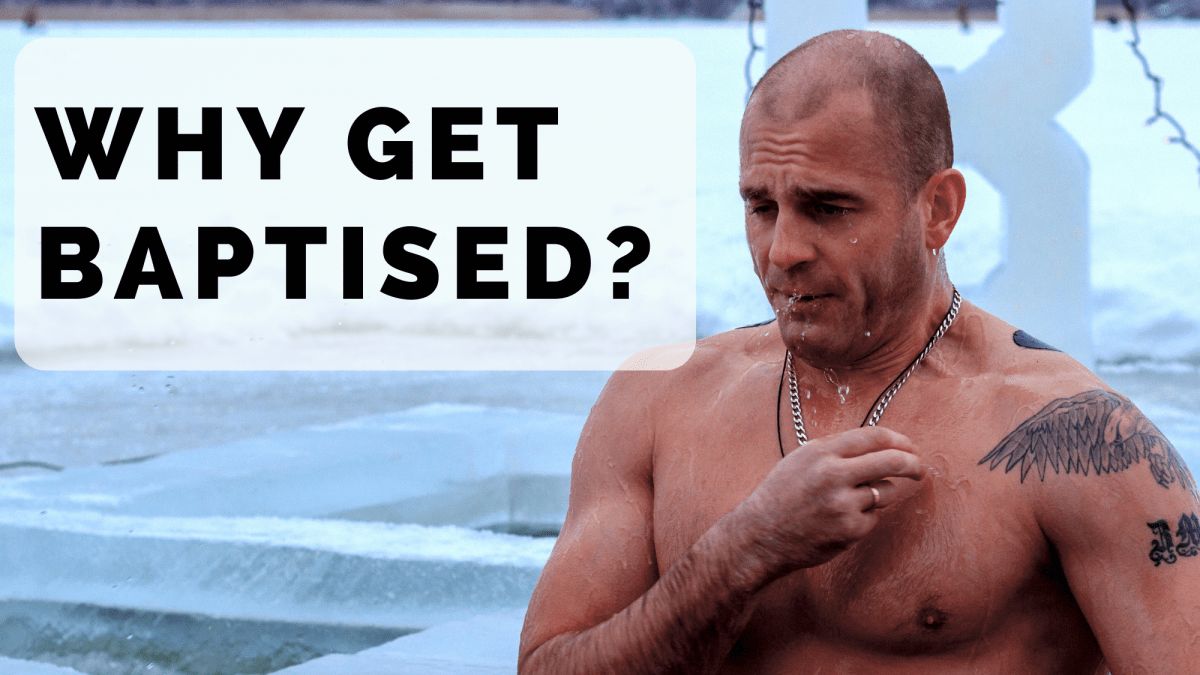
Why Get Baptised?

Why get baptised?
Jesus died because he loves me and gives me new life. Baptism is how I receive that gift.

Then Peter stood up with the Eleven, raised his voice and addressed the crowd: “Fellow Jews and all of you who live in Jerusalem, let me explain this to you; listen carefully to what I say…

“Therefore let all Israel be assured of this: God has made this Jesus, whom you crucified, both Lord and Messiah.”

When the people heard this, they were cut to the heart and said to Peter and the other apostles, “Brothers, what shall we do?”

Peter replied, “Repent and be baptized, every one of you, in the name of Jesus Christ for the forgiveness of your sins. And you will receive the gift of the Holy Spirit. (Acts 2:14, 36-38)

Introduction

The gospel is amazing news. Jesus died because he loves me and offers me new life.

Think about that for a moment.

The Son of God loved us, saw us in our sin, guilt and shame, came to live with us as one of us, took the punishment, the stain, the poison of sin, and then buried it in the ground. He releases us, cleans us, changes us, forgives us, and defeats the Devil for us.

Basically it’s brilliant.

But why do Christians get baptised in response to it?

After all, it is on any view a strange sight. An otherwise sane boy or girl, man or woman stands in a massive bath, fully dressed (thankfully), and then allows a pastor or leader to dunk them under the water. They emerge, drenched, for a room full of Christians who are clapping, cheering and (occasionally) crying.

Ancient Roots

It’s weird, properly weird. But it is also ancient.

It is the earliest recorded teaching of the Christian church that we receive new life by believing that Jesus rose from the dead, acknowledging that we need his love and forgiveness, committing ourselves to follow his teaching and being baptized into his church. Everyone who wants to follow Jesus is commanded by the apostles and their successors to be baptized.

We could give loads of examples from the New Testament. Here are just a few:

  • Jesus got baptized (Matthew 3:13-16; Mark 1:9-11; Luke 3:21-22).
  • Jesus’s followers then baptized new believers while Jesus was alive (John 3:22).
  • Jesus told his followers to go and baptize people all over the world (Matthew 28:19-20).
  • When the first church began at Pentecost, Peter commands new believers to be baptized (Acts 2:38-39).
  • That pattern is replicated over and over throughout the early churches – people hear, they believe in Jesus, they trust him, and they get baptized (Acts 8:34-40, 9:17-19 etc).

These are just a few references that you can look up to see the way baptism is a central part of the start of a Christian journey. That pattern carried on after the New Testament. Everywhere people became Christians, they got baptized.

But Why?

There is an enormous amount that could be written about baptism. At its heart, though, baptism has both a spiritual and practical effect in our lives as Christians.

Spiritual Effects

We believe that baptism is about what God has done and is doing in us through Jesus Christ.

When we are baptized we receive God’s grace and are united to Jesus and to the church.

Two pictures help us understand this: burial and bath-time.

When we go under the water we are identifying with Jesus dying and being buried. That is what St Paul means when he says “we are buried with him through baptism”. Then when we come up out of the water we are identifying with Jesus rising from the dead.

It is as if we are looking at what Jesus has done for us and saying ‘yes, I want to be a part of that’ and in response God says ‘OK, then I’ll make you a part of that’.

This isn’t just a sign or an act; it really changes us in our spirits. When we are baptized, we receive God’s grace and are united to Jesus and to the church. 

This brings me to the second picture: a bath.

I love to play football. When I do I end up covered in dirt and sweat and (sometimes) blood.

I come in from a game and before I can get on with the rest of my life, I need a bath or a shower. I need to soak in the clean water to get all of this grime and grease and stain off me. Then I can start afresh.

Part of the symbolism of baptism is that of a bath, of washing. I don’t mean that we clean our bodies. It’s about a deep cleansing for our souls.

Baptism, as a part of the whole process of identifying with and trusting in Jesus, is how God washes us clean of all the dirt and grime of sin – of the human propensity to mess stuff up, the unkind words, acts of temper, moments of violence and bitterness, the selfishness or snideness, the dishonesty or disrespect – that cling to us through our lives.

Practical Benefits

But there is a practical benefit too.

Following Jesus can be a life of great joy and peace and purpose. It is to live in tune with the moral and spiritual music of the universe, to find community and comfort and peace.

But it can also be really hard. There are times when we mess up, times when others hurt us, times when we are rejected or bereaved, times when we doubt God’s love for us, our faithfulness to him, or even his existence.

When we go through these experiences, God has given us something concrete to cling to.

Whenever you feel like this, you can look back to today and remember the feeling of being wet. You can remember the way the water touched every part of you. That was real, it was tangible. And it is a promise; that God will never leave you or forsake you, that, in the words of St Paul,

neither death nor life, neither angels nor demons, neither the present nor the future, nor any powers, neither height nor depth, nor anything else in all creation, will be able to separate us from the love of God that is in Christ Jesus our Lord.[1]

So What?

What does this actually mean for us?

Some of us may never have actually responded to what Jesus did for ourselves.
Jesus lived, and died and rose again for all of us. But we have to accept it and make it our own. It’s a bit like being given a cheque for a huge amount of money. It doesn’t benefit me unless I cash it.  You might have been in church your whole life or this might be your first time. If you’ve never consciously responded then take a moment to do so even as you read this.

Others might have become followers of Jesus recently or in the distant past. But maybe you haven’t yet been baptised. If that’s you, I want to encourage you to get baptised. It is commanded by Jesus, it is good for you now, and it will help you in the future.

Jesus died because he loves me and offers me new life.Baptism is how I receive that gift.


[1] Romans 8:38-9

Theology, Wisdom and the Fear of God

Theological writing and debate (let alone preaching) would be immeasurably improved if everyone involved imagined they will have to read out every word we write or say in public, in the presence of Christ and all the saints. 

The badge of my present University includes a Latin motto. I must confess that I had seen it lots of times but never really noticed it until last year. It reads: Initium Sapientiae Timor Domini, the Fear of the Lord is the Beginning of Wisdom. 

It is a quote from Scripture. In Psalm 111:10 we read that:

“The fear of the LORD is the beginning of wisdom;
all those who practise it have a good understanding.
His praise endures forever!”

In other words, you cannot even begin to be wise until you have learned the fear of the Lord. Wisdom depends upon a sense of reverence for God, of respect, of the genuine fear that comes from knowing that someone else is immeasurably more powerful, wise, good and authoritative than you are. 

It is a sentiment that I recognise from my time in court, particularly in the higher courts. Only a fool went into the Court of Appeal (or, I am sure, even more so the Supreme Court) without a healthy fear of the venerable, esteemed, brilliant and ruthless minds one was going to find there. The beginning of making good and wise submissions, of success, was to revere and respect the judges.

I wonder what it would mean for that sentiment to be taken seriously in contemporary theological discussion, writing and debate. 

As I have attended conferences, read papers and responded to them over the last few years I have been first struck, and then alarmed, by the lack of fear of God that accompanies a lot of Western theology. Theological work ought to be characterised by respect for God, by a sense that it really matters and will be judged. It should be underpinned by the knowledge that whatever we say (and of course it will be inadequate), we are seeking to speak of, and on behalf of, the Supreme Judge of the Universe.

This doesn’t mean that we shouldn’t take risks or be willing to disagree and dispute, and think creatively. But our discourse should reflect the fact that how we speak of God matters and that it matters primarily not because it impacts on other people but because God himself matters most of all.

Too much theological work in the West is flimsy. It lacks moral and intellectual seriousness, sometimes shown by a lack of rigour or work. It is willing to speak about God in ways that do not treat him seriously and show a lack of respect for his people, his church and those who have gone before us. 

A Couple of Examples

I think, for example, of a paper I heard presented recently. The burden of the paper, explicitly, was that St Paul was a misogynist. It is an interesting contention, and one that should not be made lightly since it involves an attack on the moral and intellectual character of one of the leading Christian thinkers in history and a man venerated as a servant of God in every part of the church. It also involves impugning the moral credibility and reliability of Paul’s writings, particularly in the New Testament.

These would be big charges to bring against anyone, let alone someone of the intellectual and spiritual stature of Paul. Yet the paper tried to argue for Paul’s misogyny on the basis of a single passage (1 Corinthians 15 in case you’re interested), extracted from its context, without addressing (or even, I checked in questions, considering) the intention of that passage or alternative interpretations of it. The paper didn’t even address or reflect upon what Paul said in the rest of that letter.

There are interesting questions about how Paul deals with men and women, and particularly how we apply that in the contemporary church. But the paper didn’t seem to be a good faith attempt to ask them. It was a hatchet job given without any sense that the way one speaks about God’s servants, or Scripture, has any consequences at all. There was no fear of the Lord.

Others have identified similar trends in different parts of the church. Mark Bauerlein at First Things wrote a brilliant piece addressing the way that Professors in New Testament Theology (in this instance in a Roman Catholic context) use Queer Theory and other branches of Critical Theory in their studies of the New Testament.

Conveying what the New Testament author actually meant, let alone putting a particular text in its ecclesial and canonical context, has ceased to be the primary goal. Instead the primary goal is to demonstrate the writer’s sophistication and facility with whatever contemporary interpretative fad presently holds sway.

Again, there is precious little evidence that theology as a discipline, or the ideas that it proposes matters. But they do. They matter because God does.

The Fear of Human Beings

In Proverbs 29:25 a second type of fear is identified, the fear of human beings. That type of fear is, we are told, “a snare”. To be anxious about what people think of us is a trap. And it is one we fall into again, and again, and again.

In this context, the location of theological discourse in the Academy (where funding often depends on demonstrating social utility), and the missional desire to bring people close to Jesus, is a major risk. When the primary driver of our work is whether we are going to be approved by other people (and particularly by those outside the church), and the criteria of a good or bad point is that approval, then we are at risk of going wrong. We are facing the wrong audience, seeking the wrong endorsement, trying to be relevant to the wrong issues.

This isn’t to adopt the classic conservative rhetorical approach of denouncing anyone who isn’t abrasive or rude to their opponents as displaying the “fear of man”. Sometimes it is good to get along with people and to be wise and discerning about what we say (just look at St Paul before Festus and Agrippa in Acts 25). We must, of course, be respectful and kind as far as we are able. Moreover, good theology will always end up serving people and the mission of the church.

But there is such a thing as showing too much respect to human beings. Ultimately the most important thing in theological debate and writing is to speak faithfully and well of God for his sake. People come second. 

In this we are following the example of Jesus who put the commandments into exactly that order: 

Jesus replied: “‘Love the Lord your God with all your heart and with all your soul and with all your mind.’ This is the first and greatest commandment. And the second is like it: ‘Love your neighbour as yourself.’ All the Law and the Prophets hang on these two commandments.” (Matthew 22:37-40)

First God. Then people.

Practical Pay Off

What might this mean in practice for theological writing and debate?

I propose a simple rule that helped immeasurably when we were involved in litigation:

All of us involved in teaching, research and preaching should imagine that we will have to read out every word we write or say in public, in the presence of Christ and before all the great theologians of history. 

If anything is likely to root us in the fear of the Lord, and therefore in wisdom, it is that. It also has the advantage of being absolutely true.

The Christian Meaning of Suffering

Suffering is a part of the human condition and is evidence of evil. Yet Christ has walked that path, can meet us in the midst of suffering and use it to bring goodness and salvation in us.

I want, in this post, to think about suffering. And, in particular, suffering as a Christian.

This isn’t an easy topic to address. Often, as Job’s friends found, we are too quick to speak when others are in pain.

Yet as a pastor I encounter suffering a lot. I, of course, experience my own pain and struggles with bereavement, depression and physical illness. I also have the privilege and burden of walking through dark valleys with others and trying to help them see Christ even in the midst of their difficulties.

The way of Jesus speaks to these times as loudly (and perhaps louder) as it does to times of blessing and joy.

Before we go any further I need to acknowledge that much of what I am saying today is influenced by the work of a much greater mind and teacher than myself: Pope (now St) John Paul II in his letter On the Christian Meaning of Human Suffering. It is hard going in places but is the product of a one of the great modern theologians and philosophers; I recommend it.

Summary

Whenever I preach or write, I always try to think about a summary of what I’m going to say, distilled down into a sentence or two. Here’s today’s:

Suffering is a part of the human condition and is evidence of evil. Yet Christ has walked that path, can meet us in the midst of suffering and use it to bring goodness and salvation in us.

The Nature of Suffering

My own reflections on suffering in this context began with the story of Jesus healing a blind man in John 9.

The account opens with Jesus seeing a man who was suffering. He suffered physically – he had never been able to see – and economically – he was a beggar.

The man’s situation began to prompt the questions that sooner or later come to everyone: why? Why is there this pain? What is the meaning of it?

These questions are universal. To experience suffering is a uniquely human thing. Animals experience pain, certainly. But they are not aware of themselves and of their pain. The mental aspect is not there and so the experience is fundamentally different.

The problem of pain is not easy to answer.

When faced with, or experiencing, suffering it is tempting, as the disciples showed, to reach for the language of blame. Surely it must be this man’s fault? Or if not him then his parents?

Jesus resists that line of logic: Sometimes suffering is the direct result of human sin – either our own or someone else’s. We don’t have to think for long to come up with examples.

But often, perhaps much more often, we suffer and there is no one directly to blame. It is fruitless to cast around for villains to accuse. Jesus doesn’t bother with that here.

Suffering isn’t always the direct result of sin but it is indicative of the presence of evil. Evil, in Christian thought, comes from a lack of, or the absence of, a good. We suffer because of a lack of something we need.

In that sense our experience of suffering is a pointer to the fact that the world is not as it should be – that it has gone wrong in some way that we cannot fully grasp.

That is why the problem of evil is so profound and also why it is ultimately evidence for the existence of God. After all, on an atheist view of the world in which all there is can be reduced to mere matter, there is no explanation for why we experience pain as “bad”. “Bad” and “good” are meaningless, non-existent ideas. For the atheist, there is no reason to believe we ought not to experience pain.

We intuitively know this is not true. Everything within us revolts at the suffering we experience and see around us. “This should not be” scream our hearts as the memory buried deep within us of a Creator who loves us and does not want this for us stirs within.

Jesus’s Response to Suffering

Suffering, then, is profoundly linked to our experience of being human. It speaks of evil but is not always (or even often) a direct response to anything we, as individuals, have done.

What is God’s response to that suffering? What is his response to any form of evil?

For Christians the answer begins and ends with Jesus.

The heart of Christianity is Jesus’s claim that:

For God so loved the world that he gave his one and only Son, that whoever believes in him shall not perish but have eternal life. For God did not send his Son into the world to condemn the world, but to save the world through him.[1]

In other words, God sees the world of evil and death, of pain and suffering, and offers himself in Christ to bear it, to confront it and to redeem it.

In Jesus, the Son of God, was willing to step into our world to face its evil and to bear its suffering, to bear our suffering, in order that he might save us.

Isaiah, the Old Testament Jewish prophet, predicted exactly this in a stunning piece of poetry that anticipated and described how the Messiah would come and suffer with us in order to redeem us.

In Christ, therefore, suffering is no longer a place forsaken by God, bearing the darkness of death and rejection of good. Rather it is a path that God himself has trod and which he has used to bring life.

In a small way we see this marked out in John 9.

  • Who saw the blind man? Jesus. Jesus sees us in our pain.
  • Who healed the blind man? Jesus. Jesus is the one who comes to fix our pain.
  • Who found the man when everyone else rejected him? Jesus. Jesus is the one who finds us and comforts us in our suffering.
  • Who would be tried by the same court, and bear the weight of their rejection and scorn? Jesus.

God’s response to suffering is not to deny it but to walk through it in order that it can be turned to good.

Encountering Christ in and Through Suffering

Now we should notice that suffering does not stop because we have become Christians. That is never promised, nor should it be expected.

Jesus told us that those who wish to receive his life must first take up their cross and follow him. The path of a follower Christ is inextricably linked with suffering even as his own path was.

In our reading the blind man obeys Jesus and receives a huge blessing in the grant of his sight. Yet immediately his suffering switches from disability and poverty to rejection and exclusion.

At the end of the story, however, it is he who has been accepted, has received light and no longer lives in darkness, while those who were powerful and apparently healthy have been revealed to be blind.

The man’s suffering has remained a source of pain and grief. Yet it has become an opportunity for him to encounter Christ. It is through his trials and his pain that he comes to see and understand who Jesus is and to receive the life that he offers.

Christians suffer even after they have come to Christ.

Yet, our suffering now is not hopeless or meaningless. Rather it can be an opportunity for us to encounter Christ (who himself walks through suffering) and so to come to a deeper understanding of him and in turn be changed to be more like him.

As we suffer as Christians, we are united, in a deep way, with the experience and life of our Master. That does not mean that our pain is not real, our frustrations not deep anymore than his were.

Rather it means that God is there with us in the midst of it, sharing it, and using it to bring us closer to him and to work something of his redemptive power in us.

In Salvifici Doloris, Pope John Paul explains that:

Suffering is, in itself, a trial of evil. But Christ has made it the most solid base of the definitive good, namely of the good of eternal salvation. By his suffering on the Cross, Christ reached the very roots of evil: those of sin and death. He has overcome the author of evil which is Satan, and his permanent rebellion against the Creator. To his suffering brother or sister, Christ opens and gradually unfolds the horizons of the Kingdom of God: of a world converted to the Creator, of a world liberated from sin, which is being built on the saving power of love. And slowly but surely, Christ introduces suffering man into this world, into this Kingdom of the Father, in a certain sense via the very heart of his suffering. Indeed, suffering cannot be transformed and changed by a grace from outside, but from within. 

St Paul puts it like this:

For just as we share abundantly in the sufferings of Christ, so also our comfort abounds through Christ.[2]

We are hard pressed on every side, but not crushed; perplexed, but not in despair; persecuted, but not abandoned; struck down, but not destroyed. We always carry around in our body the death of Jesus, so that the life of Jesus may also be revealed in our body. For we who are alive are always being given over to death for Jesus’ sake, so that his life may also be revealed in our mortal body.[3]

The End of Suffering

Ultimately, Christian hope is not merely that suffering itself can be redeemed and recast as an occasion either for our own encounter with Christ or for love to be demonstrated between people.

The final consolation, the final reassurance, for those who suffer with Christ is that this pain is not the final word. Nor, does it ultimately lead to death. Rather when we walk this road with Jesus, we can be assured that our journey ends in life; abundant, overflowing life.

We are people who not only see Christ crucified, bearing the weight of our suffering and sin on his shoulders, but Christ raised, offering light and hope to all who will receive it. He came into the world so that that light may be offered to all who are in darkness.


[1] John 3:16-17

[2] 2 Corinthians 1:5

[3] 2 Corinthians 4:8-11