How Can We Follow a Good God in a World of Pain?

Precisely because Auschwitz exists, we need faith, we need the presence of the Resurrection and of the victory of love; only the Resurrection can make the star of hope rise that allows us to live.

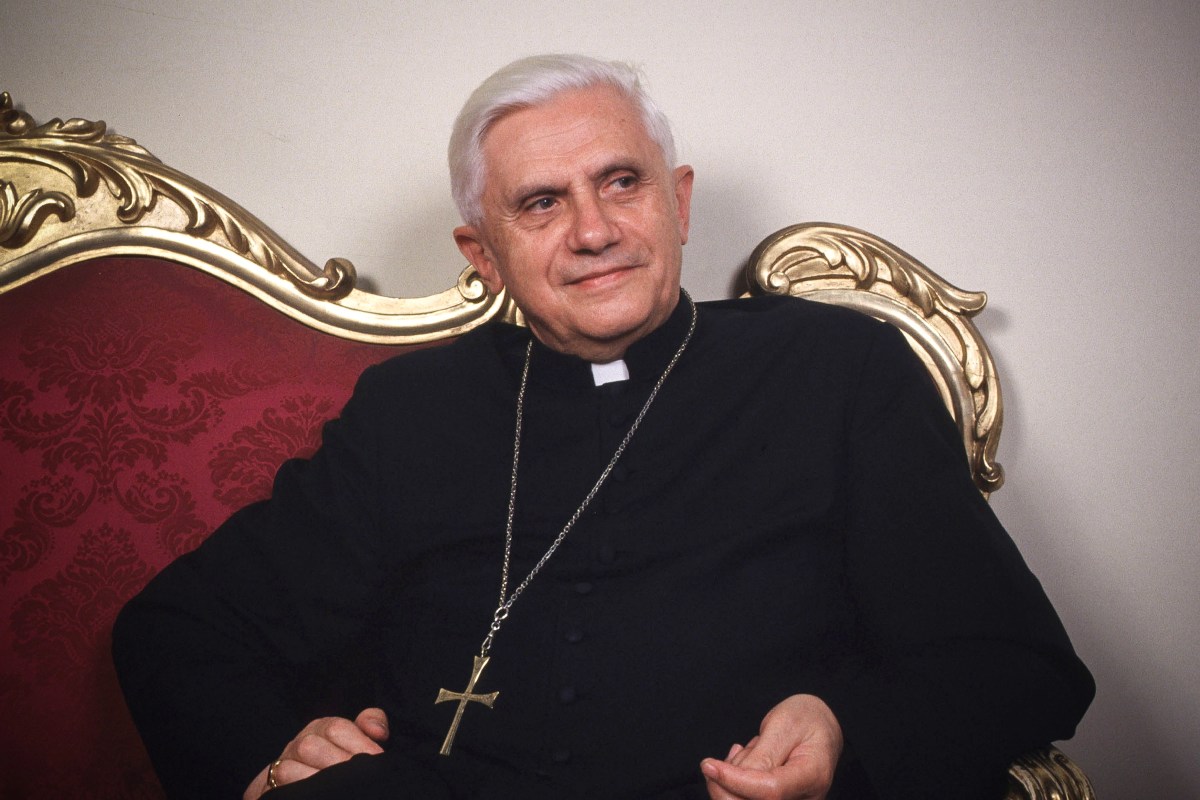
This is a question everyone wrestles with at some time or another. Here’s what Joseph Ratzinger, whose family were persecuted by the Nazis, addressed the subject in a talk to those about to be ordained to the priesthood:

The answer to an oft-asked question became clear to me as well. How often has it been said: Can anyone still believe in a good God after Auschwitz? I understood: Precisely because Auschwitz exists, we need faith, we need the presence of the Resurrection and of the victory of love; only the Resurrection can make the star of hope rise that allows us to live.
Making the Resurrection present—my dear young friends—this in fact describes completely the essence of what being a priest means. It means, most profoundly, being able to bring about this reality on the killing field of this world, in which death and its powers reap a continual harvest; it means bringing about the presence of the Resurrection and, thus, giving the answer of life that is stronger than death.
1

In turn, this changes the way that we see evil. We mourn and fight it but regard it ultimately as a defeated and vanquished foe. Thus, as Ratzinger returned to Auschwitz-Birkenau and celebrated the Eucharist, he found his perspective changed:

Making the Resurrection present… It was an exciting thought and an exciting experience, over this vast harvest field of death, on this killing field on which over a million people met their death, to live to see the presence of the Resurrection as the only true and only sufficient answer to it. It was exciting to experience how this memorial to hatred and inhumanity became a place of the triumph of the love of Jesus Christ and of love.2

  1. Ratzinger, Teaching and Learning the Love of God, p.95. ↩︎
  2. Ratzinger, Teaching and Learning the Love of God, p.94. ↩︎

Suffering, Joy and Evangelism

The Gospel can be proclaimed credibly only by someone who, on the one hand, has suffered, who has not evaded reality, the difficult reality of this world, and has stood fast in his faith in the love that is stronger than suffering.

Joseph Ratzinger (Benedict XVI) is one of my favorite writers. Almost everything he produced is gold: joyful, wise and saturated in Jesus. Here he is on great form, preaching about suffering, joy and Christian evangelism:

“When a person receives a great love, when he is privileged to know that he is loved by someone who is good and powerful and absolutely reliable, then this is no guarantee that something terrible will not happen to him, too, and remain terrible. Nevertheless, it will not be able to destroy him, because there is something in him that all these terrors cannot touch: a light and a strength that are stronger than all that. The Christian, though, is such a person; for to him is granted the gift that he is loved by God, who is absolutely kind and powerful, whose love does not depend on any moods and whose fidelity never wavers. And therefore resignation, joylessness, sullenness, humourlessness, and cynicism do not suit one who is Christian… Joylessness in this most profound sense is the repudiation of the faith, the repudiation of the God whose Yes is still the foundation of our life, whatever may happen. “Rejoice” therefore means: be believers, immersed in the certainty of what the Gospel has proclaimed to us: God loves with a love that is not fickle…

But someone who is resigned or embittered himself cannot be a bearer of Good News. The Gospel can be proclaimed credibly only by someone who, on the one hand, has suffered, who has not evaded reality, the difficult reality of this world, and has stood fast in his faith in the love that is stronger than suffering. Only someone who is an evangelist in this way can hand on the joy that we need, which is not a surrogate, a brief anesthesia, but withstands the truth of this world.”

Teaching and Learning the Love of God, p.139-140