
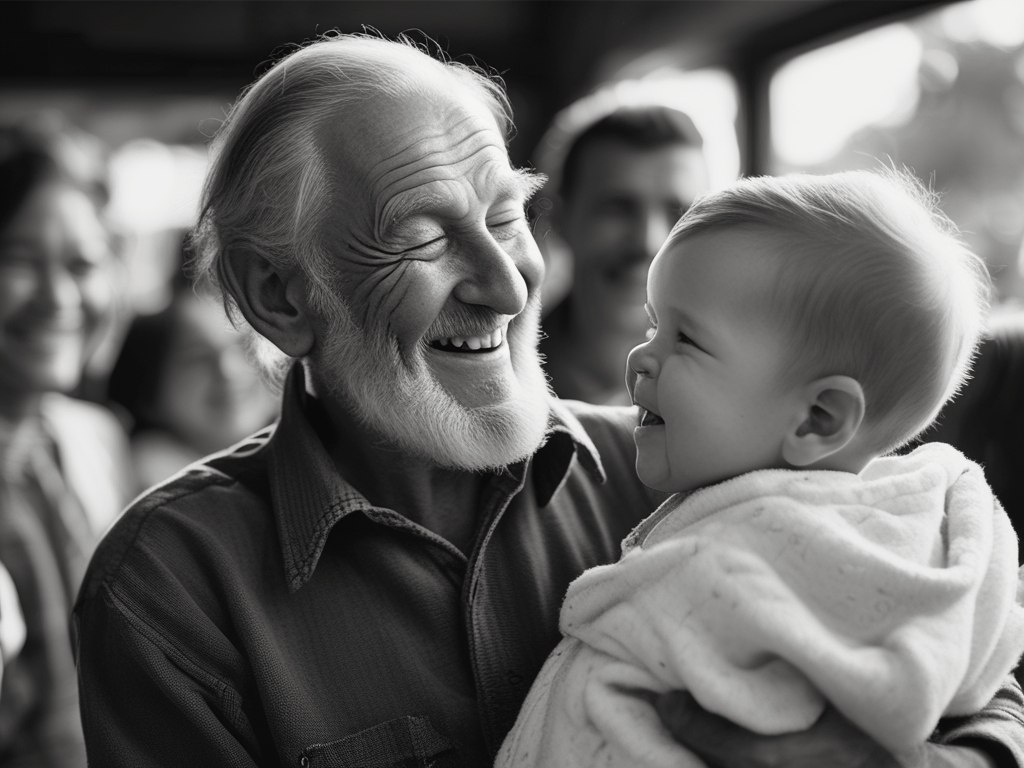
All human life is sacred, given by God and should be cherished and protected.
This week I want to think about one of the most pressing, important and sensitive issues we can: the dignity, value and sanctity of human life.
Before I write another word, I want to acknowledge that this topic may bring up painful memories, experiences or ideas. In a blog I cannot possibly do justice to the pastoral or emotional issues that arise when we consider abortion, euthanasia, war, or any related issue. For that reason I want to ask for your patience and forgiveness for when I misstep or write clumsily. Above all, however, we must always remember that while it is vital that we speak and think with clarity and courage on these issues, Jesus came not to condemn but to restore and that there is always grace and forgiveness available to us in him.
[If you’re interested in some Bible passages that relate to these ideas, you can find them here]
- The Central Importance of Life
There is no more important issue in all human ethics – all moral questions – than the dignity and value of human life. It shapes and affects everything. Your view of this question changes your answer to every other question.
Christians make several startling claims about the value of human life that change the nature of every other discussion profoundly.
We believe that human beings, both male and female, are created in the image of God. Pause there. That is the ethical point being made in the story of Eve being created from Adam; not that she is inferior to him or an afterthought. Rather that she is inseparable from him. Men and women together equally share in God’s image and his dignity.
We believe that every human being is, in the words of the Catechism of the Catholic Church, ‘unique and unrepeatable’. You matter as an individual. You are not a lego brick, interchangeable with a million others, whose only purpose is to make a bigger model. You are unique. God saw you in your mother’s womb, before you were born. He chose you.
As Benedict XVI beautifully put it, while evolutionary theory may picture how God took the stuff of this world and shaped it into people, nevertheless ‘we are not some casual and meaningless product of evolution. Each of us is the result of a thought of God. Each of us is willed, each of us is loved, each of us is necessary.’
We believe, therefore, that every human being has an inherent dignity and worth that does not depend upon others. Every life matters whether other people love it and cherish it or not. It is inherently worthy because every individual is known to God and loved by him. Every person is, to quote the Psalmist, ‘fearfully and wonderfully made’.
This means that a person’s value, dignity or worth does not increase or decrease as they age. It does not depend upon race or social class, upon intellectual ability or usefulness to a society. It does not diminish upon injury or disability.
This is one of the major problems Christianity has with ideologies or belief systems that make the individual’s worth and dignity contingent on their value to the rest of society. Communism, Fascism and other forms of totalitarianism are offences against the idea of the dignity and worth of the individual created in the image of God and of infinite value to him.
It is also one of the major problems with seeing people as a bundle of characteristics, each of which increase or decrease their significance. You are not worth more, you do not have greater dignity, if you are black or white, male or female, attracted to men or women. That kind of thinking leads inevitably and inexorably to the oppression of groups and divisions between people.
All human lives are possessed of God-given value and rights from the moment they are conceived – when God knits them together in their mother’s womb and begins to plan the adventures he has for them – until the moment they die.
We do not, we dare not, violate that dignity in others or in ourselves. To do so is a crime against the person and, most profoundly, against the Creator whose image they bear.
All human life is sacred, given by God and should be cherished and protected.
- Ethical Implications
What then does this mean for our moral lives?
It means that to be a Christian is always to be pro-life.
I am going to explain what I mean by that in a moment. Of course it is nuanced. But it is not negotiable.
The witness of the Christian church from its beginning today, in almost all places and at all times, is that to follow Christ means to be for life.
That is why Jesus came for us. He came in order that we might have life, and life to the full, life that extends to the ends of the earth, to the depths of hell, and beyond the limits of time.
To be a Christian is to be pro-life because Jesus is radically pro-life.
This has implications that are uncomfortable to talk about in polite British society.
Because Christians believe in the dignity and value of every life, irrespective of age or gender or race or class, we should work to reduce and then eliminate abortion and oppose euthanasia.
Human dignity and worth do not start at a low level, increase until a point of maximal productivity in mid-life and then decline as we get older. Putting it as baldly as this might sound odd. But that is functionally how much contemporary ethical dialogue proceeds. It is common to come across the sentiment that the very young are inconvenient, unnecessary and it would be better all around if they weren’t born at all and there were fewer people. Or that the views of the old should be given less weight and less priority because they in some sense count for less than those of the young.
The creeds begin their narrative of Jesus’ life by recording that he was ‘conceived of the Holy Spirit’. The gospels speak of how John the Baptist leaped in his mother’s womb in celebration of the presence of Christ. That is a reflection of one of the great joys of expecting a baby – to feel him or her move while still within the womb.
Abortion is a direct attack on the weakest human lives. Intentionally ending the life of an unborn human being represents a rejection of the dignity and value of those seen only by God, loved by him, and yet treated as disposable by others.
Now I will concede immediately that these are profoundly painful issues and if anyone is struggling with this, I am happy to listen, to pray and, if needed, to extend God’s forgiveness.
But we have to confront this painful reality.
More than seventy million abortions occur throughout the world each year, significantly more than the whole population of the UK.
Every. Year.
This is almost as far from God’s desire and plan for us as it is possible to get.
We will think about the broader questions in a moment. But being pro-life does not mean only that we work for the elimination of abortion.
It means opposing the intentional taking of life in other situations.
Euthanasia is not compatible with Christianity. We do not have the right to take another’s life from them. Nor do we have the right to take our own lives.
Suicide, whether assisted by others or not, is a subject of extraordinary pain. Who truly knows the anguish and illness that afflicts someone who would take their own life, except God himself.
We address these issues not to condemn those on whom we pray God has mercy and compassion but to protect and care for those who are in pain now.
I can offer many pragmatic arguments against assisted suicide from my time as a lawyer, times when I have seen people take major decisions because of perceived pressure or depression about their worth to others. We protect them against the effects of those decisions because we recognise that they are not thinking clearly.
Or the fact that the vast majority of those who attempt suicide and survive (between 90 and 95%) do not end up killing themselves. To quote the New England Journal of Medicine, this suggests that ‘many suicidal crises… including attempts that were expected to be lethal’ are actually of a ‘temporary nature and fleeting’. In other words, the evidence we have suggests that the majority of people who try to kill themselves regret it and, if they survive the attempt, do not try again.1
The idea of a settled suicidal wish, for the vast majority of cases, is just not true. And it is a profound and awful tragedy when, instead of working to make that person’s life better, society colludes in ending it.
Yet these are not the most basic arguments. Most fundamentally, euthanasia is wrong because this is a person made in God’s image and neither we nor they have the right to end their life.
All human life is sacred, given by God and should be cherished and protected.
We could go on to talk of other examples of affronts to human dignity such as war, capital punishment, poverty, discrimination and so on. We will return to these ideas later in this series.
- Putting It Into Practice
What should we do about this? How should it affect the way we behave?
As Voters
As voters, there is realistically no mainstream option among political parties for those who want to work to eliminate abortion.
However, we can campaign on and ask candidates for their plans to reduce the conditions that make abortions attractive.
In the UK, this takes the form of policies such as removing the limit on child benefit, to build more homes, to increase access to adoption services. Each of these might have a measurable effect on the demand for abortion.
We can write to MPs and campaign on the issue of Euthanasia when it comes up. The same applies if the nation is being taken into an unjust war.
As a Church
As a church we should continue to promote a culture that embraces life. That means being clear that caring for the elderly is a priority for us, within our church community and beyond.
It means welcoming children and supporting families with babies. This means going beyond Sundays to the work that we do with midwives, health-care visitors, toddler groups and so on.
As Individuals
As individuals, the most important thing we can do is to pray.
Beyond that, however, let us challenge ourselves: do we see all people as created in the image and likeness of God? Do my actions and interactions with others reflect this belief?
What about the people who bother us at work, at home, or at school? Do we care for them as made in God’s image?
All human life is sacred, given by God and should be cherished and protected.
- Matthew Miller and David Hemenway, ‘Guns and Suicide in the United States’, N Engl J Med 359.10 (2008) < https://www.nejm.org/doi/full/10.1056/NEJMp0805923#:~:text=The%20temporary%20nature%20and%20fleeting,on%20to%20die%20by%20suicide. > ↩︎
 Deep Church