Having Hope in an Age of Darkness

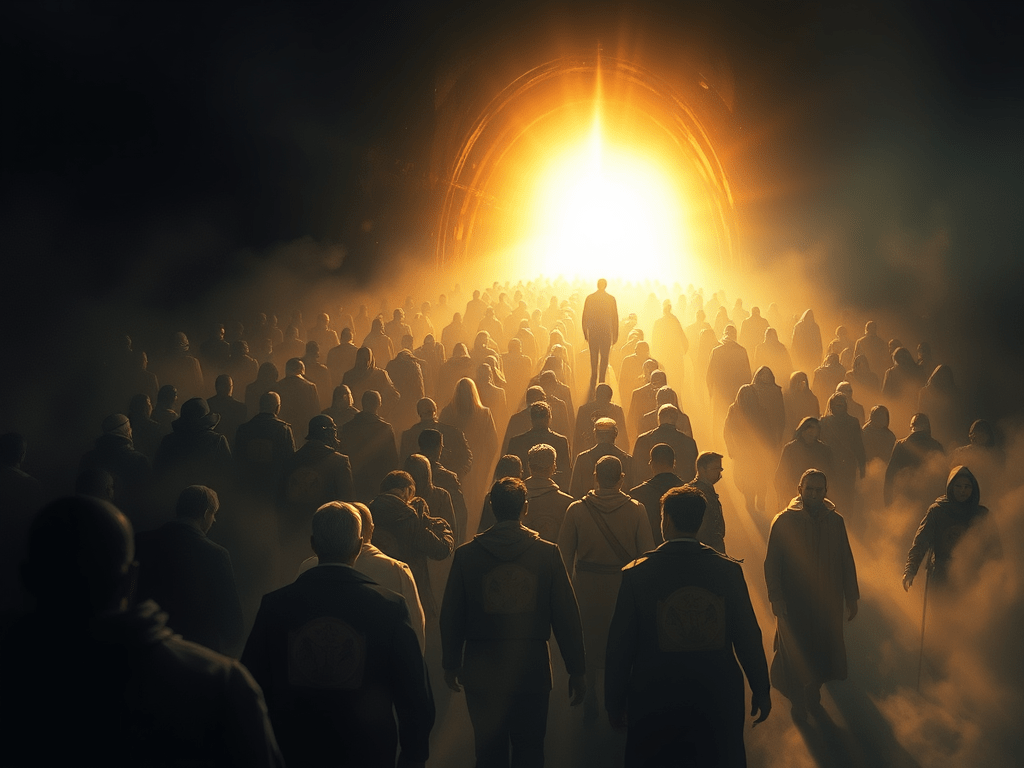
In a season of darkness we can keep on choosing life. We can be committed to embracing new life in babies, to making our homes, families, workplaces, friendships as open to life and grace as we can. We can embrace the stranger, care for our elderly, show love and compassion to our enemies. We can resolve never to give in to nihilism or self-centredness and instead keep living for the sake of God and of others. This will not be easy. But it is possible because God keeps his promises.

Do not be afraid! God keeps his promises.

I wrote these reflections on how to live free from fear and anxiety, how to be a people of hope, before last week’s decision concerning assisted suicide.1 In light of that vote, however, these ideas are particularly important. 

One of the famous texts that is read at 9 Lessons and Carols most years is Jeremiah 33:14-16. It is all about hope and fear.

Jeremiah begins his message to Israel with reassurance about God’s faithfulness:

The days are coming,’ declares the LORD, ‘when I will fulfil the good promise I made to the people of Israel and Judah.

It is worth sitting with this for a moment. God makes promises to us. He is a promise making God.

Incidentally, God doesn’t have to be like this. He could be arbitrary – doing whatever he wants whenever he wants it. That kind of God is a tyrant, untrustworthy and unreliable. We intuitively know God isn’t like this. It is written into the very fabric of the universe which, completely unnecessarily, is governed by laws. In that it reflects the character and mind of its Creator.

One of the earliest things we read God say in Scripture is a promise. We can read about this in Genesis 3:14-15.

Through Eve and then Adam sin had entered the world. She had received a message from an angelic messenger – pictured here as a serpent – who tempted her with a promise of power. If only she defied God, humanity would take God’s place. And so she had taken the fruit and ate. It was an act of defiance, of rejection, and it brought a poison into humanity that would eat up and kill generation after generation. They would be cut off from the presence of God and his light. This is always the path when we choose darkness. Man and woman are promised that they will become like God; instead they become less than human. The rejection of light and life is the embrace of darkness and death.

But at the outset of this creeping darkness God spoke a promise of light. One day there would arise a woman who would have a Son and that Son would crush the serpent. He would provide a Redeemer to deliver humanity from the curse it had brought upon itself. These promises are repeated in different forms throughout the Scriptures to Israel and then to her kings and prophets. King David is promised a son who would reign not as one who dies but who lives forever.

We can read these promises, and receive them for ourselves. Perhaps you feel you have had promises from God – that you would flourish, that your friend or family member would come to know Jesus, that he would never forsake you. But at times it feels as if the promise is failing. We wait and wait but still the darkness advances and we come to fear the future, to fear the power of the Serpent, to fear that God has failed.

That was the position of ancient Israel when Jeremiah spoke. The promise to King David seemed in ruins. The kingdom he built had divided, his sons had failed morally, politically, militarily. And his people were going into exile. On and on the darkness marched as the Serpent’s voice seemed the only one that sounded.

It was precisely at this time that Jeremiah reaffirms the promise. He calls his people to hope.

God speaks in the midst of the darkness and what he says is “Fear Not!” “Do not be afraid”. The God of Israel, of the Cosmos, of your heart, is the God who lives and reigns even when darkness abounds.

The hope of Israel may seem to have fallen and been crushed but God is going to make it spring up, sprout from the broken stump of David’s line. Can you feel the imagery? David’s tree has been axed down, felled and broken. But in this moment of death God is going to bring resurrection. 

And so we come to Luke 1 and the story of the annunciation. The familiarity of the verses can blind our eyes to the reality of what is happening.

Here is the second woman, filled with grace (v.28). Your copy will read “highly favoured”, literally, saturated with God’s gifts. She is one who has been prepared and sanctified by God for this moment. While Eve’s sin had separated humanity from God and now to Mary comes the word: “God is with you”. Eve had brought the Serpent to power; through Mary will come the One to crush that Serpent’s head. And where Eve had defied God’s design for her grasping power and equality with God, Mary would reply “I am the Lord’s servant…May your word to me be fulfilled.” To the woman comes an angelic message. The promise is to be fulfilled. David will have his king to sit on the throne.

Suddenly, when hope seemed lost, when Israel was dominated by tyrants, humiliated and oppressed, when the promises of God were a long-held but distant memory, God acted.  He had been working through all the ages even when we could not see it.

He was working in Cain and Abel, in the flood of Noah, in Abraham and Joseph, in David and Solomon, in Ruth and Moab, in Esther in Exile, through Isaiah and Jeremiah and Micah and the Macabees. It was hard to see, darkness seemed to reign, death seemed ever more present. Fear was a natural response. And yet God was working.

And so he brought a new Eve, ready to bear the fulfilment of every promise – the eternal yes, the final word: Fear Not!

Even as Christ battled demons, diseases and demagogues, darkness and death seemed to triumph. But a voice would echo from the despair of Calvary: Fear Not! And Christ would rise triumphant from the grave.

My friends and fellow-sinners. I don’t know what promises you have received from God this year or through your life. Some of us are in that moment of rejoicing, standing with St Mary and acclaiming with joy: How can this be? What a God who fulfils his promises!

Some of us are in exile with Jeremiah, looking at a life which seems marked with pain where the presence of evil is all too obvious. The temptation is to despair, to succumb to fear of the present of the future.  If that is you, you are in good company. But my message to you this morning is the same as Jeremiah’s: Fear Not! 

The God of Israel, the God of Eve and Mary, the God of Jesus Christ has not forsaken you or forgotten you. It is precisely from the place of death that we encounter resurrection power.

The world can seem increasingly dark. There are wars and rumours of wars. The gospel retreats in the West even as it advances in the East and in Africa. At times it feels as if the Serpent is winning and the kingdom of death and darkness are at hand. But even now, especially now, God is at work. He has not forsaken us. He will not forsake us. Fear Not!

There will be a day when you will stand in glory with Mary and acclaim the glorious faithfulness of her Son. When you will stand with Jeremiah and say: I saw the fulfilment of the promises. When the hand that flung the stars and surrendered to nails will wipe the tears from your eyes and speak over you words of love and grace. Fear Not!

If your life is hard, then take heart. God hasn’t forsaken you. Lean into him. Find a good prayer app or practice that you can hold onto even when life is hard. You can try the Bible in One Year, Lectio 365, or Hallow.

Often the answer to our prayers, the fulfilment of God’s promises in our lives, requires our consent, our courage. Mary is our mother in this: we need to resist the temptation to become hardened or so sad that we are unable to say ‘yes’ when the promises begin to be fulfilled.

Finally, we need the courage to live as men and women of hope and life in the midst of a culture that embraces despair and death.

Our culture is becoming increasingly dark. This is likely to continue. Once one has accepted the logic that unborn life can be terminated for reasons of convenience or, to be blunt, finance, the logic of terminating other inconvenient life becomes irresistible. And so it has proved. This is a deeply dangerous trajectory for a society to be on and it can cause us to feel lost and afraid.

The alternative is to have the courage to keep on choosing Christ, to keep on choosing life. We can be committed to embracing new life in babies, to making our homes, families, workplaces, friendships as open to life and grace as we can. We can embrace the stranger, care for our elderly, show love and compassion to our enemies. We can resolve never to give in to nihilism or self-centredness and instead keep living for the sake of God and of others. This will not be easy. But it is possible because God keeps his promises.

    1. I refuse to use the euphemism ‘assisted dying’: words matter and we should not hide from the reality that what was approved last week is physicians giving poisons to patients so that they can kill themselves ↩︎

    Is Jesus True for Everyone?

    Jesus is true for everyone. And that’s really good news.

    Christianity is what is called a missionary faith. We are people with purpose – to bring the whole world to Jesus and to enable people to know him. We are explicit about it. We want to help people to convert.

    This idea makes some people uncomfortable. In fact, for the reasons I’m going to explain, it not only makes sense, it is good. 

    I’m not going to extract loads of Bible verses. But you might want to read these passages if you want to see some of the Scriptural background to what I’m saying.

    1. Christianity claims to be the truth.

    First, we need to see that Christians make some profound claims about Jesus.

    Jesus himself claimed to be one with God – his perfect representation on earth. That is what he is saying in the reading we heard from John’s gospel – when you look at Jesus, you see God.

    That isn’t something later Christians made up. It goes right back to the beginning. In Colossians, written right at the start, Paul claims that God fully dwells in Jesus.

    That doesn’t mean that Jesus is the only thing that tells us anything about God. We can learn something about him in lots of places – creation, culture, beauty, even the mathematical laws of science reveal the brilliant mind of God.

    But it is in Jesus that we see God clearly, and fully.

    More than that, Jesus is the only way to God. Everyone needs Jesus and it is only through Jesus that human beings can be forgiven their sin, healed, and receive eternal life. Everyone who is saved will be saved through Christ.

    Again, these ideas are central to who Jesus claims to be. 

    1. Why This Makes Sense

    Given that this is what we believe, it makes complete sense to argue that Christianity is the true religion and that it is true for everyone.

    Against this some people argue that all religions are simply different paths to God. It doesn’t matter what you believe; all roads lead to the same place in the end. Therefore, it is said, we shouldn’t try to convert one another.

    This argument is, to put it as charitably as I can, absolute nonsense. Even worse, it is patronising and slightly racist nonsense.

    First, it doesn’t understand the way facts work.

    When you claim something as an objective fact, it is either true or false. Universal facts aren’t true for some people but not for others depending on how they feel. They just are.

    Suppose someone said that Swindon Town are in the Premier League this year. And I said that they aren’t. It doesn’t matter how strongly he feels about it, it is a question of fact. It is either right or wrong.

    That is either true or it is not. What it cannot be is true for some people but not for others.

    Everyone knows this but somehow forgets it when it comes to questions of faith.

    That brings me to the second point: it doesn’t understand how religions work.

    Christianity and other faiths make truth claims. They are at least as much about facts as feelings.

    Christianity makes claims about the true nature of the universe. It claims certain facts to be true: that there is one God, that Jesus is his Son, that he did die and then he rose again. Moreover, it is through him that people are saved.

    Christian theologians and evangelists support this arguments by appealing to philosophy (arguments about why it is sensible to believe in God), human experience (the desire to love and be loved), and history (the evidence for the life, death and resurrection of Jesus).

    Muslims, by contrast, believe that Allah has no Son, that Jesus was not really divine, that he did not really die and that he did not rise from the dead. They don’t believe that people are forgiven by trusting in Jesus.

    These are truth claims about the nature of reality and history. And they directly contradict Christianity. 

    Christianity and Islam cannot both be true. They contradict one another. Just like the earth cannot both be a globe floating in space and a flat desert carried on the backs of a giant turtle.

    That isn’t to be critical of Islam or any other religion. Quite the opposite. It is to take them seriously. 

    By contrast the person who seems to love all religions equally actually despises and patronises each of them.

    It is nonsense to suggest that they are just different ways of saying the same thing. 

    Nor is it arrogant to suggest that if one is right, the other is wrong – it is simply reality.

    1. It is Good to Try to Convert Each Other

    Still, maybe it is bad to try and persuade people to change their religion.

    This argument sounds kind. But it is also really bad:

    It treats people like children who don’t have the ability or the right to make their own decisions. More than that, it actually leaves them in danger. Finally it ignores and treats as unworthy of respect the stories of those who have decided to change religion, even in terribly difficult circumstances.

    Trying to persuade someone to change their mind about something important is both a mark of respect and, if it is because you want their good, an act of love.

    We persuade people of important things because we think they are able to make decisions for themselves. It is a mark of our respect for them. They don’t need to be coddled or wrapped in cotton-wool in case an idea upsets them. They are a real person, with their own mind and desires and eternal soul.

    Moreover, we should try to convert them not just because we respect them but because we love them. If Christianity is true, then their eternal soul is dying from the inside out. They are in danger of eternal death. To try and prevent that is not disrespectful or unkind; it is a mark of profound love.

    Finally, to believe in preaching the gospel and trying to bring people to Christ is to take account of the lives and stories of those who have given everything to follow Jesus and found profound joy and peace in it.

    I could tell you of the 45 Ugandan martyrs who converted to Christianity. They were executed by the Ugandan king, Mwanga II, in 1880 when they refused to renounce Christ.

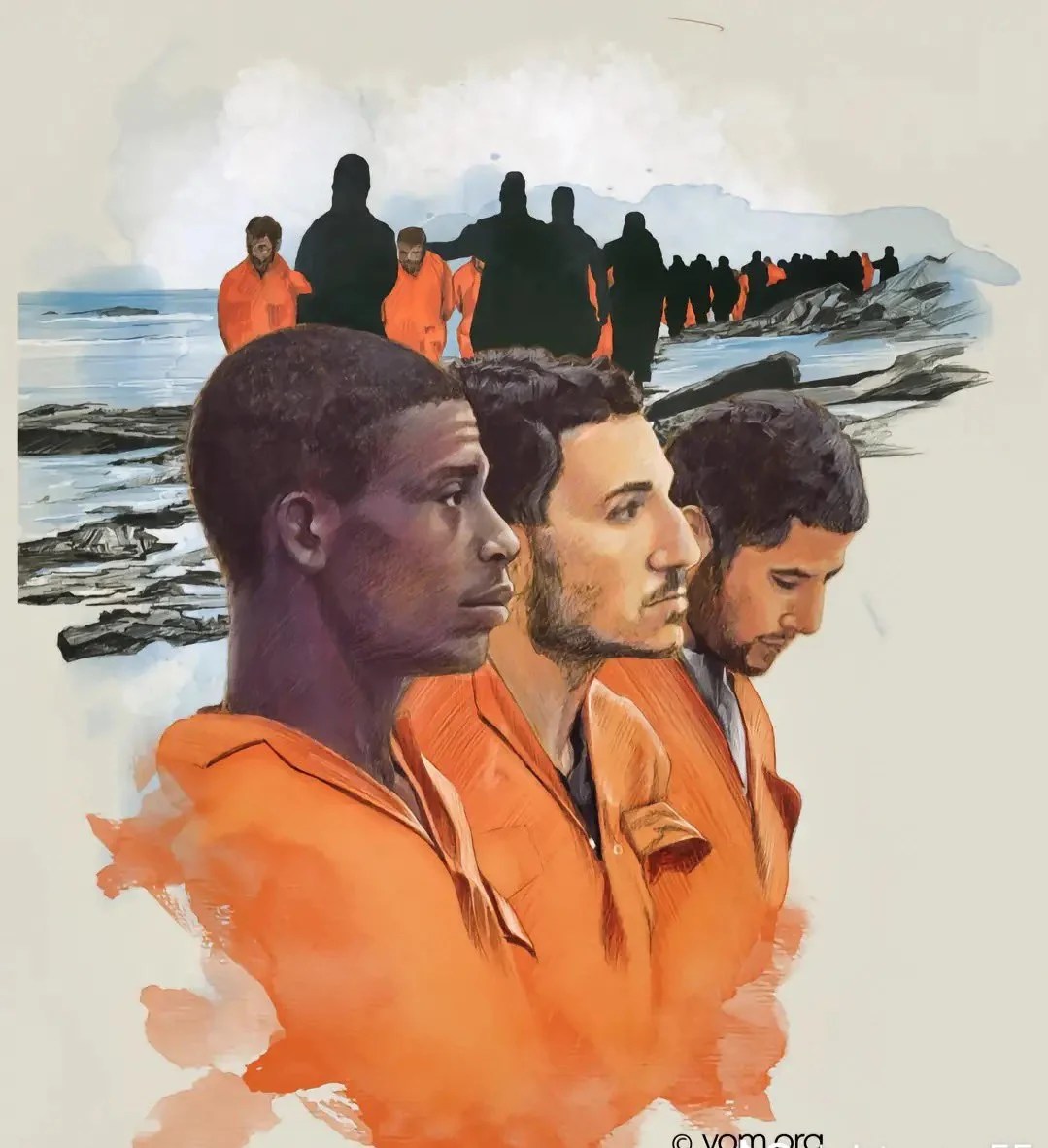
    Or in 2015, of the 21 Egyptian Orthodox Christians who were kidnapped and executed by Islamic State for refusing to renounce Jesus. They died audibly praising his name.

    Or of those I myself have baptised who have fled their homes and countries in the Middle East for the sake of choosing Jesus and are unable to return.

    I could tell you story after story of men and women who have lost enormous amounts in order to gain Christ and consider it a brilliant trade. Christianity takes their stories, often from within marginalised and ignored communities seriously.

    So what should we do about this?

    • Lean into Jesus and commit to him. The truth about Jesus is far better, more profound and more satisfying than we often remember. If you are a Christian, lean into your faith. Get to know it. It is very cool and deeply joyful.
    • Be humble, curious and prayerful with friends from other points of view. Evangelism is only morally good when we genuinely care about those we are going to; it is only effective when they understand and trust that we care about them.
    • As you listen, seek points of overlap to give away to share Jesus with them. Because you respect and love them, try to convert them. 

    Jesus is true for everyone. And that’s really good news.

    The Benefit of the Doubt

    Doubt is not always bad. If we handle it in the right way, doubt can spur us on to a richer, more satisfying and deeper faith.

    Doubt is not always bad. If we handle it in the right way, doubt can spur us on to a richer, more satisfying and deeper faith.

    Everyone experiences doubt at some point in their lives. This can affect our relationships with each other. Drawing on his own counselling ministry and research, the Christian writer and philosopher, Gary Habermas, observes in his excellent Dealing with Doubt that ‘Doubts concerning the ideas or persons most important to us might be called an almost universal fact of life.’ 

    This is true both for religious people and atheists, for matters of faith and any other area of life in which we have to deal with things of significance. 

    CS Lewis reflected on his own experience of periods of doubt as both an atheist and a Christian:

    ‘Now that I am a Christian I do have moods in which the whole thing looks very improbable; but when I was an atheist I had moods in which Christianity looked terribly probable.’

    Uncertainty is a part of human existence. That means that doubt is, too.

    Doubt is not always bad. As we will see, Jesus doesn’t condemn it in the disciples. Moreover, if we handle them in the right way, periods of doubt can spur us on to a richer, more satisfying and deeper faith.

    We should also note that doubt isn’t simple. We can be tempted to imagine that it is always an intellectual phenomenon. In reality, those involved in counselling people experiencing periods of doubt in different contexts have found that there are actually different types of doubt, each of which requires its own response.

    In this passage we see Jesus’ response to three types of doubt.

    1. Doubt in the emotions
    2. Doubt in the mind
    3. Doubt in the will

    Emotional Doubt

    In Luke 24:36 Jesus’s first words to his disciples when he appears to them after his resurrection are ‘peace to you’

    The first species of doubt is emotional. This is where doubt arises largely from our feelings rather than a particular intellectual problem. Habermas estimates that more than ⅔ of doubt he has come across in church is actually emotional.

    Doubt can often seem to be about ideas when actually it is about feelings. 

    This is a classic example. The disciples have been through a terrible trauma. They are utterly exhausted. They are also scared, probably angry, have been betrayed by their mate, and seen everything they believe in apparently crash around their ears.

    They are having a very bad week.

    In the midst of tiredness, hunger, and pain we can begin to doubt in a visceral way.

    Lewis expresses it in this way:

    Our faith in Christ waivers not so much when real arguments come against it as when it looks improbable–when the whole world takes on that desolate look which really tells us much more about the state of our passions and even our digestion than about reality.

    When we experience this type of doubt we need to be healed, not persuaded. That is why Jesus just says: ‘Peace be to you.’

    This healing has three parts:

    1. Physical:
      Get some sleep. Take some time off work if you are burnt out. Do something fun. Eat well.
      For example, I never take seriously anything I think after 10pm. It’s tiredness talking.
    2. Mental:
      If you are assailed by an idea you know to be false (like I’m too awful for God to love), identify the idea, name it, and challenge it with truth. Memorising Scripture is good for this.
    3. Spiritual:
      Learn to pray, particularly contemplative prayer. If you struggle to think of ways to pray, speak to me. 

    Intellectual Doubt

    Second, we can experience doubt in our minds. 

    This is what is going on in Luke 24:37-39. The disciples are struggling to believe that someone really could rise from the dead. They can’t get their heads around it. So Jesus offers them evidence to explore.

    Every thinking Christian at some point will have questions about the faith.

    They might be about the reliability of the gospels: how do we actually know that Jesus lived and died and rose from the dead?

    They might be about the existence of God: what arguments are there for believing that there is something more than the material world?

    They might be about specific questions such as the problem of evil or reconciling scientific discoveries with the content of Scripture and the faith.

    These questions are not new – they have been well canvassed by some of the most brilliant minds in the history of the world, from both science and philosophy. And many of those asking these questions end up as Christians.

    So how do we deal with this type of doubt:

    1. Maintain a strong devotional life.
      Staying in the Scriptures, and have a regular pattern of prayer feeds our minds and our souls.

    Lewis said:

    …make sure that, if you have once accepted Christianity, then some of its main doctrines shall be deliberately held before your mind for some time every day. That is why daily prayers and religious reading and church-going are necessary parts of the Christian life. We have to be continually reminded of what we believe. Neither this belief nor any other will automatically remain alive in the mind. It must be fed.

    1. Look for answers.
      Jesus offers his disciples evidence for his claims. There is really, really good evidence for Christianity.
      The questions we have are ones that brilliant minds have considered (not least Lewis himself). If you are really struggling with doubt in your minds about a particular question, look into it.
    2. Be patient.
      None of us is that smart and we need to be patient if we don’t get everything right away. Some things are really difficult. God is really big. We are really small.
      That doesn’t mean don’t apply your mind. It does mean having a healthy humility about your capacity to reason to the answer on every question in your own time.

    Doubt in the Will

    The third type of doubt flows from the will.

    This means that God is asking us to do something we don’t want to do. It is usually characterised by knowing the facts but not being willing to do the thing they seem to imply.

    This is suggested by what Jesus says in Luke 24:46-49

    By this stage the disciples know that Jesus is alive. The question is, are they going to go and tell anyone about him?

    Types of challenge that can cause this species of doubt can include ethical problems (I really want to sleep with my boyfriend even though I know I shouldn’t), to come to church (I know I should go but I want to stay home) or missional (I know God wants me to do something for him but I don’t want to).

    This type of challenge can lead to doubt. It isn’t a rational process: we rarely think ‘I don’t want to do [X]  so I don’t believe anymore’.

    Rather it manifests itself in raising up small, ‘picky’ issues that on any objective view aren’t really relevant to a life of faith or in refusing to accept, or even really consider, any answers or explanations that are given to apparent problems. The dispeace or uncertainty therefore continues and nothing can touch it.

    This happens because faith isn’t just a question of belief but of action. It implies a choice about what I will do – what Paul describes as the obedience of faith.

    How do we address this type of doubt? Jesus’ response to the disciples suggests two things:

    1.  We need to exercise our wills.
      Ultimately only we can choose to follow Christ. By God’s grace, every one of us has that agency. We are treated like grown-ups.
      It can be hard, painful and require the support of friends. But the choice is ours. 
    2. We need the Holy Spirit.
      Christ knows that the task is too difficult for them to do on their own. It is too difficult even to begin on their own. I think that is not only because they need the power to do it. It is because they need the courage to choose it.
      This implies prayer. When we are facing a hard choice, we need to be those who come to Jesus and ask for the Spirit’s power to choose well. Or even to desire to choose well. Don’t underestimate the power that is available to one who seeks it.

    Application

    I’ve offered ideas about how we respond in each of these areas as we have gone along. Nevertheless, I want to close by offering some general principles for dealing with doubt.

    • Keep together.
      Doubt, whether in our minds, emotions or wills is not something to be ashamed of or gone through alone. Talk to people.
      Obviously, be careful who you speak to if it is personal. But this is part of why God puts us in churches.
      For example, if you are wrestling with the problem of evil or the relationship between Creation, evolution and Scripture, come and talk to a pastor or theologian. You can even email me. I won’t judge you; the chances are I have thought about the same things. 
      If stuff is hard emotionally and you are starting to doubt your faith, talk to a friend or life group. You might find something as simple as a hug, or crying with them, makes a huge difference. Or it might take much longer.
      But use each other.
    • Keep praying.
      Above all else, keep Christ before you. If you are wondering if it’s worth it, I would ask: why not? What are you losing by continuing to pray and to come to church? And often it is through prayer and worship that we find ourselves united to Christ in a way that relativises all our doubts.
    • Keep humble and be patient.
      Always remember how small even the smartest and most together of us are compared to God, the universe and the things we are dealing with.
      There is such a big temptation to want to rush to conclusions or take immediate action in response to every thought. I cannot stress how important it is to resist that temptation.
      Be patient. With yourself, with God, with the answers. Stuff takes time to heal, to find, to understand and to accept.

    Doubt is not always bad. If we handle it in the right way, doubt can spur us on to a richer, more satisfying and deeper faith.

    How Can We Follow a Good God in a World of Pain?

    Precisely because Auschwitz exists, we need faith, we need the presence of the Resurrection and of the victory of love; only the Resurrection can make the star of hope rise that allows us to live.

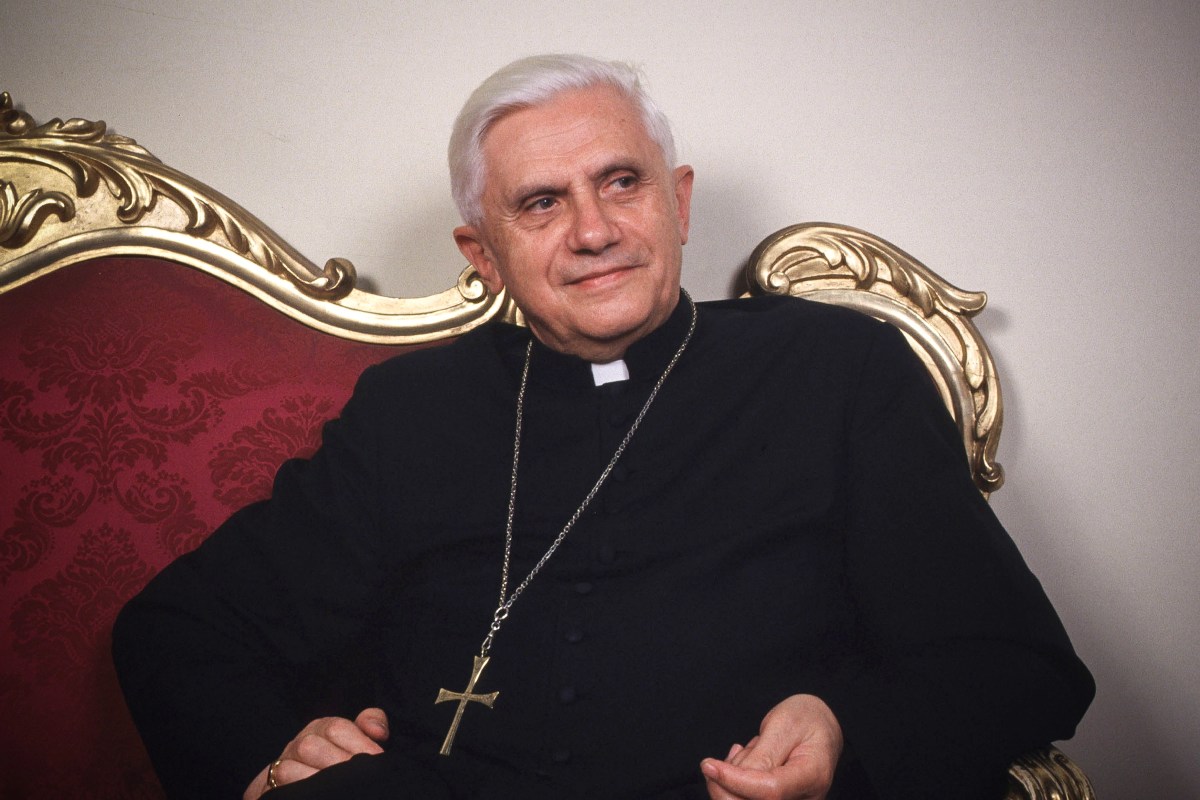
    This is a question everyone wrestles with at some time or another. Here’s what Joseph Ratzinger, whose family were persecuted by the Nazis, addressed the subject in a talk to those about to be ordained to the priesthood:

    The answer to an oft-asked question became clear to me as well. How often has it been said: Can anyone still believe in a good God after Auschwitz? I understood: Precisely because Auschwitz exists, we need faith, we need the presence of the Resurrection and of the victory of love; only the Resurrection can make the star of hope rise that allows us to live.
    Making the Resurrection present—my dear young friends—this in fact describes completely the essence of what being a priest means. It means, most profoundly, being able to bring about this reality on the killing field of this world, in which death and its powers reap a continual harvest; it means bringing about the presence of the Resurrection and, thus, giving the answer of life that is stronger than death.
    1

    In turn, this changes the way that we see evil. We mourn and fight it but regard it ultimately as a defeated and vanquished foe. Thus, as Ratzinger returned to Auschwitz-Birkenau and celebrated the Eucharist, he found his perspective changed:

    Making the Resurrection present… It was an exciting thought and an exciting experience, over this vast harvest field of death, on this killing field on which over a million people met their death, to live to see the presence of the Resurrection as the only true and only sufficient answer to it. It was exciting to experience how this memorial to hatred and inhumanity became a place of the triumph of the love of Jesus Christ and of love.2

    1. Ratzinger, Teaching and Learning the Love of God, p.95. ↩︎
    2. Ratzinger, Teaching and Learning the Love of God, p.94. ↩︎