
Christianity is what is called a missionary faith. We are people with purpose – to bring the whole world to Jesus and to enable people to know him. We are explicit about it. We want to help people to convert.
This idea makes some people uncomfortable. In fact, for the reasons I’m going to explain, it not only makes sense, it is good.
I’m not going to extract loads of Bible verses. But you might want to read these passages if you want to see some of the Scriptural background to what I’m saying.
- Christianity claims to be the truth.
First, we need to see that Christians make some profound claims about Jesus.
Jesus himself claimed to be one with God – his perfect representation on earth. That is what he is saying in the reading we heard from John’s gospel – when you look at Jesus, you see God.
That isn’t something later Christians made up. It goes right back to the beginning. In Colossians, written right at the start, Paul claims that God fully dwells in Jesus.
That doesn’t mean that Jesus is the only thing that tells us anything about God. We can learn something about him in lots of places – creation, culture, beauty, even the mathematical laws of science reveal the brilliant mind of God.
But it is in Jesus that we see God clearly, and fully.
More than that, Jesus is the only way to God. Everyone needs Jesus and it is only through Jesus that human beings can be forgiven their sin, healed, and receive eternal life. Everyone who is saved will be saved through Christ.
Again, these ideas are central to who Jesus claims to be.
- Why This Makes Sense
Given that this is what we believe, it makes complete sense to argue that Christianity is the true religion and that it is true for everyone.
Against this some people argue that all religions are simply different paths to God. It doesn’t matter what you believe; all roads lead to the same place in the end. Therefore, it is said, we shouldn’t try to convert one another.
This argument is, to put it as charitably as I can, absolute nonsense. Even worse, it is patronising and slightly racist nonsense.
First, it doesn’t understand the way facts work.
When you claim something as an objective fact, it is either true or false. Universal facts aren’t true for some people but not for others depending on how they feel. They just are.
Suppose someone said that Swindon Town are in the Premier League this year. And I said that they aren’t. It doesn’t matter how strongly he feels about it, it is a question of fact. It is either right or wrong.
That is either true or it is not. What it cannot be is true for some people but not for others.
Everyone knows this but somehow forgets it when it comes to questions of faith.
That brings me to the second point: it doesn’t understand how religions work.
Christianity and other faiths make truth claims. They are at least as much about facts as feelings.
Christianity makes claims about the true nature of the universe. It claims certain facts to be true: that there is one God, that Jesus is his Son, that he did die and then he rose again. Moreover, it is through him that people are saved.
Christian theologians and evangelists support this arguments by appealing to philosophy (arguments about why it is sensible to believe in God), human experience (the desire to love and be loved), and history (the evidence for the life, death and resurrection of Jesus).
Muslims, by contrast, believe that Allah has no Son, that Jesus was not really divine, that he did not really die and that he did not rise from the dead. They don’t believe that people are forgiven by trusting in Jesus.
These are truth claims about the nature of reality and history. And they directly contradict Christianity.
Christianity and Islam cannot both be true. They contradict one another. Just like the earth cannot both be a globe floating in space and a flat desert carried on the backs of a giant turtle.
That isn’t to be critical of Islam or any other religion. Quite the opposite. It is to take them seriously.
By contrast the person who seems to love all religions equally actually despises and patronises each of them.
It is nonsense to suggest that they are just different ways of saying the same thing.
Nor is it arrogant to suggest that if one is right, the other is wrong – it is simply reality.
- It is Good to Try to Convert Each Other
Still, maybe it is bad to try and persuade people to change their religion.
This argument sounds kind. But it is also really bad:
It treats people like children who don’t have the ability or the right to make their own decisions. More than that, it actually leaves them in danger. Finally it ignores and treats as unworthy of respect the stories of those who have decided to change religion, even in terribly difficult circumstances.
Trying to persuade someone to change their mind about something important is both a mark of respect and, if it is because you want their good, an act of love.
We persuade people of important things because we think they are able to make decisions for themselves. It is a mark of our respect for them. They don’t need to be coddled or wrapped in cotton-wool in case an idea upsets them. They are a real person, with their own mind and desires and eternal soul.
Moreover, we should try to convert them not just because we respect them but because we love them. If Christianity is true, then their eternal soul is dying from the inside out. They are in danger of eternal death. To try and prevent that is not disrespectful or unkind; it is a mark of profound love.
Finally, to believe in preaching the gospel and trying to bring people to Christ is to take account of the lives and stories of those who have given everything to follow Jesus and found profound joy and peace in it.
I could tell you of the 45 Ugandan martyrs who converted to Christianity. They were executed by the Ugandan king, Mwanga II, in 1880 when they refused to renounce Christ.
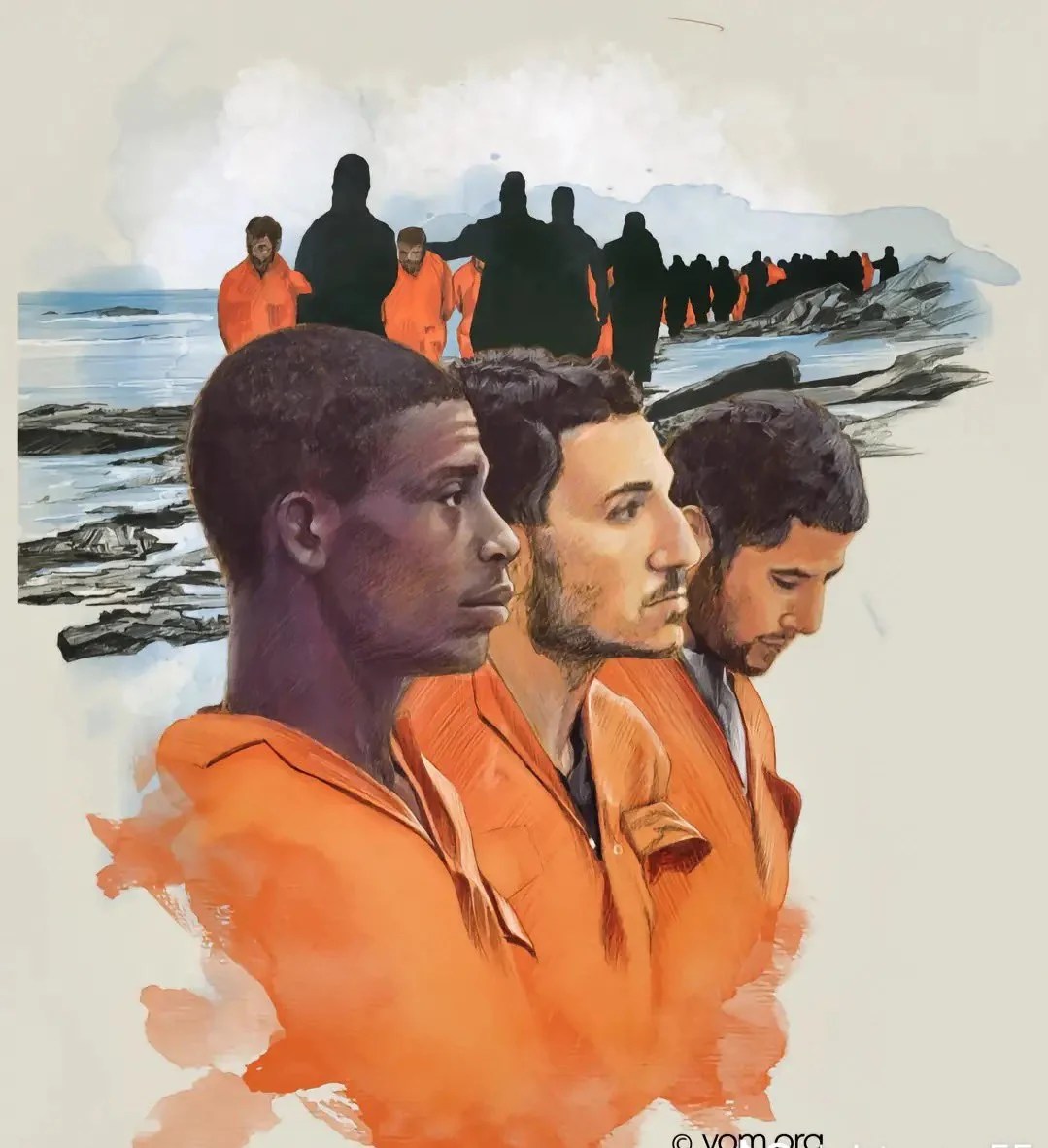
Or in 2015, of the 21 Egyptian Orthodox Christians who were kidnapped and executed by Islamic State for refusing to renounce Jesus. They died audibly praising his name.
Or of those I myself have baptised who have fled their homes and countries in the Middle East for the sake of choosing Jesus and are unable to return.
I could tell you story after story of men and women who have lost enormous amounts in order to gain Christ and consider it a brilliant trade. Christianity takes their stories, often from within marginalised and ignored communities seriously.
So what should we do about this?
- Lean into Jesus and commit to him. The truth about Jesus is far better, more profound and more satisfying than we often remember. If you are a Christian, lean into your faith. Get to know it. It is very cool and deeply joyful.
- Be humble, curious and prayerful with friends from other points of view. Evangelism is only morally good when we genuinely care about those we are going to; it is only effective when they understand and trust that we care about them.
- As you listen, seek points of overlap to give away to share Jesus with them. Because you respect and love them, try to convert them.
Jesus is true for everyone. And that’s really good news.

 Deep Church