Precisely because Auschwitz exists, we need faith, we need the presence of the Resurrection and of the victory of love; only the Resurrection can make the star of hope rise that allows us to live.
This is a question everyone wrestles with at some time or another. Here’s what Joseph Ratzinger, whose family were persecuted by the Nazis, addressed the subject in a talk to those about to be ordained to the priesthood:
“The answer to an oft-asked question became clear to me as well. How often has it been said: Can anyone still believe in a good God after Auschwitz? I understood: Precisely because Auschwitz exists, we need faith, we need the presence of the Resurrection and of the victory of love; only the Resurrection can make the star of hope rise that allows us to live. Making the Resurrection present—my dear young friends—this in fact describes completely the essence of what being a priest means. It means, most profoundly, being able to bring about this reality on the killing field of this world, in which death and its powers reap a continual harvest; it means bringing about the presence of the Resurrection and, thus, giving the answer of life that is stronger than death.“1
In turn, this changes the way that we see evil. We mourn and fight it but regard it ultimately as a defeated and vanquished foe. Thus, as Ratzinger returned to Auschwitz-Birkenau and celebrated the Eucharist, he found his perspective changed:
Making the Resurrection present… It was an exciting thought and an exciting experience, over this vast harvest field of death, on this killing field on which over a million people met their death, to live to see the presence of the Resurrection as the only true and only sufficient answer to it. It was exciting to experience how this memorial to hatred and inhumanity became a place of the triumph of the love of Jesus Christ and of love.2
Ratzinger, Teaching and Learning the Love of God, p.95. ↩︎
Ratzinger, Teaching and Learning the Love of God, p.94. ↩︎
How can we make our churches deeper in pastoral care, the sacraments and Scripture while also being more effective in evangelism and social outreach? The answer from the New Testament is to appoint and empower Deacons.
How can we make our churches deeper in pastoral care, the sacraments and Scripture while also being more effective in evangelism and social outreach? The answer from the New Testament is to appoint and empower Deacons.
Church leadership has classically been made up of teams that comprise a range of gifting but which represent two different orders, and which have different focuses. The one that draws the most attention and controversy is that of Elder or Priest, a role that focuses on mediating Christ’s presence to his people through teaching, pastoral care, and the sacraments.
Equally important, though, are non-Elder leaders, traditionally called Deacons. Acts 6 and 13 illustrate why. In Acts 6, the text in which the office of Deacon as a non-Elder leader is first explained, we find Deacons leading in two areas. First, they lead in social action – demonstrating the love of Christ in action by ensuring the people are fed. Second, they lead in evangelism, pioneering an early evangelistic and apologetics programme that leads ultimately to the martyrdom of one of their number, Stephen.
Later, in Acts 13 we find other non-Elder leaders developing the mission strategy of the Antiochian church alongside Paul and Barnabus.
As Joseph Ratzinger put it:
[B]ecause one cannot learn to do by speaking but only by doing, the diaconate originated precisely and in a special way as a ministry of “showing how to do”. When the apostles called the seven men from whose efforts the Church’s diaconal ministry developed, they did so in order to entrust to them the ministry of charity in the Church, so as to be free again as apostles for the ministry of the word. Since then charitable work, showing how to believe and to love, has always remained a defining feature of the diaconal ministry…A Church that neglected this demonstration of charity, of social and human concern, and the actualization of Jesus Christ’s goodness in practical matters would neglect an essential part of her mission…
Here a second aspect of diaconal ministry becomes visible: showing-how-to-do remains mute unless it is interpreted in an explanatory proclamation, in the message that commands the deeds in the first place.1
In all of this the Deacons enable the pastoral and sacramental ministry of the Elders precisely because they (the Deacons) lead the mission of the Church in both its evangelistic and practical forms so that the Elders don’t get distracted from their actual calling. In other words, Deacons are appointed to lead in mission because that is not what Elders should be focused on Acts 6:3-4. That doesn’t mean the Elders are irrelevant to mission. Texts such as Acts 13 and Philippians 1: 1 show blended teams of Elders and non-Elders working together. But it does mean that as Elders they aren’t responsible for directing on implementing the church’s social and evangelistic mission and when they try to be so they will inevitably end up being compromised in the execution of their actual calling.
I’m really blessed in this regard. My church’s leadership includes some wonderful and effective leaders executing non-sacramental ministries that keep the church on mission while enabling me to focus on representing and ministering Christ to those for whom I am responsible. Nevertheless, at a time when many in church life desire greater depth and care from Elders, the mission demands of a post-Christendom world seem overwhelming, and many evangelical pastors burn out, maybe Elders should not be occupied with being vision-casting, organisation-building, missional leaders. And ask the church to appoint and empower some Deacons instead!
Benedict XVI, Teaching and Learning the Love of God: Being a Priest Today, p.152, 154. ↩︎
Jesus creates, commands + delivers the most diverse movement in human history. If you value diversity, follow Jesus.
This year I’m writing a series of talks thinking about big questions that lots of us have about Christianity, Jesus and faith. Some of them are about how we can live well, some are doubts we often have but don’t know how to express.
Everything I’m saying, Rebecca said first and better. In fact, more than that, I want to urge you to get and read, particularly if you are under 25 (but also if you’re older than that).
Summary(TL;DR)
I always try to give a summary of what I’m going to say in one or two sentences so it is easy to remember. Here is today’s:
Jesus creates and delivers the most diverse movement in human history. If you value diversity, follow Jesus.
Jesus Creates Diversity (or why believing in the dignity and equality of all depends on there being a Creator).
For Jews and Christians, the equality of every person, whatever their race, ethnicity or background is rooted in our belief that every person is made in the image of God. That is why they are worthy of respect.
To be made in God’s image doesn’t particularly mean to look like him physically. It means to be like him, to reflect something of his character and what he is like. Jesus did this perfectly. St Paul tells us that he was the exact image of the invisible God.
If you want to know what God is like, look at Jesus.
That applies perfectly to him but in a distorted and different way to every human being.
This belief is the foundation of all modern movements for equality, inclusion or justice.
Secular society takes for granted that everyone is of equal worth and dignity. But that idea comes from the Christian (and Jewish) commitment to the concept that everyone is made in God’s image.
This is a historical fact.
Historian Tom Holland explains that the idea of human rights – that human beings are equal and all of value arose specifically out of Christianity in Europe.
It was Christians, reflecting on the central idea of Genesis 1:27 (that humanity is made in God’s image), who argued for this. And in doing so they changed the world. Without that, and without the idea that human beings are made in God’s image, it wouldn’t have happened at all.
In case you think Tom (who isn’t himself a Christian) and I are making this up, we know what happens when you reject the idea that human beings are made in God’s image.
The western nations of Europe … now so immeasurably surpass their former savage progenitors [that they] stand at the summit of civilisation … The civilised races of man will almost certainly exterminate, and replace the savage races through the world.1
This led to the Eugenics movement (getting rid of the weak), to scientific racism and then inevitably to Nazism and the attempt to exterminate the entire Jewish race.
This isn’t to reject evolution as a scientific idea. It may well be a brilliant description of a tool that God, as the great designer and Father of all, has used to shape the world around us. (For what it’s worth, I can quite see how the development of speciation fits with Genesis’ symbolic description of humanity formed from the earth and yet filled with the presence of God but I wouldn’t insist upon it).
But a solely material picture of human origins without God in the picture gives us no reason to believe in equality or dignity – and every reason to reject it.
Without the Christian commitment to the idea that God made us and that we all bear his image, then we are left with no reason to believe in equality, in dignity, in diversity at all.
This has been taken up by the contemporary historian, Yohann Harari. Harari rejects the idea that human beings are made in God’s image. He is a materialist. And that means he doesn’t believe in human rights or equality as anything other than a nice idea:
“The Americans got the idea of equality from Christianity, which argues that every person has a divinely created soul, and that all souls are equal before God. However, if we do not believe in the Christian myths about God, creation and souls, what does it mean that all people are ‘equal’?”2
We believe in equality, in diversity, in the rights of all, because we are Christians.
Jesus creates and delivers the most diverse movement in human history. If you value diversity, follow Jesus.
Jesus Delivers Diversity (or why Jesus is the root of movements for justice).
So it is a Judeo-Christian view of humanity, made in God’s image, which is the foundation of modern commitments to equality and human rights. It is the root of why we value diversity.
But what about Jesus?
Jesus’ Teaching
Jesus explicitly taught and demonstrated that his kingdom went beyond ethnic, racial or class boundaries. It was truly diverse.
The most famous example of this is the parable of the Good Samaritan. We tell this story as an illustration of how we should help one another. That is a part of its meaning. But it is more profound than that.
When Jesus said that the second greatest commandment was to ‘love your neighbour’, he was immediately challenged by another teacher: but who does that mean? The other guy wanted to keep his obligations narrow – I love them, because they are like me but I don’t need to love them because they are not.
In particular, in that period there was an ongoing religious and racial conflict between the Jews and the Samaritans. They hated each other in part because the Samaritans were ethnically different.
Jesus’s parable is designed to cut through that. The one who shows mercy, who keeps the commandment, is not the pure, religious Jew. It is the unclean, alien Samaritan.
The whole parable is about welcoming in a stranger and recognising that all are equally in need of God’s grace and all can equally receive it. It becomes the ultimate anti-racist message.
Early Church Teaching
This wasn’t just Jesus. St Paul explained the logic of it in his earliest churches.
The gospel, St Paul explains, requires that we treat all people equally.
Everyone, without exception, is made in God’s image and is loved by him.
Everyone, without exception, sins and needs Jesus.
Everyone, without exception, is made a Christian only by trusting in Jesus.
So no-one can be treated better or worse because of where they come from or their ethnic background or their social class.
Now I want to acknowledge later on, some Christians were complicit in the horrors of American slavery.
Historians and sociologists Michael Emerson and Christian Smith have shown that that came about because men and women bowed to the pressure of their society to turn their back on the teachings of Jesus and the early church in favour of the apparent progress of their society. The dominant view, the view of the elites and of business, was that slavery was necessary to build their empires.
And so elements of the church bowed to the demand to get with the times, to move with the forces of progress, to change their faith to gain favour with society because it was apparently outmoded.3
My friends, in passing, never forget – never – that when we change the teachings of Jesus to keep up with the changing mores and values of society, the world is a worse place. Christian involvement in slavery was a progressive heresy. And the ones who overturned it were Evangelicals and Catholics who wanted to return to the old-faith, the faith of Jesus.
Even then the movement to stop the slave trade and liberate slaves will fight for equality was led by committed Christians who acted not in spite of their faith but because of it.
Time won’t permit me to name them all but here are just a few of the fathers of the anti-slavery, anti-racism movement who named Christ as the reason for their work:
William Wilberforce, the MP who campaigned to end the slave trade: “God Almighty has set before me two great objects, the suppression of the Slave Trade and the Reformation of Manners”.
Harriet Tubman, the escaped slave, nicknamed “Moses” for helping others to escape: “I always tole God, I’m gwine [going] to hole stiddy on you, an’ you’ve got to see me through.'”
Martin Luther King Jr, the civil rights campaigner: There are a lot of people that I find it difficult to like. I don’t like what they do to me. I don’t like what they say about me and other people. I don’t like their attitudes. I don’t like some of the things they’re doing. I don’t like them. But Jesus says love them. And love is greater than like. Love is understanding, redemptive goodwill for all men, so that you love everybody, because God loves them. You refuse to do anything that will defeat an individual, because you have agape in your soul.
In other words, where parts of the church gave into the temptation to go along with slavery, and even baptise it in Christian language, it was Jesus and the Christian tradition that led to the error being corrected and overthrown.
The Diversity of the Church
But did it work? Is the church actually a place for every race and ethnicity?
In other words, Christianity is incredibly diverse. It could not be more so.
This isn’t just an abstract idea. We live in one of the whitest, most British parts of the UK. Yet a couple of years ago I counted the number of different nationalities in this church. We had people regularly attending from 15 different countries, from 4 different continents while our material is regularly read and watched on another 2. I’m working on Antarctica but it’s harder than you’d think to convert the Penguins.
That is just our little church. But it is typical of other, bigger churches too.
The average Anglican is a Sub-Saharan woman in her 30s.
God made diversity, Jesus commanded diversity, the Spirit delivered diversity in his Church.
Jesus creates and delivers the most diverse movement in human history. If you value diversity, follow Jesus.
Application
What does this mean for us as we try to know hope, show hope and share hope:
First, don’t feel challenged or threatened by contemporary criticisms of Christianity as intolerant or anti- diversity. They are founded on ignorance and reliant upon the values given them by the faith they despise.
Second, don’t form in-groups and out-groups. Everyone has a measure of dignity + value because of their Creator. Everyone is a potential brother or sister in Christ. There will be times they need to be resisted. It doesn’t mean being weak. But it does mean being merciful even when we have to be strong, playing the ball and not the man. As part of this we must be as clear as possible: discrimination or hatred on the basis of race or ethnicity is morally wrong, against Christian doctrine and has no place in the Church or society. For the avoidance of any doubt, that includes antisemitism.
Finally, think about those you find hardest to love or to include and set your heart to pray for them regularly. That might be someone with a different ethnicity. It might be someone with different politics or a different faith. It might be a bully. Pray for them because they need Jesus just like you need Jesus.
Jesus creates, commands + delivers the most diverse movement in human history. If you value diversity, follow Jesus.
Charles Darwin, Origin of Species, Vol II, pp. 796-797 ↩︎
Yuval Noah Harari, Sapiens: A Brief History of Humankind (Vintage, 2015), p 109. ↩︎
Michael O. Emerson and Christian Smith. Divided By Faith: Evangelical Religion and the Problem of Race in America. Oxford University Press, 2000, p.24] ↩︎
For many people, reading the Bible can be hard. This is a quick guide to how we can understand it’s deep meaning and know God better.
For many people, reading the Bible can be hard. There are bits that seem easy to follow (like when Jesus teaches people), that seem irrelevant (tell me again about eating shellfish in the desert), that are obviously picture language or poetry (the trees in the fields don’t literally clap their hands), and that just seem weird (all of Revelation).
Then there is the way Biblical authors use other bits of the Bible. For example, John the Baptist looks at Jesus and describes him as “the lamb of God, that takes away the sins of the world” (John 1:29), St Paul writes about the stories of Israel finding water in a rock only to say “the Rock was Christ” (1 Corinthians 10:4). It is perfectly reasonable to ask: what on earth is going on?
The church has always believed that the Bible is a book that operates on a number of levels. I recently came across this summary of how this works in the Catechism of the Catholic Church (paragraphs 109-118). It really helped me to categorise the different ways we engage with Scripture. I’ve reproduced it below (with some of my explanation at the end of each section) in case it helps you too.
First, read what the authors meant:
109 In Sacred Scripture, God speaks to man in a human way. To interpret Scripture correctly, the reader must be attentive to what the human authors truly wanted to affirm, and to what God wanted to reveal to us by their words.
110 In order to discover the sacred authors’ intention, the reader must take into account the conditions of their time and culture, the literary genres in use at that time, and the modes of feeling, speaking and narrating then current. “For the fact is that truth is differently presented and expressed in the various types of historical writing, in prophetical and poetical texts, and in other forms of literary expression.”
This means that we can’t always simply read the text literalistically. Instead we need to work out what the original author meant and how his readers would have understood his words.
We do this all the time in English. If I said “it’s raining cats-and-dogs outside”, you get an umbrella. You don’t call the RSPCA. You know that in English that is an idiom or metaphor, not literal. And it would be completely inappropriate to treat it like it was.
Sometimes it’s appropriate to read the Bible like a history book (for example when dealing with the Gospels or biographies). Sometimes it’s obviously not (for example when dealing with the poetry in the Psalms). Sometimes it’s complicated because the Bible uses types of books that we aren’t familiar with (like collections of Proverbs or Paleo-History).
Things that can help with this are Pastors and good Bible commentaries.
Second, read Scripture as a whole, assuming that it is coherent and bearing in mind that Jesus is the point of it all:
112 Be especially attentive “to the content and unity of the whole Scripture”. Different as the books which compose it may be, Scripture is a unity by reason of the unity of God’s plan, of which Christ Jesus is the center and heart, open since his Passover.
The phrase “heart of Christ” can refer to Sacred Scripture, which makes known his heart, closed before the Passion, as the Scripture was obscure. But the Scripture has been opened since the Passion; since those who from then on have understood it, consider and discern in what way the prophecies must be interpreted.
This means that as Christians we believe that the Bible has lots of human authors (all writing in their own personalities and using their own styles) but one divine mind behind it. To put it another way, Scripture is loads of books but together they tell one story. And that story is ultimately about Jesus.
This means when you take two texts that seem hard to reconcile or contradict one another, they can almost certainly be read as complementing each other or as talking about different things. If you find something that troubles you in this way talk to a Pastor (or read a good commentary).
Third, read with the Church:
113 2. Read the Scripture within “the living Tradition of the whole Church”. According to a saying of the Fathers, Sacred Scripture is written principally in the Church’s heart rather than in documents and records, for the Church carries in her Tradition the living memorial of God’s Word, and it is the Holy Spirit who gives her the spiritual interpretation of the Scripture (“. . . according to the spiritual meaning which the Spirit grants to the Church”).
114 3. Be attentive to the analogy of faith. By “analogy of faith” we mean the coherence of the truths of faith among themselves and within the whole plan of Revelation.
The Bible is a book that is meant to be read in community. Jesus promises that as we live together as the Church, we are guided by his Spirit and learn how to read the Bible correctly (eg John 15:26). This goes for the Church in the world now but also throughout time. We want to hear how the Spirit has directed us to read Scripture, and that means reading it in the community of the Church. It also means that sometimes we have to have the humility to accept that we may have misunderstood something from Scripture and to be corrected.
Four, pay attention to the different senses of Scripture:
115 According to an ancient tradition, one can distinguish between two senses of Scripture: the literal and the spiritual, the latter being subdivided into the allegorical, moral and anagogical senses. the profound concordance of the four senses guarantees all its richness to the living reading of Scripture in the Church.
116 The literal sense is the meaning conveyed by the words of Scripture and discovered by exegesis, following the rules of sound interpretation: “All other senses of Sacred Scripture are based on the literal.”83
117 The spiritual sense. Thanks to the unity of God’s plan, not only the text of Scripture but also the realities and events about which it speaks can be signs. 1. the allegorical sense. We can acquire a more profound understanding of events by recognizing their significance in Christ; thus the crossing of the Red Sea is a sign or type of Christ’s victory and also of Christian Baptism. 2. the moral sense. the events reported in Scripture ought to lead us to act justly. As St. Paul says, they were written “for our instruction”. 3. the anagogical sense (Greek: anagoge, “leading”). We can view realities and events in terms of their eternal significance, leading us toward our true homeland: thus the Church on earth is a sign of the heavenly Jerusalem.
118 A medieval couplet summarizes the significance of the four senses:
The Letter speaks of deeds; Allegory to faith; The Moral how to act; Anagogy our destiny.
This is the hardest bit for us to grasp but it makes sense of how the apostles and other Biblical writers used Scripture and unlocks a lot of what God is wanting to tell us through it.
Put simply, there are four ways that we can interpret different bits of the Bible. They aren’t contradictory – they are like levels of meaning (kind of like a Russian doll). They are:
The “Letter” or “Literal” sense. This doesn’t mean taking everything literally. It means asking what a passage would have meant to the original readers. This is what we talked about above. It means reading bits of the Bible according to the type of book they are (poetry, history etc). It is the basic question: what is the writer trying to say here. For a lot of modern Bible scholars, this is as far as they go (which is a shame and means we miss a lot of meaning that the ancient church understood).
The “allegorical” sense. This means way that the bits of the Bible we are reading teach us lessons about Jesus even when he doesn’t explicitly appear. This is what John the Baptist is doing when he describes Jesus as the “Lamb of God” or what St Paul is doing when he describes a Rock from the Old Testament as being about Jesus. It realises that when God inspired the Bible he was always pointing us to Jesus, even when the original authors didn’t realise it. So, for example, the story of the creation of Adam and Eve is designed to teach us about Jesus and the church (see Ephesians 5:31-32). Another word for this is Typology.
The Moral sense. This is obvious. Bits of the Bible are designed to teach us how to behave. When it says “don’t steal”, you don’t need to reach for a commentary (particularly if the commentary isn’t yours). Other narratives can also teach moral lessons. So, for example, the story of Cain and Abel can teach valuable moral lessons about the danger of anger, jealousy and the destructive consequences of violence.
The “anagogical” or “mystical” sense. Stories we find in Scripture can ultimately teach us something important about our eternal destiny in Jesus. So, for example, the story of God bringing Israel out of slavery in Egypt, through a time of trials and testing in the desert, over a river (literally through something that kills people) and into a promised land is a picture of the way God rescues souls, leads them through life and brings them through death to heaven.
You don’t need to be an expert at spotting all these levels of meaning in Scripture right away. One of the good things about being part of a Church is that many men and women have spent their lives meditating on Scripture and explaining to us what they saw so that we can see it too. It’s also part of why God gives the church teachers – so that we can grow in understanding him and his word to us.
The Gospel can be proclaimed credibly only by someone who, on the one hand, has suffered, who has not evaded reality, the difficult reality of this world, and has stood fast in his faith in the love that is stronger than suffering.
Joseph Ratzinger (Benedict XVI) is one of my favorite writers. Almost everything he produced is gold: joyful, wise and saturated in Jesus. Here he is on great form, preaching about suffering, joy and Christian evangelism:
“When a person receives a great love, when he is privileged to know that he is loved by someone who is good and powerful and absolutely reliable, then this is no guarantee that something terrible will not happen to him, too, and remain terrible. Nevertheless, it will not be able to destroy him, because there is something in him that all these terrors cannot touch: a light and a strength that are stronger than all that. The Christian, though, is such a person; for to him is granted the gift that he is loved by God, who is absolutely kind and powerful, whose love does not depend on any moods and whose fidelity never wavers. And therefore resignation, joylessness, sullenness, humourlessness, and cynicism do not suit one who is Christian… Joylessness in this most profound sense is the repudiation of the faith, the repudiation of the God whose Yes is still the foundation of our life, whatever may happen. “Rejoice” therefore means: be believers, immersed in the certainty of what the Gospel has proclaimed to us: God loves with a love that is not fickle…
But someone who is resigned or embittered himself cannot be a bearer of Good News. The Gospel can be proclaimed credibly only by someone who, on the one hand, has suffered, who has not evaded reality, the difficult reality of this world, and has stood fast in his faith in the love that is stronger than suffering. Only someone who is an evangelist in this way can hand on the joy that we need, which is not a surrogate, a brief anesthesia, but withstands the truth of this world.”
Do you want to live a life of influence and purpose? Jesus wants that for you too.
Jesus wants you to live a life of influence and purpose by learning to pray, to talk and to listen.
One of the issues that comes up most often in my pastoral work, particularly as I and my peers hit middle-age, is how we can live a life of influence and purpose.
I think a lot of us crave both of those things. We want to know what we are doing with our lives and to feel it is worth it.
I’ve noticed that this sense is even stronger among the young people I meet. They struggle with the pressure (and desire) to change the world, but simultaneously with the knowledge that doing so seems next to impossible.
I have often wondered to myself if this is a major contributor to the epidemic of anxiety and self-harm that is well documented among under-20s. They know they want to do something about a world they are repeatedly told is dying (and have a moral obligation to do so) but practical forms of action that make a real difference are not available to them. The result is familiar to anyone with a passing knowledge of religion and history: a sense of guilt accompanied by helplessness that generates anger and anxiousness. The guilt cannot be forgiven because there is noone to absolve, and the helplessness cannot be overcome because there is nothing an individual can do to atone for a shared sense of failure (that the planet is burning or some such) or to repent by putting the wrong right.
I was meditating on some of these concerns as I read Mark 1:20-39.
Before I explain what I think this passage has to say about this in any more detail, I what I’m going to say in one or two sentences so it is easy to remember. Here is today’s:
Jesus wants you to live a life of influence and purpose by learning to pray, to talk andto listen.
Before you go any further, you should read the passage using the link above. What I’m saying will make more sense if you know what I’m talking about.
Let Jesus Influence You By Learning to Pray
The first thing we see in this passage is that when we choose to bring Jesus into our lives he can bring real and positive change.
The scene is set in Capernaum, a town in Northern Israel where Jesus was based. He and his students had been in the synagogue, worshipping and Jesus had delivered a man who was afflicted with an evil Spirit. You can read about it in the previous couple of paragraphs.
Now they go back from the synagogue to Simon and Andrew’s house.
Notice that they don’t go there because Simon’s mother-in-law is sick; Simon doesn’t tell Jesus about it until he’s already at the house. They go because Jesus’ students are making Jesus a part of their whole lives. He isn’t just someone they listen to in the Synagogue and then try to remember what he said, or marvel at what he did. Those are good things. But the disciples do something more. They take Jesus home with them.
The benefits of making Jesus a part of our whole lives become obvious when we look at verse 31. Because Jesus is with them outside the Synagogue, they are able to ask him for what they need when they need it. So they arrive home and Simon’s mother-in-law is sick, very sick. And because Jesus is there, Simon is able to ask him to help.
It’s a process. First you accept you need Jesus outside church. You start to read your Bible (or a Bible app) and to worship at home during the week, build a devotional life, begin to pray about work, or family, or your day. Then when a crisis starts to emerge – your family are sick or you need help – you know who to ask and know he is there.
It is then that Jesus heals her. He responds to Simon’s request, in effect to Simon’s prayer.
This is a pattern that occurs again and again throughout the Scriptures. Jesus doesn’t impose himself on people (unless they are completely bound by demons or sickness). He allows us to choose the extent to which we will accept his presence in our lives.
You might be thinking: “That’s fine for Simon. He had Jesus there with him. I’d invite Jesus around for lunch if he were here.”
That’s a completely understandable response. But I do have a couple of observations.
First I’d gently push back and say: would you?
Lots of people didn’t. How can you be so sure? How can I? I know I make a lot of excuses for why I don’t cultivate my spiritual life – why I don’t pray and read the Bible that range from the good (I’ve been called to rush to hospital) to the bad (Spurs might score and I don’t want to miss it).
But more importantly, second: we can be with Jesus in all of our life, not just in church.
Christ isn’t still here bodily. It’s better than that. That is the reason for his Ascension into heaven and the sending of the Holy Spirit. In Simon’s day, only one person’s house could have Christ in it. Now he can be with you wherever.
That’s the starting point for everything. A great preacher once said that, “Jesus’ power is in his presence”. If you want to be someone of peace, purpose, and influence the most important thing is to be someone whose life is full of Jesus – not just someone who comes to church on a Sunday morning.
He’s what you ultimately need.
Influence Others By Learning to Talk
The next thing I notice in these verses is that word spread.
We’re not told how, but at some point during that afternoon the word about what Jesus had done for Peter’s mother-in-law spread all around the village.
Capernaum wasn’t a huge place. Even so, this is very impressive. In a matter of hours word has spread and there are queues of people outside waiting for Jesus.
What have they come for? For an evangelist or preacher it is tempting to want to see this as a revival – of people desperate to receive forgiveness or to hear Jesus preach.
That isn’t what Mark says, however. It’s much more relatable than that.
Look at verse 33. The crowds come to ask Jesus to do for them what he had done for the man in the Synagogue and for Peter’s mother-in-law.
What has happened is that the man who was set free – who experienced mental and spiritual healing – and those who had been blessed by the physical healing have gone around and told people.
They haven’t tried to tell everyone who Jesus is. As far as we know, they haven’t given them a tract or called them to repent (there’s certainly no evidence of that here). They have just told their stories of how Jesus has helped them, of how they have benefited from his presence. And others have decided that they want some of that too.
Again, this is a pattern we see repeated over and over again. Heather touched on it a couple of weeks ago in her talk about how Philip and Nathaniel came to follow Jesus.
One of the main ways, if not the main way, that ordinary people brought others to know Jesus in the New Testament was to learn to talk about how they had benefited from him, what he had done from them. Then others think they want a piece of that.
Again, we’re going to look at the practical way to do this more in a moment.
Fundamentally, however, it relies on two basic ideas that I think most people who know Jesus would agree with but that we sometimes forget.
Knowing Jesus is good for us – we get loads from it.
Knowing Jesus would really help others – they would get loads from it.
If you agree with both of those ideas then it makes sense that we would want to talk about our own experiences of Jesus or church with others. I get this is difficult so I’m going to explain how to do it better in a moment (not that I’ve particularly nailed this, but I am learning!)
Find Purpose By Learning to Listen
So I have argued for making Jesus a part of our whole lives – at work, at football, at school, at a care home, even at church. And that when we do, we should then want to share that with others.
But what about direction? This is one of the biggest felt needs I come across pastorally. And I don’t have a magic bullet.
There isn’t a way to buy a cheat-map of life with all the right answers on it. And for good reason.
A life of faith is a life that is necessarily built on trust. It isn’t about me knowing all the answers and then being able to implement them. It is more about me entrusting myself to someone else to lead me and guide me.
In that sense it’s more like rally-driving than it is Formula 1.
In Formula 1, everyone knows the track – it’s easy. The question is how well can you navigate it as fast as you can. In rally driving the track is varied and variable. You’re driving but it is the navigator who knows where you’re going. The driver needs him and has to trust him.
A life of faith is like a rally-race.
But that doesn’t mean we’re helpless. What we see when we look at Jesus’s example in verse 35-39 is that, while we may not know every turn we should take in advance, we can know the principles that help us to make good choices. We can know why we are here, what we should prioritise, and when we need to be alert to dangers.
That kind of sense of purpose comes from spending time in quiet prayer with God. It might be sitting silently in a chair. It might be going for a long walk. It might be something completely different. But it is about learning to quiet every other voice, to present ourselves to God and then to say what do you want? What do you want for me?
When we do that regularly, we don’t get all the answers to every choice we should make. But we become aware of the values and principles that should guide us – why we have come, to paraphrase Jesus’ words.
It might be saying yes to a promotion because it allows you to provide for more people or lead in a way that will bless them. Or “no” to a promotion because God has called you to be a father or mother first.
It might be saying no to an opportunity because you know it will distract you from something else or to go and try something new because you want to meet new people to speak to about Jesus.
I can’t answer that question because I’m not you.
But the only way to get peace and stop being restless is to ask, to make time to listen to the answer and then act on it.
Jesus wants you to live a life of influence and direction by learning to pray, share and listen.
Application
What does this mean for us as we try to know hope, show hope and share hope.
Choosing to make Jesus a part of our life isn’t harder now than it was then, it’s easier. This is a quick set of suggestions for how to do it. You can add to them or take them away as you wish. I’ll start at the beginning of the day.
Set up part of your house as a prayer area. That’s where you’re going to go to pray or meditate in the morning and evening. You might designate it with an icon or a cross or something.
When you wake up in the morning, pray. The amount you can pray is going to change depending on your circumstances. But everyone here can pray first thing. Everyone here has some time. You can make up your own prayers – using T.A.P. That takes about 4 minutes. You could use a prayer book or app – I’m happy to recommend them. But pray. First thing. Before checking Facebook.
Take on Scripture. You can do this by reading it, listening to it, or meditating on it. Again, everyone can do this. You can listen to a 10 minute podcast while you breastfeed or a 15 minute devotional while you drive to work. Or if you have more time, you can spend an hour in silent meditation. But do something. You probably won’t feel an immediate benefit but over time it will help immeasurably.
Pray before meals and before work. This sounds as simple as it is. Say thank you for your food 3 times a day. Before you start work or a task, thank God for it and ask for his help. This starts to build an awareness that Jesus is at work in these places and changes our attitude.
At the end of the day, before bed, spend 5 minutes remembering the day. Then say thank you for anything you are grateful for and sorry for anything you regret. I find it helps to journal this
Find times when you can be away from others and quiet. Take headphones out or off. If there are decisions that have to be made, ask God about them and then walk or sit in silence. For at least 30 minutes.
Jesus wants you to live a life of influence and purpose by learning to pray, to talk and to listen.
If you want to live your best life, follow Jesus and go to church.
This year I’m writing a series of posts thinking about big questions that lots of us have about Christianity, Jesus and faith. Some of them are about how we can live well, some are doubts we often have but don’t know how to express.
Rebecca and I were both studying at Cambridge at about the same time, although as far as I can remember we never met. That is one of my few regrets from those years because she is one of the most interesting and insightful Christian writers around and I would have loved to have got a headstart on hearing what she has to say.
Everything I’m saying, Rebecca said first and better. I want to urge you to get the book and read it, particularly if you are under 25 (but also if you’re older than that).
The Big Idea
I always try to give a summary of what I’m going to say in one or two sentences so it is easy to remember. Here is today’s:
If you want to live your best life, follow Jesus and go to church.
Readings
A lot of this post isn’t going to be me going through Bible passages. But there are some things that Jesus said that help us to think about this:
“[Jesus said], I have come that they may have life, and have it to the full.” (John 10:10)
“Then [Jesus] said to them all: “Whoever wants to be my disciple must deny themselves and take up their cross daily and follow me.” (Luke 9:23)
“This is how we know what love is: Jesus Christ laid down his life for us. And we ought to lay down our lives for our brothers and sisters.” (1 John 3:16)
“[St Paul taught] that by this kind of hard work we must help the weak, remembering the words the Lord Jesus himself said: ‘It is more blessed to give than to receive.’” (Acts 20:35)
“[St Paul wrote] give thanks in all circumstances” (1 Thessalonians 5:18)
The rest of this post is going to be hard and fast and fun.
In the Old Testament there’s a phrase about getting ready: “gird your loins” – it literally means, “put your big boy or girl pants on because it’s going to get real”.
So, here are 5 big reasons why living your best life means going to church and following Jesus.
Going to Church Makes You Happier and Healthier
In the past there were people, very clever people, who have argued that people would be better off without religion. Lots of people like that argument – it can feel comfortable to be told that you’re better off without God.
Unfortunately for them, but fortunately for us, we now have loads of evidence that the opposite is true.
Tyler VanderWeele is the Professor of Epidemiology in the Departments of Epidemiology and Biostatistics at Harvard University. That basically means he is one of the elite guys working on public health in the world.
His research, together with 20 years of studies by others, shows that going to a religious service weekly gives you a significant chance of living longer, living more healthily, being less depressed, less prone to addiction, less likely to commit suicide, and generally more optimistic.
In case you were wondering if this applies to any regular group activity – like joining a football or golf club – it doesn’t. Studies show that doing something non-religous even with the same people every week doesn’t work the same way.
Professor VanderWeele describes going to church as “a miracle drug”.
This doesn’t mean Christian life is easy. Jesus himself suffered and said we would too at times. Globally 11 Christians are killed for their faith every day. But even with those trials, being in church is demonstrably the best way to live a healthy, happy and long life.
If you want to live your best life, follow Jesus and go to church.
Love Adds Life
So being in church is good for you in every measurable way.
That kind of love isn’t about feeling warm towards someone or being romantic with them. It means putting their interests above your own, even when it hurts. It means being willing to sacrifice for them.
We know what love is by looking at Jesus. That’s why we fill our halls and homes and necks and clothes with crosses. Because love adds life. And this is how we know what love is.
Again, we find that Jesus’s teaching was right and 2,000 years ahead of modern thought.
Scientists at Harvard University studied happiness for 75 years. People thought that happiness would come chiefly from success, fame, or wealth. But it wasn’t any of these things that really made a difference. The thing that makes the biggest difference is having good relationships with friends and family.
Love adds life.
One of the teachings most central to being a follower of Jesus is his promise that “Whoever would save his life will lose it, but whoever loses his life for my sake will find it”.
Again, Jesus said it 2 millennia ago. Now we have the data to show he is right. Scientists have shown that helping others is good for us. It might even be better for us than the person we help.1 Selfishness makes us miserable. Selflessness makes us happy.
But maybe you think that you don’t need to go to church to be unselfish. Obviously you’re right. But you are much, much more likely to be unselfish if you do. As Rebecca observes “in America, people who go to church every week give three-and-a-half times as much money to charity and volunteer twice as much as people who never go to church.”2
If you want to live your best life, follow Jesus and go to church.
We’re half way through now. Take a moment to pause, catch your breath and turn to the person next to you. Ask them : “Are you alright?”
Gratitude and Forgiveness Are Good For You
So we’ve covered going to church and the big commandments. But what about the little stuff. Like the prayer we pray each week saying thank you to God for what we have, asking for forgiveness and offering it to others?
One of the defining things about Christians is that they say thank you. We thank God for the goodness of the world, the relationships we have in it, for Jesus being willing to give himself for us to bring us life.
But saying thank you doesn’t feel amazing.
I love Christmas. It’s great. But the worst part comes afterwards when someone responsible, I’m not going to name her, turns up with a box of notes and announces : “it’s time to write thank you cards”.
Saying thank you sounds like a chore. We have to remind young children (and sometimes adults) to do it.
But again, psychologists have found that choosing to be grateful – to say thank you – makes us happier and healthier.3
It’s the same with forgiveness.
Jesus was huge on forgiveness. Every week we pray “forgive us … as we forgive”. St Peter once asked if he should forgive seven times. Jesus said “no, seventy x seven”. He even forgave people as they executed him.
Forgiveness is hard because anger and hatred and bitterness feel good in the moment. But forgiving others makes you live longer, and feel better mentally and physically.4
If you want to live your best life, follow Jesus and go to church.
Grit is Good
I love the Rocky movies. I watched them as a kid, introduced Heather to them when we started going out (it’s a true test of a girl’s commitment), and then watched them with my kids. One of my proudest moments was when, after a month of Rocky, my daughter Abi wrote in a year 4 essay that she didn’t like to see animals fight but liked watching men fight.
Rocky has what psychologists call grit. I can’t put it better than the great man himself .
What Rocky is describing is something psychologists call “grit”. It is the ability to keep going when times get tough, to persevere even in hard times. Psychologists have found that this quality makes more of a difference to success in the long term than intelligence, beauty or talent.
Grit is all over the New Testament. Jesus teaches us to follow him by walking a hard road, St Peter calls Christians to self-control and perseverance, the writer of Hebrews urges us to “run with endurance.”
And instead of just relying on our own grit, our own ability to get hit and keep moving forward, God gives Christians a Helper, the Holy Spirit, a kind of Divine support team who encourages us, empowers us and keeps us.
If you want to live your best life, follow Jesus and go to church.
Mo’ Money, Mo’ Problems
Finally, I want to quote a giant of 20th century theology, the Notoriouis B.I.G.,
I don’t know what they want from me It’s like the more money we come across The more problems we see5
I’ll keep this one short. Jesus says that “No one can serve two masters. Either you will hate the one and love the other, or you will be devoted to the one and despise the other. You cannot serve both God and money.”
As St Timothy explained, “the love of money is a root of all kinds of evil.”
Again, Jesus turns out to be right.
In fact, if you want a career in psychology it’s probably safer to just assume Jesus is right and start from there.
When this has been studied it turns out that choosing money over friends and family leads to unhappiness.6
By all means try to get money. It’s good to have money. If you’re going to use it to help others and serve God. Otherwise you’re going to end up miserable, broken and away from God and others.
If you want to live your best life, follow Jesus and go to church.
Application
What does this mean for us as we try to know hope, show hope and share hope:
First, if you want to know hope, make coming to church and following Jesus a priority this year. If you want to be happier, healthier, stronger and more influential this year, come to church and follow Jesus.
Second, if you want to share hope, find someone to help and show love to. It will make their life better and yours too.
Finally, if you want to share hope, then invite someone else to come to church. It really can make a huge, measurable difference to their life not just in a mystical or spiritual sense but in every sense.
If you want to live your best life, follow Jesus and go to church.
Caroline E. Jenkinson, et al., “Is Volunteering a Public Health Intervention? A Systematic Review and Metanalysis of the Health and Survival of Volunteers,” BMC Public Health 13 (2013): 773. For a study on caring for others being more beneficial for the carer than the cared for, see for example, Susan Brown, et al., “Providing Social Support May Be More Beneficial Than Receiving It: Results from a Prospective Study of Mortality,” Psychological Science 14, no. 4 (2003): 320–27. ↩︎
She cites Arthur Brooks, Who Really Cares (New York: Basic Books, 2006), p.34. ↩︎
Robert A. Emmons and Michael E. McCullough, “Counting Blessings versus Burdens: An Experimental Investigation of Gratitude and Subjective Well-Being in Daily Life,” Journal of Personality and Social Psychology 84, no. 2 (February 2003): 377–89. ↩︎
“Forgive to Live: Forgiveness, Health, and Longevity,” Journal of Behavioral Medicine 35, no. 4 (2012): 375–86; Loren L. Toussaint, Everett L. Worthington, and David R. Williams, eds., Forgiveness and Health: Scientific Evidence and Theories Relating Forgiveness to Better Health (Dordrecht: Springer, 2015). ↩︎
The attacks in Southern Israel are an act of unequivocal moral evil. Christian leaders have a responsibility to say so.
When I was a barrister I shared an office at different times with both an Orthodox Jew and a practising Muslim. Both were (and are) good men, kind and hard working. I talked about politics, including the Middle East, with them both. Mostly I listened with interest and a sense of sadness at the pain at the seeming intractability of the situations they described from their very different perspectives. I remember vividly discussing the Israeli withdrawal from Gaza and the fears articulated by many that it would leave Israel open to attack by Hamas. Those fears now feel prophetic.
The situation in the Middle East is, considered broadly, incredibly complex and hard to resolve. Situations that seem easy at first glance turn out to be anything but. But some things are not hard. Some situations are not complex.
Indiscriminately bombing civilians is wrong. Raping women is wrong. Kidnapping and parading captured civilian women, visibly bleeding, through the streets while filming them for propaganda is wrong. Murdering children is wrong. Beheading babies in front of their parents is wrong.
These acts are evil. They have no defence in Christian theology, brook no possible justification, permit no moral equivalence and demand no context.
The actions of Hamas last week are morally repugnant, inexcusable and the fruits of a virulently antisemitic and murderous ideology that, sadly, is neither new nor hidden. Its explicit aim (in Hamas’s words) is the murder of Jews generally and the destruction of Israel more narrowly. It is worth considering these points in some detail so that we can quickly dispose of the idea that Hamas are straightforwardly freedom fighters or anti-colonialist warriors. These are just some of the highlights (!) from the Hamas Covenant (1988), its foundational document:
“Israel will exist and will continue to exist until Islam will obliterate it, just as it obliterated others before it” (The Martyr, Imam Hassan al-Banna, of blessed memory).” (Preamble)
Our struggle against the Jews is very great and very serious. It needs all sincere efforts. It is a step that inevitably should be followed by other steps. The Movement is but one squadron that should be supported by more and more squadrons from this vast Arab and Islamic world, until the enemy is vanquished and Allah’s victory is realised. (Preamble)
“[Hamas] aspires to the realisation of Allah’s promise, no matter how long that should take. The Prophet, Allah bless him and grant him salvation, has said: “The Day of Judgement will not come about until Moslems fight the Jews (killing the Jews), when the Jew will hide behind stones and trees. The stones and trees will say O Moslems, O Abdulla, there is a Jew behind me, come and kill him. Only the Gharkad tree, (evidently a certain kind of tree) would not do that because it is one of the trees of the Jews.” (related by al-Bukhari and Moslem).” (Article 7)
The Jews are responsible for “the French Revolution, the Communist revolution and most of the revolutions we heard and hear about, here and there. With their money they formed secret societies, such as Freemasons, Rotary Clubs, the Lions and others in different parts of the world for the purpose of sabotaging societies and achieving Zionist interests. With their money they were able to control imperialistic countries and instigate them to colonize many countries in order to enable them to exploit their resources and spread corruption there… They were behind World War I… They were behind World War II, through which they made huge financial gains by trading in armaments, and paved the way for the establishment of their state. It was they who instigated the replacement of the League of Nations with the United Nations and the Security Council to enable them to rule the world through them. ” (Article 22)
The Covenant was supplemented by a further document in 2017 that claimed that Hamas wasn’t calling for the killing of Jews indiscriminately. It did not repeal the 1988 Covenant, however. Moreover, it was followed by speeches like this from a prominent member of Hamas’s leadership:
“People of Jerusalem, we want you to cut off the heads of the Jews with knives. With your hand, cut their artery from here. A knife costs five shekels. Buy a knife, sharpen it, put it there, and just cut off [their heads]. It costs just five shekels. With those five shekels, you will humiliate the Jewish state.[…]
“‘You shall find the strongest in enmity towards the believers to be the Jews and the polytheists.’ The Jews have spread corruption and acted with arrogance, and their moment of reckoning has come. The moment of destruction at your hands has arrived.”
Every Christian leader has a spiritual and moral duty to oppose such an ideology in whatever movement or organisation it is found. Our record of doing so in the last century was mixed, at best.
None of this is to justify any particular response from Israel. Christian theology allows for a state to defend itself and its citizens but she must do so proportionately and in keeping with the principles of Just War theory. Indiscriminately aiming measures at civilians without justification is itself wrong.
Yet it is too easy to default simply to calling for calm, peace or restraint. The presence, ideology and actions of Hamas are wicked and an obstacle to any just peace. They have to be condemned and condemned unequivocally before we turn to Israel’s response. Otherwise we will neither deserve nor receive a hearing for our other concerns.
Ultimately we will do well to remember that it is a Jew whom we follow and a Jew by whom we will be judged. He himself was born in the midst of the massacres of a murderous king, raging and executing infants in a grim foreshadowing of what we see now. We cannot turn away as we see these things happen in our day.
The Failure of National Leadership
This is an article I never wished to write both because of the horror of what we are seeing but also because it is not my job. Generally speaking local pastors should tread extremely carefully when thinking about addressing contemporary politics. I have always avoided it as far as possible. There are at least 3 reasons for this:
Often there is a limit to what the Christian tradition has to say about issues. We have a duty to care for the poor, for example, but the Scriptures and Tradition cannot help us to say how best that should be done. Christians legitimately disagree about whether to raise taxes and invest in welfare spending or lower them to stimulate private sector employment. These are prudential questions and ones that are best answered by men and women of good faith and skill.
I am not a public policy expert, an economist or a foreign relations specialist. I have opinions about these things, of course, but I have no greater insight than anyone else. While I can speak with at least some confidence about theology, ethics or law, therefore, making pronouncements about other areas of public life risks exposing my ignorance and discrediting the message of Christ.
Ultimately I represent another government, a kingdom that is not of this world. My role is a combination, therefore, of that of an ambassador and an advocate. I want people (even you, reader) to be able to come to Christ whatever your politics. God is not a Tory, socialist or liberal. And you can come to him whether you fall under one of these labels or none.
These reservations are part of the reason Christian denominations appoint national bodies that are asked to consider and speak judiciously to public policy questions. In the case of the denomination into which I was ordained, the Baptist Union of Great Britain, these bodies consist of the Union itself, most often through its General Secretary, and its Joint Public Issues Team (“JPIT”).
At the time of writing (Thursday 12 October), since last Saturday the JPIT have made public pronouncements (on Twitter) expressing concern or solidarity with various groups and courses including the victims and perpetrators of crime, those affected by fighting in Sudan (posted yesterday, twice), the homeless (twice), those fighting against poverty (twice), the UN General Assembly First Committee on Disarmament and International Security, teachers, the Redonda Ecosystem Reserve (twice). Israel has not been mentioned once.
There are scarcely words to express how embarrassing and disgraceful this is. The beheading of infants, the murder in cold blood of civilians, the taking of hostages, the rape of female prisoners, the promotion of a virulent and naked antisemitic and dictatorial ideology, explicitly devoted to the murder of Jews, prompts no condemnation, no comment even, from a body set up to address public issues from a Christian perspective.
If this were the result of cowardice, that would be bad enough. If it were because the team addresses issues that relate only to the UK, it would be intelligible (even if bizarrely parochialist). But neither of those excuses or explanations holds up to the slightest scrutiny. While armed militias invaded Israel to murder infants, the JPIT was “standing with” those affected by war in Sudan over the last 6 months. What could possibly explain that failure? It is hard to escape the impression that, to paraphrase David Baddiel, for some the murder of Jews just doesn’t count.
What then of the Baptist Union itself? Here there is at least some acknowledgment of the situation in general terms. The Union has posted a prayer for peace. It is, I suppose, commendable to pray generally for peace and justice. But surely there is something more to say about murder, and atrocities?The preamble to the prayers, however, explicitly refuses to name or consider anything that has actually happened. Let alone condemn (or acknowledge) the acts of incredible barbarism that we have witnessed. Or mention or condemn the well documented rise in antisemitic incidents and demonstrations across the UK in the wake of the Hamas attacks.
Again, one is left with the unwelcome impression that in no other situation would this kind of moral equivocation have a place. If we cannot say that Hamas’s actions in Southern Israel are unequivocally evil and unjustified then there is precious little left of our moral compass or witness.
If Baptists (and nonconformists generally) are to have anything to say in future, or any power with which to say it, we need seriously to reflect, to repent and to resolve to do better next time.
It is much harder to warm a cold heart than to cool an overheated one, as it is much harder to light a fire once it has gone out than to change the direction of the air heated by the fire by adjusting the air vents. It is harder to make a saint out of an ice cube than out of a firebrand, just as it is harder to start up a car that is stuck than to change its direction once it is moving.
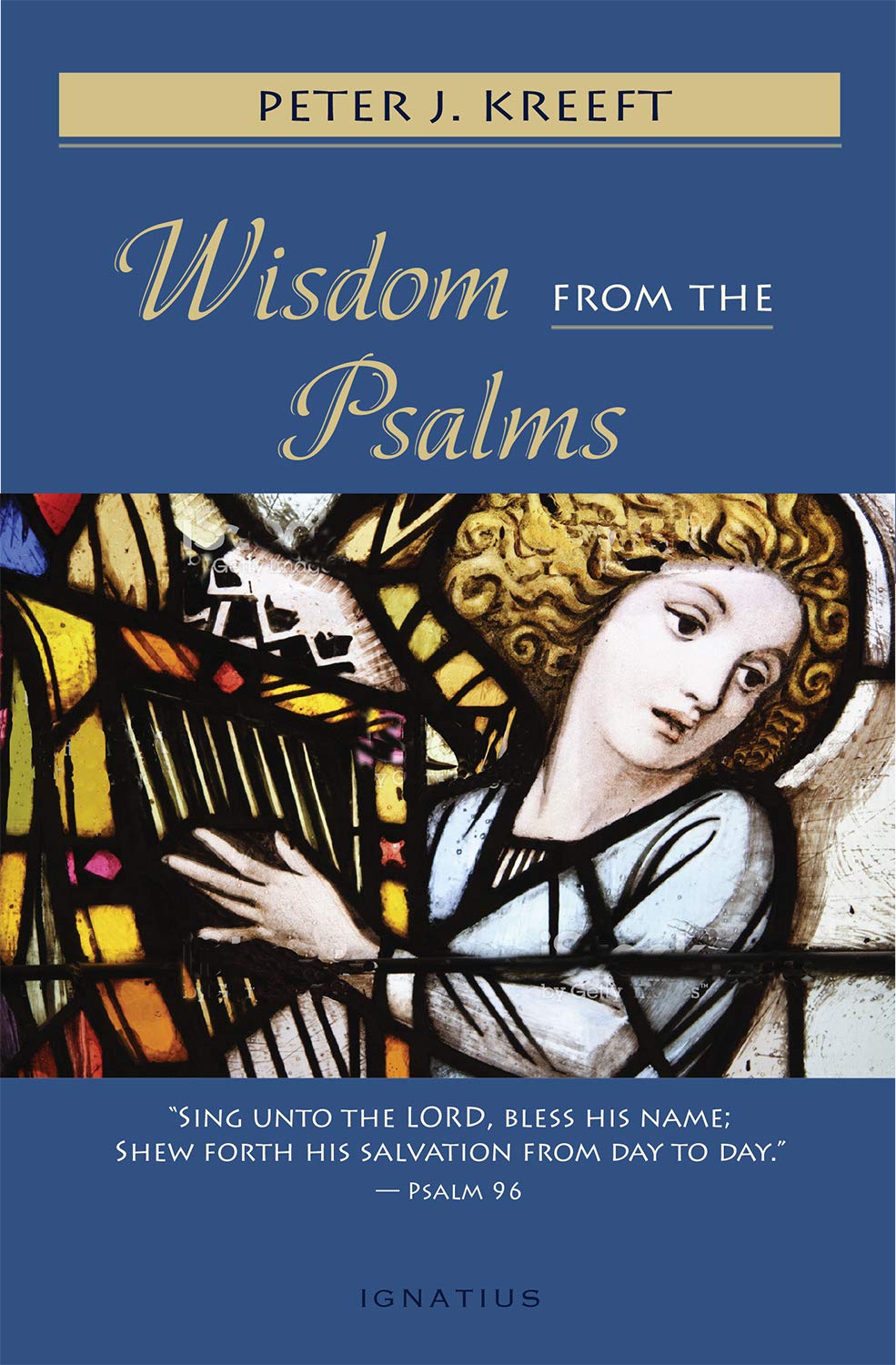
One of the most interesting and helpful authors I’ve read this year is Peter Kreeft, the Charismatic Catholic Philosopher. He’s written a wonderful book on the Psalms which, even though I haven’t agreed with every word, has consistently provoked questions, worship and delight on almost every page.
Here is Kreeft on the challenge to late Western indifference and relativism presented in the very first verse of Psalm 1:
We must clearly distinguish sins from sinners, for we are commanded to hate sins and not sinners, and to love sinners (our “neighbours”, all of whom are sinners like ourselves) and not to love sins. But we are impressed more by concretizations than abstractions; that is why examples impress us more than principles, why saints are more powerful teachers than scholars, why stories impress us more than sermons, and why great teachers always use parables. The danger is that we become so fixated on the concrete example (the person) that we take the attitude toward him that is appropriate to the principle—that is, we hate the sinner because we confuse him with the sin. This is a mistake that is natural and common to children and primitives, and it is correctable by a later sophistication and maturity of mind, when the mind becomes abstract enough to distinguish the sinner from the sin.
The opposite mistake is much harder to correct. That is the mistake of failing to begin here, with passionate and concretely real hatred of sin, as embodied in sinners. It is much easier to correct an intellectual mistake (confusing the abstract with the concrete) than to correct a mistake of the heart, and it is a mistake of the heart not to love or hate anything passionately but to be bland and indifferent, “lukewarm” (see Rev 3:16). It is much harder to warm a cold heart than to cool an overheated one, as it is much harder to light a fire once it has gone out than to change the direction of the air heated by the fire by adjusting the air vents. It is harder to make a saint out of an ice cube than out of a firebrand, just as it is harder to start up a car that is stuck than to change its direction once it is moving…
We are all sinners, of course. But “the scornful” do not admit it or do anything about it, and they scorn and pity and sneer at those of us who do. The damned do not go to Hell because they sin but because they scorn and sneer at the idea of sin and repentance. They are scornful to those of us who hate the sins that they love. The difference between the damned and the blessed is not that one class sins and the other does not, but that one class scorns and the other repents, that the one class is happy with their sins and the other is unhappy with them.
(Peter Kreeft, Wisdom from the Psalms, p.21-24)
You can get a copy of the book here. I can’t recommend it highly enough.
Why get baptised?
Jesus died because he loves me and gives me new life. Baptism is how I receive that gift.
Then Peter stood up with the Eleven, raised his voice and addressed the crowd: “Fellow Jews and all of you who live in Jerusalem, let me explain this to you; listen carefully to what I say…
“Therefore let all Israel be assured of this: God has made this Jesus, whom you crucified, both Lord and Messiah.”
When the people heard this, they were cut to the heart and said to Peter and the other apostles, “Brothers, what shall we do?”
Peter replied, “Repent and be baptized, every one of you, in the name of Jesus Christ for the forgiveness of your sins. And you will receive the gift of the Holy Spirit. (Acts 2:14, 36-38)
Introduction
The gospel is amazing news. Jesus died because he loves me and offers me new life.
Think about that for a moment.
The Son of God loved us, saw us in our sin, guilt and shame, came to live with us as one of us, took the punishment, the stain, the poison of sin, and then buried it in the ground. He releases us, cleans us, changes us, forgives us, and defeats the Devil for us.
Basically it’s brilliant.
But why do Christians get baptised in response to it?
After all, it is on any view a strange sight. An otherwise sane boy or girl, man or woman stands in a massive bath, fully dressed (thankfully), and then allows a pastor or leader to dunk them under the water. They emerge, drenched, for a room full of Christians who are clapping, cheering and (occasionally) crying.
Ancient Roots
It’s weird, properly weird. But it is also ancient.
It is the earliest recorded teaching of the Christian church that we receive new life by believing that Jesus rose from the dead, acknowledging that we need his love and forgiveness, committing ourselves to follow his teaching and being baptized into his church. Everyone who wants to follow Jesus is commanded by the apostles and their successors to be baptized.
We could give loads of examples from the New Testament. Here are just a few:
Jesus got baptized (Matthew 3:13-16; Mark 1:9-11; Luke 3:21-22).
Jesus’s followers then baptized new believers while Jesus was alive (John 3:22).
Jesus told his followers to go and baptize people all over the world (Matthew 28:19-20).
When the first church began at Pentecost, Peter commands new believers to be baptized (Acts 2:38-39).
That pattern is replicated over and over throughout the early churches – people hear, they believe in Jesus, they trust him, and they get baptized (Acts 8:34-40, 9:17-19 etc).
These are just a few references that you can look up to see the way baptism is a central part of the start of a Christian journey. That pattern carried on after the New Testament. Everywhere people became Christians, they got baptized.
But Why?
There is an enormous amount that could be written about baptism. At its heart, though, baptism has both a spiritual and practical effect in our lives as Christians.
Spiritual Effects
We believe that baptism is about what God has done and is doing in us through Jesus Christ.
When we are baptized we receive God’s grace and are united to Jesus and to the church.
Two pictures help us understand this: burial and bath-time.
When we go under the water we are identifying with Jesus dying and being buried. That is what St Paul means when he says “we are buried with him through baptism”. Then when we come up out of the water we are identifying with Jesus rising from the dead.
It is as if we are looking at what Jesus has done for us and saying ‘yes, I want to be a part of that’ and in response God says ‘OK, then I’ll make you a part of that’.
This isn’t just a sign or an act; it really changes us in our spirits. When we are baptized, we receive God’s grace and are united to Jesus and to the church.
This brings me to the second picture: a bath.
I love to play football. When I do I end up covered in dirt and sweat and (sometimes) blood.
I come in from a game and before I can get on with the rest of my life, I need a bath or a shower. I need to soak in the clean water to get all of this grime and grease and stain off me. Then I can start afresh.
Part of the symbolism of baptism is that of a bath, of washing. I don’t mean that we clean our bodies. It’s about a deep cleansing for our souls.
Baptism, as a part of the whole process of identifying with and trusting in Jesus, is how God washes us clean of all the dirt and grime of sin – of the human propensity to mess stuff up, the unkind words, acts of temper, moments of violence and bitterness, the selfishness or snideness, the dishonesty or disrespect – that cling to us through our lives.
Practical Benefits
But there is a practical benefit too.
Following Jesus can be a life of great joy and peace and purpose. It is to live in tune with the moral and spiritual music of the universe, to find community and comfort and peace.
But it can also be really hard. There are times when we mess up, times when others hurt us, times when we are rejected or bereaved, times when we doubt God’s love for us, our faithfulness to him, or even his existence.
When we go through these experiences, God has given us something concrete to cling to.
Whenever you feel like this, you can look back to today and remember the feeling of being wet. You can remember the way the water touched every part of you. That was real, it was tangible. And it is a promise; that God will never leave you or forsake you, that, in the words of St Paul,
neither death nor life, neither angels nor demons, neither the present nor the future, nor any powers, neither height nor depth, nor anything else in all creation, will be able to separate us from the love of God that is in Christ Jesus our Lord.[1]
So What?
What does this actually mean for us?
Some of us may never have actually responded to what Jesus did for ourselves. Jesus lived, and died and rose again for all of us. But we have to accept it and make it our own. It’s a bit like being given a cheque for a huge amount of money. It doesn’t benefit me unless I cash it. You might have been in church your whole life or this might be your first time. If you’ve never consciously responded then take a moment to do so even as you read this.
Others might have become followers of Jesus recently or in the distant past. But maybe you haven’t yet been baptised. If that’s you, I want to encourage you to get baptised. It is commanded by Jesus, it is good for you now, and it will help you in the future.
Jesus died because he loves me and offers me new life.Baptism is how I receive that gift.







 Deep Church