How to Share Your Faith

Sharing our faith can be hard but it is worth it because we believe this is the only way to life. Real life. Eternal life. And fullness of life here and now.

This is a guest-post from the inestimably wonderful Katherine Brown.

I want to think about evangelism: sharing our faith. 

Lots of us have different reactions to evangelism, it stirs up emotions. Some of us steel ourselves. Some of us might be combative, not taking the time to understand the person in front of us. Others here are worried about sharing their faith; people at your work, or your neighbours, have no idea you’re a Christian and it feels like a big jump to even tell them that let alone share the gospel. Still others are struggling with disappointment; people you’ve prayed for years still seem hard to the gospel. 

The reason we want to share our faith is because we believe this is the only way to life. Real life. Eternal life. And fullness of life here and now.

Chris’s Story

I have a friend called Chris who, whenever we would talk about evangelism at church, would have a really strong reaction to it. She would reply that she had tried that: ‘None of my neighbours talk to me. It’s too painful.’ 

Yet over the last year her household started praying for those neighbours. She got a dog and started to go on walks around the neighbourhood. After that she and her neighbours started having faith chats and had friends come to church for the first time. She says nothing about her skill or her ability has changed, but her expectation for what God can do has. She’s now expecting missional opportunities. 

How great is that? Chris is in her 50s, and gave her life to Jesus as a kid, and God has given her freedom in this area just in the last year. So even if you have never shared your faith and feel a bit like Chris, God can still bring a breakthrough in this area of your life.

Jesus and the Power of Interruption 

In Luke 5:18-25 we read a famous story about Jesus.

As the story opens, Jesus has gathered a crowd, we don’t know what Jesus was teaching the crowd about. The focus isn’t actually on that at the start. Attention in this story is directed to unknown, seemingly insignificant, people, just a few in the crowd. 

They’re desperate because they get through the crowd So they climb up onto the roof and find a way to get through the roof and lower their friend down. 

The friends and this man are coming to Jesus with a physical need, if you asked someone what this man’s biggest need most is would say it’s that he’s paralyzed. That would be horrible. But Jesus sees a deeper need, a much bigger reality. The man thinks the best thing that could ever happen to him was not being paralyzed, but Jesus shows Him there is so much more on offer than physical healing. This man needs forgiveness, he needs to be in a right relationship with God. 

The Pharisees are mad, Jesus has made a claim authority in this story. Declaring that He can forgive sins. The Pharisees understand that this is Jesus stating he is God. 

Jesus is interrupted as a man appears through the ceiling (which is pretty dramatic). Yet the interruption doesn’t stop the ministry, it’s part of it. Perhaps it is in the interruptions that God is wanting to work.

We should be open to interruptions in our lives, not seeing them as a nuisance, slowing us down, getting in the way, but an opportunity. This means seeing the people in front of us and slowing our lives down. Who knows what God might want to do. 

It also means being able to see and meet the needs that people feel and experience. It might be loneliness or hunger or pain. In Jesus’ case it was the man’s paralysis. But at the same time it was for him (and for us) seeing the need that everyone has for forgiveness and spiritual healing.

Sharon’s story 

People come to Church, and enter into conversations about faith,  with all sorts of preconceptions, wants, desires and needs. But the biggest needs for all people,  no matter how dire their situation, is their standing before God. We all need to know forgiveness from God. 

Most people won’t be aware that this is their biggest need. This is part of evangelism, it’s helping people see that they are in need of saving, that they are in need of forgiveness, that they can receive a right relationship with God. 

Lynn’s Story

We don’t really like to talk about sin in our culture, most people believe they’re a good person because they don’t do anything illegal. 

My husband sat down with a neighbour who’s in her eighties.  She had listened to one of Jon’s talks where he’d spoken about sin and forgiveness. She was upset: 

‘But you’re a good person Jon, I’m a good person, we haven’t done wrong, you’re not a “sinner”.’ 

He then went on to try and convince her that he had done and does do wrong (which is a bit of a weird conversation). She said that the sin Jon spoke about wasn’t that big a deal, it didn’t make a difference, it wasn’t really hurting anyone. 

But the reality is, the standard we need to get to to be right with God is perfection, which is, in one sense,  really bad news.   We all know that we’re not perfect. 

If this story ended there, Christianity would be pretty rubbish, but it is because of what Jesus did on the cross that we can know forgiveness, that we are made right with God. 

In this story Jesus looks at this paralysed man, and knowing everything about him, calls him friend and forgives him of his sins. When sharing our faith, we’re inviting people to realise that they are fully seen by God, that means God knows everything, has seen everything, every thought, every desire, every feeling, every action. Hidden, unspoken and seen. 

We’re inviting them to have this sober reflection of their lives, but also knowing that Jesus will call them friends, that through their confession and repentance God will forgive their sins. We’re letting people know that they can be in a right relationship with God. 

Paul and the Questions of the World

In Acts 17:16-33 we find St Paul in ancient Athens. 

He looks around the city and is moved by their idol worship.  He listens to their conversations and sees the people in the marketplace.  He asks questions and as he does so he notices the things they love, the stories they’re telling, the gods they’re worshipping, and some of the stock phrases they say 

Then he takes the time to consider how to proclaim the Kingdom of God into this culture, for these people. 

Paul is being culturally relevant in the best way, not watering down the gospel but proclaiming the truth in a way that can be easily understood. Paul initiates an evangelistic opportunity, he interrupts the cultural status quo, and does so in a way that shows he understands he gets it.  

He can see they’re religious. He’s read their poets. He’s seen their idols. And he’s not willing to just let it be. No, the Kingdom of God must be proclaimed and he’s willing to be sneered at. 

This is challenging 

God will interrupt us and give us opportunities to share our faith. But we see through Paul as well and through the life and teachings of Jesus – that we are to initiate evangelistic opportunities. 

What does this look like? 

Well it’s not just waiting around for people to ask questions, to stop us in the park, or to ask to come to church with us. 

It’s being the one to step out and initiate the conversation- Paul shows us that this is done well through engaging the marketplace- getting out of the Christian bubble- and talking to people! 

First, are we aware of the idols in our culture? Are we aware of some of the cultural storylines that swirl around? 

I don’t have time to talk through all of the cultural storylines but one that I think seeps into the church and relates to evangelism is the postmodern storyline. In very simple terms this says that your truth and my truth can exist together. So you can believe what you want as long as you keep it to yourself. When we allow this idea to shape us, a fear of mission is then birthed in us, we think that we’re just not that good at sharing faith when really it’s a product of the cultural story that says keep your beliefs private. 

An easy way to engage with culture and look for ways to initiate evangelism is by reading the news, watching popular TV shows that your conscience will allow, listening to popular music, to see what people are worshipping, what is shaping our nation, and praying and considering how to share the gospel by starting a conversation about something that people are already engaged with. If you know a conversation about a TV show is going to come up at work, have prayed about it before and considered what questions you could to take the conversation deeper. 

Then most challenging of all: not everyone believed. Some did, some wanted to hear more. But some sneered at Paul. It’s not nice being mocked. It’s not nice being disliked. But that is part of evangelism too. Sometimes people won’t respond well. We have to keep preaching the gospel to ourselves, and keep Christ central when this happens, because it is hard, it rocks our emotions, but God is so delighted when we act in obedience, stand up for his word and speak out the good news. 

What Does This Mean for Us?

So what does this mean for all of us? 

Well sharing faith is an adventure that God has invited us into, like all good adventures, it will have highs and lows, challenges and joys. The most wonderful thing about it, is that the pressure is off because we can’t save anyone, only God can. We’re just giving people the opportunity to know God, to get right before him. We give the invitations; then it’s their decision whether they come to the party. 

Disappointments lifted. If you have been sneered at, so has Paul. So has Jesus. We all will be, that doesn’t mean that you are bad at sharing your faith. 

Increase boldness- to go for it- to be interruptible- God interrupt my ordinary everyday! And willingness to interrupt. 

For some it will be choosing to ‘walk round the marketplace’, to do some cultural homework and consider how you might bring up gospel conversations. 

If you’re not a Christian, I was encouraged to try praying, so I encourage you, why not give prayer a go just see what happens. Invite God into your life, open your heart to Him. 
Is Jesus True for Everyone?

Jesus is true for everyone. And that’s really good news.

Christianity is what is called a missionary faith. We are people with purpose – to bring the whole world to Jesus and to enable people to know him. We are explicit about it. We want to help people to convert.

This idea makes some people uncomfortable. In fact, for the reasons I’m going to explain, it not only makes sense, it is good. 

I’m not going to extract loads of Bible verses. But you might want to read these passages if you want to see some of the Scriptural background to what I’m saying.

  1. Christianity claims to be the truth.

First, we need to see that Christians make some profound claims about Jesus.

Jesus himself claimed to be one with God – his perfect representation on earth. That is what he is saying in the reading we heard from John’s gospel – when you look at Jesus, you see God.

That isn’t something later Christians made up. It goes right back to the beginning. In Colossians, written right at the start, Paul claims that God fully dwells in Jesus.

That doesn’t mean that Jesus is the only thing that tells us anything about God. We can learn something about him in lots of places – creation, culture, beauty, even the mathematical laws of science reveal the brilliant mind of God.

But it is in Jesus that we see God clearly, and fully.

More than that, Jesus is the only way to God. Everyone needs Jesus and it is only through Jesus that human beings can be forgiven their sin, healed, and receive eternal life. Everyone who is saved will be saved through Christ.

Again, these ideas are central to who Jesus claims to be. 

  1. Why This Makes Sense

Given that this is what we believe, it makes complete sense to argue that Christianity is the true religion and that it is true for everyone.

Against this some people argue that all religions are simply different paths to God. It doesn’t matter what you believe; all roads lead to the same place in the end. Therefore, it is said, we shouldn’t try to convert one another.

This argument is, to put it as charitably as I can, absolute nonsense. Even worse, it is patronising and slightly racist nonsense.

First, it doesn’t understand the way facts work.

When you claim something as an objective fact, it is either true or false. Universal facts aren’t true for some people but not for others depending on how they feel. They just are.

Suppose someone said that Swindon Town are in the Premier League this year. And I said that they aren’t. It doesn’t matter how strongly he feels about it, it is a question of fact. It is either right or wrong.

That is either true or it is not. What it cannot be is true for some people but not for others.

Everyone knows this but somehow forgets it when it comes to questions of faith.

That brings me to the second point: it doesn’t understand how religions work.

Christianity and other faiths make truth claims. They are at least as much about facts as feelings.

Christianity makes claims about the true nature of the universe. It claims certain facts to be true: that there is one God, that Jesus is his Son, that he did die and then he rose again. Moreover, it is through him that people are saved.

Christian theologians and evangelists support this arguments by appealing to philosophy (arguments about why it is sensible to believe in God), human experience (the desire to love and be loved), and history (the evidence for the life, death and resurrection of Jesus).

Muslims, by contrast, believe that Allah has no Son, that Jesus was not really divine, that he did not really die and that he did not rise from the dead. They don’t believe that people are forgiven by trusting in Jesus.

These are truth claims about the nature of reality and history. And they directly contradict Christianity. 

Christianity and Islam cannot both be true. They contradict one another. Just like the earth cannot both be a globe floating in space and a flat desert carried on the backs of a giant turtle.

That isn’t to be critical of Islam or any other religion. Quite the opposite. It is to take them seriously. 

By contrast the person who seems to love all religions equally actually despises and patronises each of them.

It is nonsense to suggest that they are just different ways of saying the same thing. 

Nor is it arrogant to suggest that if one is right, the other is wrong – it is simply reality.

  1. It is Good to Try to Convert Each Other

Still, maybe it is bad to try and persuade people to change their religion.

This argument sounds kind. But it is also really bad:

It treats people like children who don’t have the ability or the right to make their own decisions. More than that, it actually leaves them in danger. Finally it ignores and treats as unworthy of respect the stories of those who have decided to change religion, even in terribly difficult circumstances.

Trying to persuade someone to change their mind about something important is both a mark of respect and, if it is because you want their good, an act of love.

We persuade people of important things because we think they are able to make decisions for themselves. It is a mark of our respect for them. They don’t need to be coddled or wrapped in cotton-wool in case an idea upsets them. They are a real person, with their own mind and desires and eternal soul.

Moreover, we should try to convert them not just because we respect them but because we love them. If Christianity is true, then their eternal soul is dying from the inside out. They are in danger of eternal death. To try and prevent that is not disrespectful or unkind; it is a mark of profound love.

Finally, to believe in preaching the gospel and trying to bring people to Christ is to take account of the lives and stories of those who have given everything to follow Jesus and found profound joy and peace in it.

I could tell you of the 45 Ugandan martyrs who converted to Christianity. They were executed by the Ugandan king, Mwanga II, in 1880 when they refused to renounce Christ.

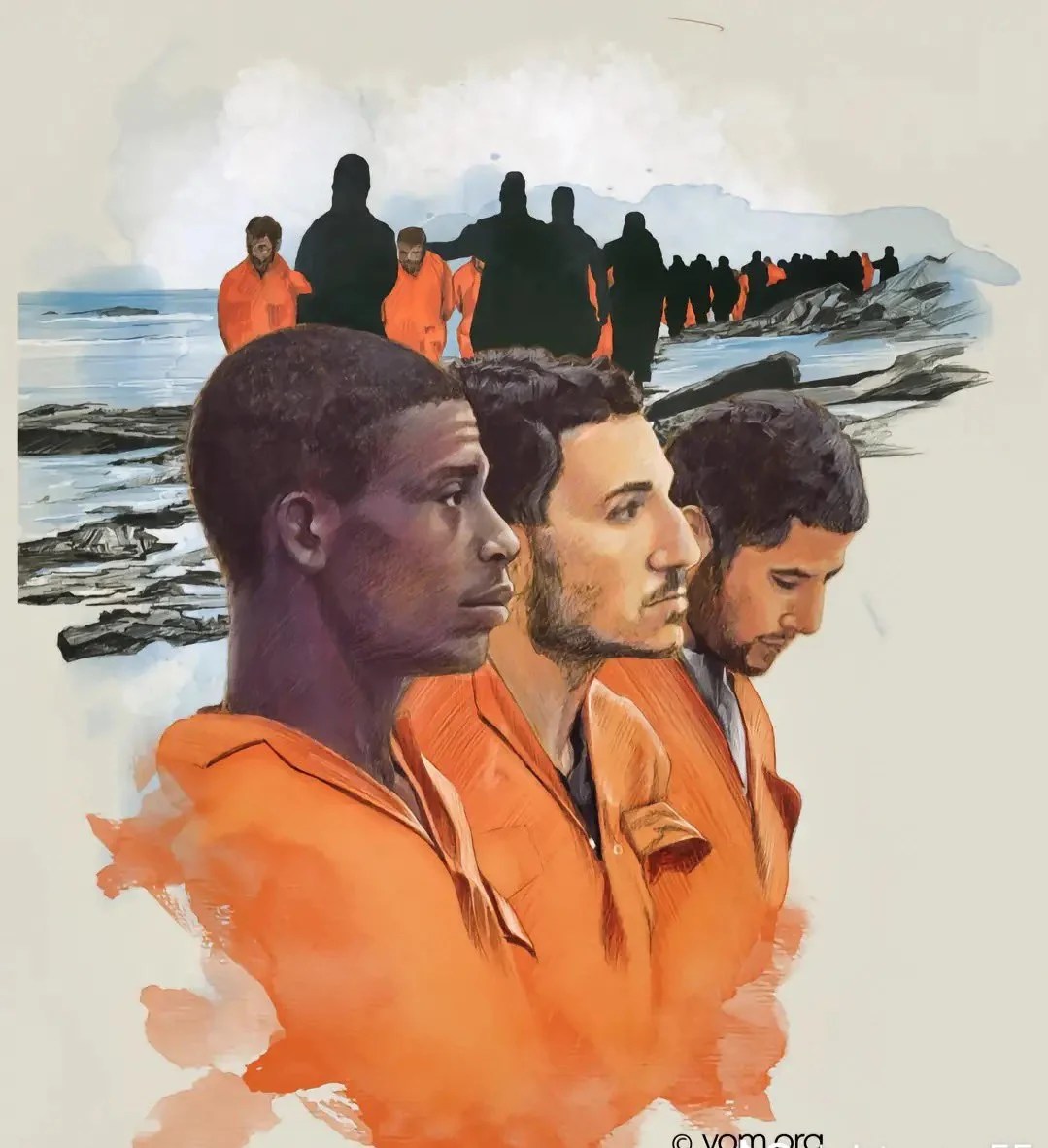
Or in 2015, of the 21 Egyptian Orthodox Christians who were kidnapped and executed by Islamic State for refusing to renounce Jesus. They died audibly praising his name.

Or of those I myself have baptised who have fled their homes and countries in the Middle East for the sake of choosing Jesus and are unable to return.

I could tell you story after story of men and women who have lost enormous amounts in order to gain Christ and consider it a brilliant trade. Christianity takes their stories, often from within marginalised and ignored communities seriously.

So what should we do about this?

  • Lean into Jesus and commit to him. The truth about Jesus is far better, more profound and more satisfying than we often remember. If you are a Christian, lean into your faith. Get to know it. It is very cool and deeply joyful.
  • Be humble, curious and prayerful with friends from other points of view. Evangelism is only morally good when we genuinely care about those we are going to; it is only effective when they understand and trust that we care about them.
  • As you listen, seek points of overlap to give away to share Jesus with them. Because you respect and love them, try to convert them. 

Jesus is true for everyone. And that’s really good news.

Be More St George…

The way of St George is not one of slaying dragons but of giving ourselves for others and for God. This is a path all of us can choose.

In honour of the patron Saint of England, here’s some reflections on the life of the actual St George.

People who have days named for them have to be remarkable. Their lives have to be significant – to point to something or someone bigger than them. St George was no exception.

He lived about 1700 years ago and for most of his life was pretty successful. He had money and property. He was a brilliant soldier and was loved by Caesar, the Emperor and leader of most of the world.

Then he seemed to throw it all away. And yet in the process achieved greatness.

The Emperor started to attack and punish Christians. When he heard about this George publicly revealed that he followed Jesus and started to tell people about how Jesus had come back from the dead and could give those who trusted him new life.

George sold all that he had and gave all his money to help the poor.

This was not a good career move, to say the least. If you’ll pardon the expression, all hell broke loose. Here was one of the top soldiers in the Roman army publicly defying the emperor and the law.

The Emperor was not having any of this so he tried to get him to say he didn’t believe in Jesus. First he offered him good things like a better job and money if he would deny Jesus. Then, when that didn’t work he hurt him very badly and did all kinds of horrible things. George kept on saying no – he believed Jesus had come back from the dead & had given him a new life.

So they went on torturing George and still he wouldn’t do what they wanted.

Things were getting pretty embarrassing for the Emperor. Worse still, when others saw George’s his example – how he loved others and gave his money to help them, how he loved Jesus and wouldn’t deny him – they became Christians too. Eventually even the Emperor’s own wife became a Christian. Eventually it all got too much and they killed George.

But not before his life had become so important that the church started to celebrate a day in his memory which we still celebrate today – the day he died.

So why celebrate?

George’s life is important for what it points to.

Greatness is found not in the path of Caesar but after the example of George. It consists not on obtaining what we can for ourselves, but in giving ourselves for others; not in living for this life but for eternity; not in following the path of popularity and temporary power but of the crucified Christ.

George found greatness, and changed the world around him, by serving God and pointing people to Jesus. He appeared to fail yet 1700 years after his death the Emperor who had him killed is largely forgotten George is remembered around the world.

The way of St George is not one of slaying dragons but of giving ourselves for others and for God.

This is a path all of us can choose. We can choose what we do with our lives, choose the men and women we want to be. We can choose greatness

Choose to love God and love others – that is the path to a truly great life.

Do We Still Need Pastors and Priests?

Faith, and the pastors and priests who embody it, not only remain relevant, in our current age they are essential.

Do we still need pastors and priests? Or has our society progressed made such people and posts irrelevant or actively harmful. It’s a question I think about a lot both as a pastor/priest myself and as I watch many of my colleagues struggling with a crisis of calling or identity, scrabbling for relevance to other disciplines or professionals.

To this question, Joseph Ratzinger gives a rallying cry: faith, and the pastors and priests who embody it, not only remain relevant, in our current age they are essential.

The shadows are becoming longer, the loneliness— more profound, and the question of those who remain— more difficult: What sort of a future do they face? Does it still make sense to become a priest in a world in which only technological and social progress matters now? Does faith have a future? Is it worthwhile to stake one’s whole life on this card? Is priesthood not an outdated relic from the past that no one needs anymore, whereas all our efforts should be applied to eradicating poverty and furthering progress?

But is all that really the case? Or is mankind, by running the machine of progress faster and faster, not at the same time rushing into suicidal insanity? The famous French aviator Antoine de Saint- Exupéry once wrote in a letter to a general: “There is only one problem in the world. How can we restore to man a spiritual significance, a spiritual discontent; let something descend upon them like the dew of a Gregorian chant. Don’t you see, we cannot live any longer on refrigerators, politics, balance sheets, and crossword puzzles. We just cannot.” And in his book The Little Prince, he says: How uncomprehending the world of adults, of clever people is. By now we understand only machines, geography, and politics. But the really important things, the light, the clouds, heaven and its stars, we no longer understand. And the great Russian author Solzhenitsyn records the cry of distress of a Communist who landed in Stalin’s prisons: We could use cathedrals in Russia again and men whose pure life makes these cathedrals alive and turns them into a space for the soul. Indeed, man does not live by refrigerators and balance sheets alone. The more he tries to do that, the more desperate he becomes, the emptier his life is. We need even today, and today more than ever, people who do not sell luxury items and do not make political propaganda but, rather, ask about the soul of a man and help him not to lose his soul in the tumult of everyday routine. The scarcer priests become in the world of business and politics, the more we need them.

Joseph Ratzinger, Teaching and Learning the Love of God, p.207-8

The Benefit of the Doubt

Doubt is not always bad. If we handle it in the right way, doubt can spur us on to a richer, more satisfying and deeper faith.

Doubt is not always bad. If we handle it in the right way, doubt can spur us on to a richer, more satisfying and deeper faith.

Everyone experiences doubt at some point in their lives. This can affect our relationships with each other. Drawing on his own counselling ministry and research, the Christian writer and philosopher, Gary Habermas, observes in his excellent Dealing with Doubt that ‘Doubts concerning the ideas or persons most important to us might be called an almost universal fact of life.’ 

This is true both for religious people and atheists, for matters of faith and any other area of life in which we have to deal with things of significance. 

CS Lewis reflected on his own experience of periods of doubt as both an atheist and a Christian:

‘Now that I am a Christian I do have moods in which the whole thing looks very improbable; but when I was an atheist I had moods in which Christianity looked terribly probable.’

Uncertainty is a part of human existence. That means that doubt is, too.

Doubt is not always bad. As we will see, Jesus doesn’t condemn it in the disciples. Moreover, if we handle them in the right way, periods of doubt can spur us on to a richer, more satisfying and deeper faith.

We should also note that doubt isn’t simple. We can be tempted to imagine that it is always an intellectual phenomenon. In reality, those involved in counselling people experiencing periods of doubt in different contexts have found that there are actually different types of doubt, each of which requires its own response.

In this passage we see Jesus’ response to three types of doubt.

  1. Doubt in the emotions
  2. Doubt in the mind
  3. Doubt in the will

Emotional Doubt

In Luke 24:36 Jesus’s first words to his disciples when he appears to them after his resurrection are ‘peace to you’

The first species of doubt is emotional. This is where doubt arises largely from our feelings rather than a particular intellectual problem. Habermas estimates that more than ⅔ of doubt he has come across in church is actually emotional.

Doubt can often seem to be about ideas when actually it is about feelings. 

This is a classic example. The disciples have been through a terrible trauma. They are utterly exhausted. They are also scared, probably angry, have been betrayed by their mate, and seen everything they believe in apparently crash around their ears.

They are having a very bad week.

In the midst of tiredness, hunger, and pain we can begin to doubt in a visceral way.

Lewis expresses it in this way:

Our faith in Christ waivers not so much when real arguments come against it as when it looks improbable–when the whole world takes on that desolate look which really tells us much more about the state of our passions and even our digestion than about reality.

When we experience this type of doubt we need to be healed, not persuaded. That is why Jesus just says: ‘Peace be to you.’

This healing has three parts:

  1. Physical:
    Get some sleep. Take some time off work if you are burnt out. Do something fun. Eat well.
    For example, I never take seriously anything I think after 10pm. It’s tiredness talking.
  2. Mental:
    If you are assailed by an idea you know to be false (like I’m too awful for God to love), identify the idea, name it, and challenge it with truth. Memorising Scripture is good for this.
  3. Spiritual:
    Learn to pray, particularly contemplative prayer. If you struggle to think of ways to pray, speak to me. 

Intellectual Doubt

Second, we can experience doubt in our minds. 

This is what is going on in Luke 24:37-39. The disciples are struggling to believe that someone really could rise from the dead. They can’t get their heads around it. So Jesus offers them evidence to explore.

Every thinking Christian at some point will have questions about the faith.

They might be about the reliability of the gospels: how do we actually know that Jesus lived and died and rose from the dead?

They might be about the existence of God: what arguments are there for believing that there is something more than the material world?

They might be about specific questions such as the problem of evil or reconciling scientific discoveries with the content of Scripture and the faith.

These questions are not new – they have been well canvassed by some of the most brilliant minds in the history of the world, from both science and philosophy. And many of those asking these questions end up as Christians.

So how do we deal with this type of doubt:

  1. Maintain a strong devotional life.
    Staying in the Scriptures, and have a regular pattern of prayer feeds our minds and our souls.

Lewis said:

…make sure that, if you have once accepted Christianity, then some of its main doctrines shall be deliberately held before your mind for some time every day. That is why daily prayers and religious reading and church-going are necessary parts of the Christian life. We have to be continually reminded of what we believe. Neither this belief nor any other will automatically remain alive in the mind. It must be fed.

  1. Look for answers.
    Jesus offers his disciples evidence for his claims. There is really, really good evidence for Christianity.
    The questions we have are ones that brilliant minds have considered (not least Lewis himself). If you are really struggling with doubt in your minds about a particular question, look into it.
  2. Be patient.
    None of us is that smart and we need to be patient if we don’t get everything right away. Some things are really difficult. God is really big. We are really small.
    That doesn’t mean don’t apply your mind. It does mean having a healthy humility about your capacity to reason to the answer on every question in your own time.

Doubt in the Will

The third type of doubt flows from the will.

This means that God is asking us to do something we don’t want to do. It is usually characterised by knowing the facts but not being willing to do the thing they seem to imply.

This is suggested by what Jesus says in Luke 24:46-49

By this stage the disciples know that Jesus is alive. The question is, are they going to go and tell anyone about him?

Types of challenge that can cause this species of doubt can include ethical problems (I really want to sleep with my boyfriend even though I know I shouldn’t), to come to church (I know I should go but I want to stay home) or missional (I know God wants me to do something for him but I don’t want to).

This type of challenge can lead to doubt. It isn’t a rational process: we rarely think ‘I don’t want to do [X]  so I don’t believe anymore’.

Rather it manifests itself in raising up small, ‘picky’ issues that on any objective view aren’t really relevant to a life of faith or in refusing to accept, or even really consider, any answers or explanations that are given to apparent problems. The dispeace or uncertainty therefore continues and nothing can touch it.

This happens because faith isn’t just a question of belief but of action. It implies a choice about what I will do – what Paul describes as the obedience of faith.

How do we address this type of doubt? Jesus’ response to the disciples suggests two things:

  1.  We need to exercise our wills.
    Ultimately only we can choose to follow Christ. By God’s grace, every one of us has that agency. We are treated like grown-ups.
    It can be hard, painful and require the support of friends. But the choice is ours. 
  2. We need the Holy Spirit.
    Christ knows that the task is too difficult for them to do on their own. It is too difficult even to begin on their own. I think that is not only because they need the power to do it. It is because they need the courage to choose it.
    This implies prayer. When we are facing a hard choice, we need to be those who come to Jesus and ask for the Spirit’s power to choose well. Or even to desire to choose well. Don’t underestimate the power that is available to one who seeks it.

Application

I’ve offered ideas about how we respond in each of these areas as we have gone along. Nevertheless, I want to close by offering some general principles for dealing with doubt.

  • Keep together.
    Doubt, whether in our minds, emotions or wills is not something to be ashamed of or gone through alone. Talk to people.
    Obviously, be careful who you speak to if it is personal. But this is part of why God puts us in churches.
    For example, if you are wrestling with the problem of evil or the relationship between Creation, evolution and Scripture, come and talk to a pastor or theologian. You can even email me. I won’t judge you; the chances are I have thought about the same things. 
    If stuff is hard emotionally and you are starting to doubt your faith, talk to a friend or life group. You might find something as simple as a hug, or crying with them, makes a huge difference. Or it might take much longer.
    But use each other.
  • Keep praying.
    Above all else, keep Christ before you. If you are wondering if it’s worth it, I would ask: why not? What are you losing by continuing to pray and to come to church? And often it is through prayer and worship that we find ourselves united to Christ in a way that relativises all our doubts.
  • Keep humble and be patient.
    Always remember how small even the smartest and most together of us are compared to God, the universe and the things we are dealing with.
    There is such a big temptation to want to rush to conclusions or take immediate action in response to every thought. I cannot stress how important it is to resist that temptation.
    Be patient. With yourself, with God, with the answers. Stuff takes time to heal, to find, to understand and to accept.

Doubt is not always bad. If we handle it in the right way, doubt can spur us on to a richer, more satisfying and deeper faith.

How Can We Lead Prayer Better?

What are the problems involved in evangelical and charismatic approaches to public prayer? And how can it be done better?

In my (charismatic free) wing of the Church our services don’t feature much written or traditional prayers or liturgies. We prefer to change the exact words we speak to reflect the type of community we are waking in or what we think the Holy Spirit wants us to do at any particular moment.

There are big advantages to this approach. 

It allows us to be flexible, fresh and to respond to the needs and characteristics of the people in Church. It also allows us to be alert to what the Holy Spirit might want to do at the time we are ministering. Finally it allows us to model for the people we are pastoring that they can pray in any language and in a way that is real for their personality and background.

With that said, emphasising contemporaneous prayer also has drawbacks. 

Andrew Wilson has written about the need,  in the midst of spontaneity,  to maintain the essential elements of Christian worship (like praying, reading Scripture, taking communion etc). Otherwise our worship becomes progressively less and less full of the riches of worship the spirit has given to his Church in Scripture and Tradition. We want to be “Eucharismatic” in our worship.

My concern here is a slightly different one. When the charismatic or evangelical worship leader, venue pastor or preacher leads the Church in spontaneous or unplanned prayer, he (or she) is writing liturgy and language that needs to sum up, express and model the concerns of the Church, the needs of the world and the right way to address God. All at the same time as teaching the people how to do that for themselves. 

This is a much harder task to do well than one might imagine. It involves formulating Scripturally sound, theologically rich, pastorally sensitive and reverent words, expressing them contemporaneously and clearly, and then fitting them into the rhythm and setting of an informal worship service. 

If we are not careful the spontaneous prayer we bring becomes all the things we want to avoid as people of the Spirit and Scripture. 

I think there are three particular areas we need to be careful about (drawn from my own failings leading prayer and worship over many years):

  1. Not including much, if any prayer, in public services.
    Here we end up having extended singing followed by a sermon (and maybe communion). There might be a short prayer between songs or at the end. But, if we’re honest, it’s not a particular feature of the service, certainly compared to, for example, sung worship or a talk. 
  2. Having my own personal prayer time in front of the congregation rather than leading them in prayer.
    Here I end up praying in a slight mumble with my eyes closed and talking quickly and informally, as if I am having an internal monologue. The problem is I am not leading the congregation at this point; instead, they are just watching me pray.
  3. Praying prayers that, instead of expressing the immediate, urgent, prophetic intercession of the Spirit praying through me, become predictable, banal, cliched, and dominated by non-words that litter speech such as “just…”, “yeah…” and so on.
    The ‘just’, and ‘yeah’ prayers are actually the least problematic form of this. It gets much worse when public prayer becomes dominated by the concerns or vocabulary of the leader’s own politics or concerns, narrate their own thoughts about life, politics, social issues or Jesus (often with the phrase ‘God, you know that… followed by explaining it to him anyway). At times they can become offensively bad. The most egregious one I’ve heard used the phrase ‘blaze, Spirit, blaze’ from Shine Jesus Shine (an excellent song people are wrongly snobbish about) to segue into intercession about a major fire in which people had lost their lives. It was, to say the least, not optimal.

What can we do to remedy these difficulties if they begin to arise in our context or ministry?
One approach would be to begin using formal, written liturgies. That approach might be one we should consider (I’ll leave that to Andrew to argue for). I think, however, that there is another approach that would allow us to keep the good that we find in spontaneous prayer while also remedying its difficulties.

Resolving these issues requires us to think a bit more about what is happening when we pray publicly, particularly if we do so spontaneously.

Filling Our Stores: The Christian Tradition of Prayer

When we speak publicly, whether in prayer, preaching or some other way, we are essentially bringing words, ideas and idioms out of our minds and memories. No speech is, in that sense, truly spontaneous. We are a bit like jazz musicians Who seem to be producing spontaneous, improvised music but are doing so using scales, techniques and phrases they have internalised over time practising. Or footballers,  who produce moments and movements of inspiration in the immediate context of a match but draw on hours of drills and practised skilIs. 

If we want to lead prayer well,  therefore, we need to practise. 

That means filling our minds and memories with great prayer, Scripture and discipline so that we have something to draw from when we pray in public. In some ways, this is more important for those of us in traditions that don’t use a formal liturgy in our public services than it is for those who do. It is precisely because we want to be able to lead the congregation in spontaneous prayer in response to the Spirit’s leading in the moment of worship that we particularly need to fill our minds and mouths with the language, cadence and concerns of great prayers. We might repeat these exact prayers as we lead people to pray. More likely, though, is that we will begin to pray with a greater fluency and depth when we create our own prayers. We will also find the content of our prayers becomes more timeless and aligned with the eternal and historic concerns of the Church and the saints she contains and less dominated by the phrases and personal preoccupations we unconsciously find ourselves repeating.

Similarly, disciplining ourselves to include in our daily devotional life a set time in the Psalms or the Divine Office imprints on our minds and hearts the central importance of prayer as a discipline for both public and private worship. We will find, then, that the impulse to overlook intentional times of public prayer on the basis that there is no time in the service or that it interrupts the “flow” or mood of sung worship is easier to overcome. 

Moreover, the discipline of reading (out loud) the prayers of the historic Church and of Israel is an antidote to the habit of mumbling to oneself when leading in prayer. These are prayers written and published with the intent of being read publicly. They have that feel about them.  As we begin to make them a part of the unconscious reservoir from which we draw our public prayers, we will begin to find that we construct and project our prayers with a similar tone.

What Does This Mean in Practice?

So what does this mean for those Who regularly lead prayer in charismatic or evangelical  services? 

There are, I think, three specific things that will transform the way we pray, and particularly how we pray in public.

  1. When praying, remember we are leading the congregation and not just praying on our own in front of them.
    That means:
    1. Begin your prayer with clarity. Don’t just let the prayer ’emerge’ from under your breath.
    2. Go at a pace where the congregation can follow what you are saying and agree with it. God can understand you at your fastest speed but we can’t.
    3. Think about what you want to say and then say it. Don’t feel the need to keep on speaking when you don’t have anything to say at that moment.
  2. Plan to pray as part of your service leading.
    If you are not able to say when you are going to lead the congregation in prayer during a service, there is a problem. Choose a time in the service and allocate who is leading prayer and what you want for it. A good test is to think how you would treat the preparation of sung worship in terms of planning etc and then make sure prayer in the service is at least as good and focussed as that.
  3. Twice a day, as part of your daily devotional times, include praying the Psalms and/ or a traditional Daily Office.
    There are lots of modern versions of a liturgy of the hours or something similar. However, to be honest, I think you are better off with one of the older ones from a historic denomination. For me, the best you can do is get the free “Daily Office” app. It is a Catholic app, devoted to systematically praying through the Psalms and uses many of the ancient prayers of the Church. If you don’t want to use a prayer book then read three Psalms (give or take, depending on the Psalm length)twice a day as part of morning and evening prayer.

Throughout this article I have focused on the pragmatic reasons for immersing yourself in the Church’s historic prayers. There is, however, another even more powerful reason to do so. These prayers have been collected, edited, arranged and prayed over millennia. Praying them each day as part of a disciplined prayer life won’t just make you better at praying; it will bring you joy. Ultimately every worship leader themselves needs to draw close to Christ. Disciplined prayer with the church will help you to do that.

Further Reading and Resources

If you want to explore these ideas further or get into praying with the Church, here are some resources to get you started.

Books about this type of prayer for evangelicals:

Prayer Books or Apps

How does prophetic evangelism work?

Prophetic evangelism might be easier than you think. It requires listening, responding, and risk-taking.

One of the amazing things about being a Christian, and particularly belonging to the charismatic part of the Church is the belief not only that God sees and guides our lives generally but that he can lead and speak through us as we counsel, support and share his love with others.

We see this in the New Testament both in Jesus’s life and ministry and in the book of Acts. One obvious example is Jesus speaking with the Samaritan woman in John 4. Here the Lord receives insight into the woman’s circumstances and history in a way that shows her that God sees her and knows her. A slightly different type of encounter is recorded in Acts 8. Here Philip is in a place he’s not used to when he feels God’s Spirit provoking him to go to a particular chariot. When he gets there he doesn’t have great insight of supernatural guidance, rather he just shows an interest in the individual he finds there. The prophetic element was in putting him in that place to begin with. Finally, there is the story in Acts 9 of Ananias and Saul. In this story Saul is in bad need of prayer and baptism, of someone to make sense of the profound experience he has held of Jesus but which no one else knows about. Here the prophetic call comes when Ananias hears the Spirit telling him to go and pray with Saul in Jesus’ name for him to receive the Spirit.

These stories can feel a million miles away from our personal experiences. Even for those of us who enthusiastically affirm that the Holy Spirit is at work in and through his Church in much the same way now as he was then, it is hard to translate them into practice. In the rest of this post I am going to suggest a couple of principles we find in these stories which help us to start to experience prophetic leading in our evangelism and pastoral care. Then I will share a couple of stories of how this has worked out in my own (admittedly meagre) experiences.

Principles at Work

Each of these stories has, I think, three things in common that are simultaneously easy and hard for us to imitate.

  1. They all happen to people who are listening to God whether they are talking to someone (Jesus) or in a strange place (Philip).
    In turn this implies that they are paying attention to the impression they feel in their spirit. The voice of God rarely comes in an audible way. More often it is a strong impression that we should do or say something, combined with an awareness that it might not come from ourselves.
    This comes with practice and time spent in worship and prayer. It also means taking off headphones, sitting and being present to God and to the place we are in.
  2. They all involve being willing to take a risk in response.
    It’s great to hear what God might be saying. Then we have to take a risk and do something about it.
    The risk is usually that we will go up to someone and they won’t be interested. Or that we will fail to see any benefit. Or that we will be embarrassed. Or that we will waste our time.
    All of these things will happen sometimes. But unless we are willing to risk them, we won’t ever see the prophetic at work.
  3. They are all focussed on making Jesus’s love present in the moment.
    Prophetic evangelism (or pastoral care, for that matter) is never focused on ‘wowing’ someone or looking good. It isn’t a demonstration of power or ability. Rather it is the precursor to going into a situation in order to minister the love of Christ to someone. 

A Practical Example

So how does this work out in practice? Here’s a very limited and broken example.

Last week my wife and I were in a coffee shop talking about various bits of church admin. At the same time I was looking around and, as I often do, quietly asking Jesus what he was saying.

A lady walked in wearing a traffic warden’s uniform. As we carried on talking, I couldn’t get her out of my mind. Over and over again, the thought came to me that her job was horrible and I should offer to buy her a coffee. 

That’s the listening phase.

After a while of this (about 2 minutes), I got up and went over to the lady as she decided what to order. I said ‘excuse me’ and interrupted her. I asked if she was a traffic warden. She said she was. I explained that I’m a priest (that’s the language I find most people understand better than Elder or Pastor) and that I had been praying for her. I asked if I could buy her coffee for her because her job could be horrible.

She looked surprised and touched. The barista, to be honest, looked completely confused. I paid for the coffee and went and sat down.

That’s the risk-taking phase and love phases. She could have said ‘no’ and I would have felt embarrassed, especially as I was trying to do it in Jesus’ name. But equally if I succeeded, at very least she would have a coffee and know that there were people praying for her and that Jesus is kind.

Then, the twist. This is where the prophetic bit comes in.

After getting her coffee she came back over to the table where my wife and I were sitting. She was emotional and explained that she had been at Alpha in another village the previous night. She was finding life really hard but knew that Someone was holding her and caring for her.

I offered to pray for her and her daughter. She was very glad to accept.

I had no idea about any of this. But God did. He saw her, loved her, and showed her his care at a time when she was seeking him.

Prophetic evangelism might be easier than you think. It requires listening, responding, and risk-taking.

How Can We Do Sung-Worship Well?

We love sung worship. But how can we do it well, love others, and honour our core values?

Introduction

In my (Charismatic Protestant) branch of the Church we love sung worship. Sung worship is very important to us as it has been throughout the history of the Church. 

This is not just a question of taste or preference. It expresses something profound about who we are and how we encounter God on a deep level. St Augustine wrote that “singing is for one who loves” while an ancient proverb reads that “he who sings, prays twice”.1 In the New Testament we find Christ and his disciples singing as they head for the Mount of Olives on the night of his betrayal,  St Paul commanding the church in Ephesus to “[speak] to one another with psalms, hymns, and songs from the Spirit. Sing and make music from your heart to the Lord, always giving thanks to God the Father for everything, in the name of our Lord Jesus Christ.” Finally, John’s vision of heaven echoes with the sound of the song of the redeemed and angelic bests falling before the glorified and exalted Lamb of God.

Sung worship is powerful. It draws us close to God in our minds and our hearts. It can lift the brokenhearted and put strength in the legs of the weary. To lead sung worship is a wonderful and fearsome thing. The words we sing, particularly when we are young, are the words we carry with us and which in times of exaltation and desolation we will reach for to find comfort, hope and to direct our paths. To some extent, therefore, to lead sung worship is to stand as liturgist, preacher, counsellor and guide for the whole congregation.

The songs we sing reflect and shape who we are, who we will become and what we will become. This means we need to take sung worship seriously. Doing it well is a priority for us.  

At my church are blessed to be led in the sung parts of our services by some gifted and godly leaders and singers. We want to empower and trust you to lead in accordance with the gifts God has given each of you. These guidelines are given in order to enable us to benefit from you and you to grow as you minister to us.

Values Behind Sung-Worship

At HBC we find it helpful to think about what we do and believe in terms of core values. We want to be people who are Bible saturated, Spirit dependent, loving of others, and courageous in mission. Each of these has relevance to sung worship.

Bible Saturated

Sung worship needs to be saturated with truth both about God and about us. This flows from two ideas we find in Scripture and the Christian Tradition.

Responding to Truth

First, sung worship flows from Truth because it is a response to what we have seen of God. For example, in Revelation 14:1-3 John describes the scene in heaven as he sees “the Lamb, standing on Mount Zion” followed in response by overwhelming music “like that of harpists playing their harps. And they sang a new song before the throne.” 

Sung worship, in this sense, is not the warm up to get us in the right place to begin to worship. It is also not something that we come to “cold”, so to speak. As both worship leaders and a congregation we sing in response to the reality of who God is being revealed to us. This is why our services begin with prayer for God to draw worship from us followed by a reading from Scripture or a testimony. We sing in response to God. It also means that as worship and service leaders we need to be immersed in worship and Scripture throughout the week so that we have seen Christ and can respond to him in faith as we lead others.

Communicating Truth

Second, sung worship is Bible saturated because when we sing we are teaching. In Colossians 3:16, Paul writes:

Let the message of Christ dwell among you richly as you teach and admonish one another with all wisdom through psalms, hymns, and songs from the Spirit, singing to God with gratitude in your hearts.

Singing is teaching. Even more than a sermon, the sung worship in our services shapes how people think about God and themselves. At its most basic level this means that the songs we sing must be biblically orthodox.

In addition to each song’s content being true in itself, the balance of song themes and contents overall must be helpful, forming the congregation in a particular way. For example, we should ensure that over the course of a typical month we are singing hymns and songs  that reflect on who God is in himself, on what he has done for us (chiefly in Jesus) and on our response to, and experience of,  him.

Ensuring this happens is a partnership between the sung worship leader and the Elders and other leaders in the church. We need to be meeting regularly to reflect, pray and oversee what we are doing and ensure it is biblically sound and balanced.

Spirit Dependent

In addition to being Bible saturated, sung worship should also be Spirit dependent. Again, this has multiple dimensions.

Prepared in Prayer

Being Spirit dependent means, first and foremost, being immersed in prayer. This begins in the week prior to the service as everyone involved in leading seeks Christ for both the inspiration and the ability to worship. As the Psalmist prays:

Open my lips, Lord, and my mouth will declare your praise.

But prayer does not cease when we begin to lead. Rather, prayer becomes for the worshipper a disposition of our hearts, orienting ourselves towards Christ, listening all the time even as we sing for what the Spirit might be saying to us and through us.

Prepared to Pray

Being Spirit dependent means being willing to pray at the front of church if it seems appropriate and right. The sung worship leader is also, at that moment, the chief liturgist in the church, shaping how we, as a people, respond to what we were heard either in prayer or, if appropriate, through the prophetic gifts. 

Obviously, this looks different at different points in the service and depends on whether there are, for example, young children present or a preacher has gone over his allocated time. What is important is the posture of prayer and a willingness and confidence to respond to it if it seems right.

Flexibility

Finally, while the Sunday worship service has a high degree of order to it both to enable us to worship well and to make it accessible for guests, especially if they were young children, part of being Spirit dependent in leading sung worship is flexibility. 

Depending on what the Spirit is doing, you might want to swap out a song for one you think is more appropriate at that moment. Generally that is fine;we would encourage and support you in that. Equally the overall service leader (if they are a different person) might want to drop or add a song or silence to enable a different form of response. Again, this is fine;  we want to listen to what the Spirit is saying and doing.

Courageous in Mission and Loving of Others

What, then, of our final two values? To be courageous in mission as a sung worship leader means to be willing to be vulnerable by being on display at the front of church. To stand in front of a room of one hundred or more people and sing is already an act of courage, not least because it requires you publicly to declare your faith in a way that is not required of an ordinary church member.

More than this, however, there is courage in leading sung worship for a church that comprises a wide range of people of different ages and backgrounds. Doing so well requires the leader to deny their own desires and preferences in order to minister effectively to the congregation.

In turn this leads us to our final value, being loving of others. For the sung worship leader this consists of two principles. 

First, they should practise so that they know the songs they are singing and are able to lead as well and as unobtrusively as they are able. To serve well is itself an act of love. 

Second, however, the sung worship leader shows love for others by denying their own preferences in relation to presentation, set length or song choice in order effectively to minister to the needs of the congregation. In this way they choose to focus their selection around how first to love and honour God and then second to serve the needs of the other. This is essentially an ascetic practice and as such is not pleasant. Yet in the midst of the discomfort, and even occasional irritation, that accompanies all forms of self-denial for the sake of another, there is the opportunity to become closer to Christ both for the leader (who embodies his self-giving love) and for the congregation (who sees the love of Christ reflected in the leader’s love for them).

  1. Augustine, Sermon 336. ↩︎

What Is the Future of the Church?

We don’t need a church that celebrates the cult of action in political ‘prayers’. It is quite superfluous…the future of the church, this time as always, will be shaped anew by the saints. By people who are aware of more than mere phrases, people who are modern but have deep roots and live in the fullness of the faith.

We don’t need a church that celebrates the cult of action in political ‘prayers’. It is quite superfluous. Therefore it will collapse of its own accord. From today’s crisis this time too a church of tomorrow will rise, which will have lost much. It will become small, and to a large extent it will have to start again from the beginning. It will no longer be able to fill many of its buildings that were built in times of prosperity. Because of the number of its adherents it will lose many of its privileges in society. Unlike in the past, it will present itself much more strongly as an optional community, which can only be joined through a decision to do so. It will surely find new forms of office and ordain reliable Christians as priests, who also have other jobs. But, as before, full-time priests will be essential too.

The future of the church will not come from those who just follow recipes. It will not come from those who just want to choose the easy way. Those who avoid the passion of the faith and call anything demanding false and obsolete, tyrannical and legalistic. To put it positively: the future of the church, this time as always, will be shaped anew by the saints. By people who are aware of more than mere phrases, people who are modern but have deep roots and live in the fullness of the faith.

But despite all these changes which we can imagine, the church will again decisively find its essential being in what has always been its heart: faith in the triune God and in Jesus Christ. It will be an inward church, which does not bang on about its political mandate and flirts as little with the left as with the right. It will rediscover its own core in faith and prayer and experience the sacraments again as divine service, not a problem of liturgical design. The church will find it hard-going. For the process of crystallization and clarification will cost it much labour. It will become poor, a church of the little people.

The process will be long and difficult. But after the test of this letting go, great power will stream from a church that has been taken to heart and become simplified. For the people of a wholly planned world will become unutterably lonely. When God has disappeared from them, they will feel all their terrible destitution. And then they will discover the little community of believers as something completely new. As a hope that takes root in them, as an answer, which they have always secretly been seeking – as a home which gives them life and hope beyond death.

Joseph Ratzinger, Glaube und Zukunft (Munich, 1970) (quoted in Peter Seewald, Benedict XVI: A Life (Volume 2), p.70)

How Does God Love the World?

This is how God loved the world, he gave his only Son that whoever puts their trust in him shall not perish but have eternal life.

Love is a big deal for Christians. It’s because of the centrality of love to Christianity that it appears so prominently in our culture. We all love to love.

But as soon as we say this, it begs the question: how? How does God love the world? What does ‘love’ mean in that context? In culture, ‘love’ is often a synonym for sex. Yet at the same time grown men will say they ‘love’ their football teams.

When Scripture talks about God loving the world it has something very powerful and particular in mind. It isn’t something that can adequately be summed up in words – it has to be shown rather than told.

The best I can do is to say that love consists in choosing to give oneself completely for the good of another. Thus, in John 3:16 we read that, God loves the world by giving his only Son that whoever puts their trust in him shall not perish but have eternal life.

That’s an idea that is quite easy to repeat. It is sufficiently well known that the wrestler, Stone Cold Steve Austin, used to parody the endless references to it on signs at Wrestlemania with his own version: Austin 3:16.

The rest of this post is trying to explain what these verses actually mean and why they matter.

I’m not going to quote John 3 here. But the rest of this post will make a lot more sense if you have read it.

  1. What’s Going On Here?

Our scene opens at night. That is significant. It is dark. As you read John’s gospel you will notice that he often mentions light and darkness as symbols of a spiritual or mental awakening. For example, we are told in John 1 that Jesus is the light that shines in the darkness.

So we are on the alert for someone who does not understand – who is, so to speak, “in the dark” and to whom Jesus is going to bring light.

Into the scene comes Nicodemus. Nicodemus is a very senior leader and religious teacher in Israel. He is part of the council that runs Jewish religious life and is a brilliant man.

I find this story so poignant.

Here is someone who is faithful, who is clever, who has worked hard and achieved an enormous amount. But even with all of that he knows he needs Jesus. He has seen something in Christ that goes beyond all the power and all the prestige and all the wisdom he has acquired. And he knows he needs it.

Whether you are the Teacher of Israel or a street Prostitute, eventually you have to come to Jesus and ask for help.

I love Nicodemus. I love his humility. I love the way a supreme official in the religious hierarchy has come to sit down with a provincial street preacher in order to ask him about the Kingdom of God. He reminds me of the best of brilliant people.

Nicodemus comes to Jesus and asks him about what Jesus is doing. He and his colleagues have seen Jesus at work and they get there is something going on here. But they don’t quite grasp its implications.

Maybe that is how you feel about church or Christianity. There is something you have seen that you recognise as good. It might be a feeling you get in worship, a peace that comes when you pray or hike, or a deep hunger you can’t quite understand (like an itch you can’t reach) but which seems to be satisfied when you listen to the Bible. 

If that resonates with you then you are the type of person Jesus is speaking to in this conversation.

  1. Why Jesus Came

Jesus tries two ways of explaining this to Nicodemus. 

First, he says, getting into God’s kingdom is like having a fresh start, almost going right back to the beginning, like you are born for a second time. But instead of this being a physical birth, it comes from two things: God’s Spirit moving on you and you being baptised; from Spirit and water.

Nicodemus doesn’t get that metaphor. So Jesus reaches for something he is very familiar with – the Old Testament.

There is a story of the people of Israel in the desert after God had set them free from Egypt and before they had entered the land they would call home. They were bitter and angry and complained about God, about being set free, about the food they had and the lives they lived. They began to reject God as provider and leader and look back towards the slavery of Egypt.

And so God allowed an invasion of snakes to come into their camp. They were biting the people and causing pain, even death. The people were sick. 

God provided a way out for them. He commanded Moses to make a bronze snake and put it on a pole. Moses lifted it in the air. Whoever looked up to the bronze snake was healed from the effect of the snake bites.  It was as if the bronze snake had taken all the effects of the snake bites into itself and the people could be healed.

This is what the kingdom of God is like, Jesus says. In fact this incident was put there in the Old Testament so people like Nicodemus could recognise this moment when it came and know what they should do about it. 

Human beings are sick and they are dying. They are dying from the inside out – spiritually killed by the decision to reject God and to turn inward to selfishness and pride. This is what we call sin – the human propensity to mess things up, particularly our relationship with God and each other.

And so Jesus has come, and would be lifted up on a cross and die, punished as a sinner, taking all the world’s sin on himself and offering healing to everyone who would look to him.

Notice three things about this description:

  1. The people aren’t condemned by Jesus.
    They are sick already. It is their choices, our choices, which kill us. That is why Jesus didn’t come into the world to condemn the world but to save it. The world is already dying. Naturally we are already dying, mortally wounded by a thousand rebellions, petty hurts, treasured prides and self-centredness. 
  2. It is God who takes the first step to redeem us.
    Jesus came to us, we didn’t go to him. The point about the bronze snake is that God (through Moses) gave it to the people so that they could be healed. This is what we call grace – the free gift of healing and forgiveness and a future. It isn’t earned, like exchanging a day’s labour for a fair wage. It is given, like receiving medicine.
  3. It has to be accepted and trusted.
    The gift has to be received. It has to be trusted. The people had to look up, away from themselves, away from the snakes, away from their staffs and solutions, and trust the provision God made.
    This is what we call faith. To paraphrase St Thomas Aquinas, it is the response of trust to the testimony of someone we believe. The way Jesus (and the Church after him) teaches we should exercise this trust is by turning away from ourselves and being baptised; be born of Spirit and water.
  1. Why Do We Choose (or Not Choose) the Light?

The conversation finishes with John (or possibly Jesus – the Greek is unclear) explaining how people react to this. 

We can react in one of three ways.

  1. We can hold on to our sin because of shame (misunderstanding what the light is there to do – he came to save, not condemn).
  2. We can refuse the light because we actually prefer our sin. This gets worse the more we choose darkness. When we refuse the light, it gets harder to choose it next time. 
  3. We can choose to say yes to the light and find it brings healing. This has the opposite effect- we find the light is pleasant and good and so the more we choose it, the easier and more desirable it is to choose it again.

Application

What does this mean for us?

  • The first response is for those who haven’t yet trusted themselves to Jesus. Maybe you’re one of those, like Nicodemus, who senses there is something good, vital, even divine about what Jesus says and does. God’s word to you is that he loves you and came for you.
    But you need to know that the yearning you feel is a symptom. It’s like a hungry body’s craving for food, a thirsty man’s need for water. Your soul is sick and it craves the cure.
    Put your trust in Jesus, be baptised, and you will receive a new start and a new life.
  • What about showing hope to others? Here we need to remember that Jesus came to a world that hadn’t asked for him but needed him. He came in love, to bring help and healing to people who had rejected him.
    Ask God to show you who needs your help. And then give it. That is the way of God.
  • Finally, what about sharing hope? Learn from the way Jesus deals with Nicodemus. He listens to him, knows him, and talks to him in a way he can understand. The first step to sharing Jesus effectively with others is to listen to them.